








I used to think messy ponytails were for people who’d given up. Seriously. When I saw women with those perfectly imperfect, tousled ponytails, I assumed they’d just rolled out of bed and couldn’t be bothered. Boy, was I wrong.
What You’ll Learn About Messy Ponytails
What I Used to Believe About Messy Hair

My old approach to ponytails was military-level precision. I’d brush every strand into submission, use half a bottle of gel, and create something so tight it gave me headaches. The idea that “messy” could be intentional? Absolutely not in my vocabulary.
I thought polished meant perfect. Smooth meant sophisticated. And anything with texture or movement was basically admitting defeat to your hair routine.
Looking back at photos from that era makes me cringe a little. My ponytails looked like I could bounce quarters off them. Sure, they stayed put all day, but they also made me look like I was heading to a corporate board meeting even when I was just grabbing coffee.
The worst part? I was spending so much time fighting against my hair’s natural texture. My hair wanted to have movement and body, but I was determined to steamroll it into submission every single morning.
The Moment Everything Clicked
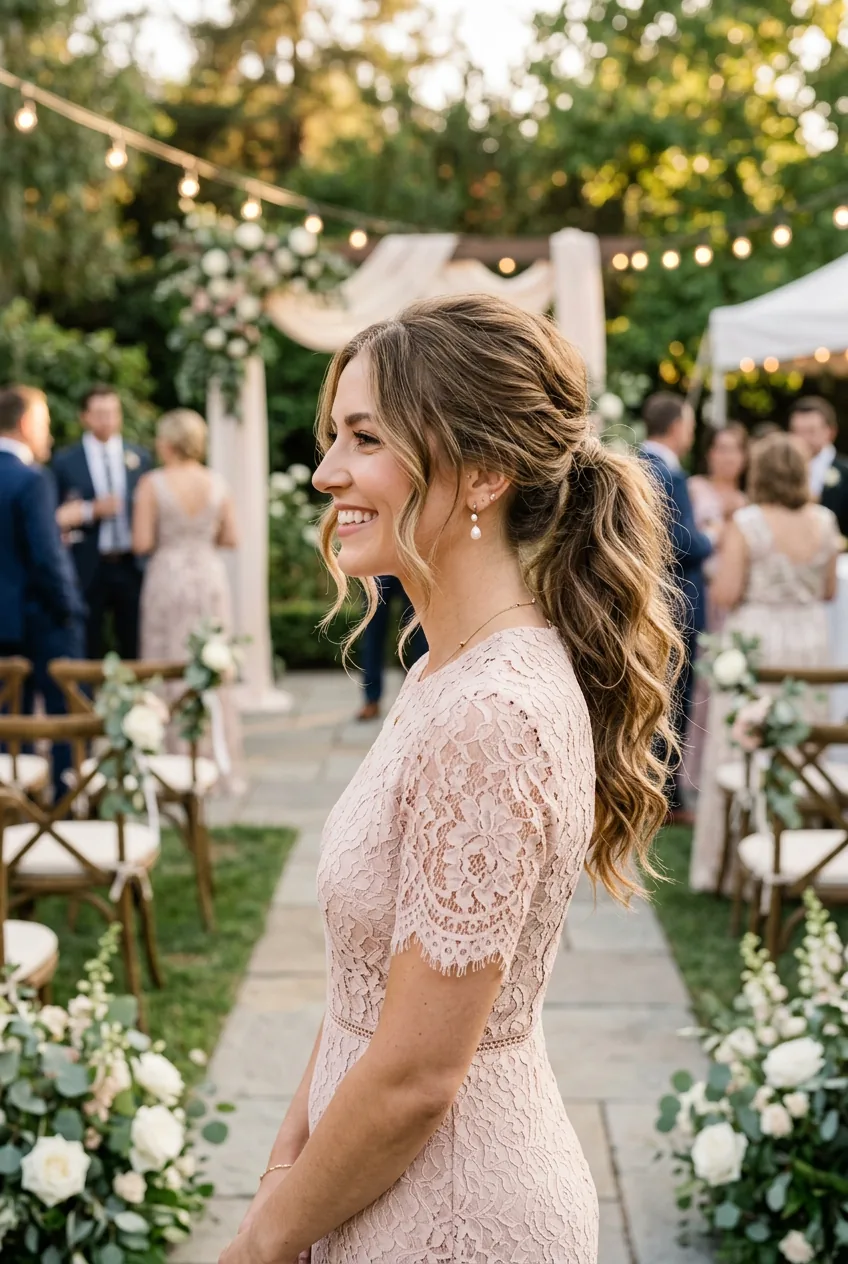
The lightbulb moment happened at my friend Sarah’s wedding. Her maid of honor had this gorgeous, effortlessly tousled ponytail that looked like she’d spent hours perfecting it — but also like she could have thrown it together in five minutes.
I couldn’t stop staring. It was elegant but approachable. Polished but not uptight. Everything my helmet-hair ponytails weren’t.
When I complimented her on it, she laughed and said it took her three attempts to get it “messy enough.” That phrase hit me like a truck. Messy enough. There was actual technique behind what looked effortless.
She explained that the secret wasn’t in making it perfect — it was in knowing exactly where to add texture, where to pull pieces out, and how to create that lived-in look without it falling apart completely. Balayage and ombre techniques can actually help create the dimensional look that makes messy ponytails work so well.
The Four Rules That Actually Work
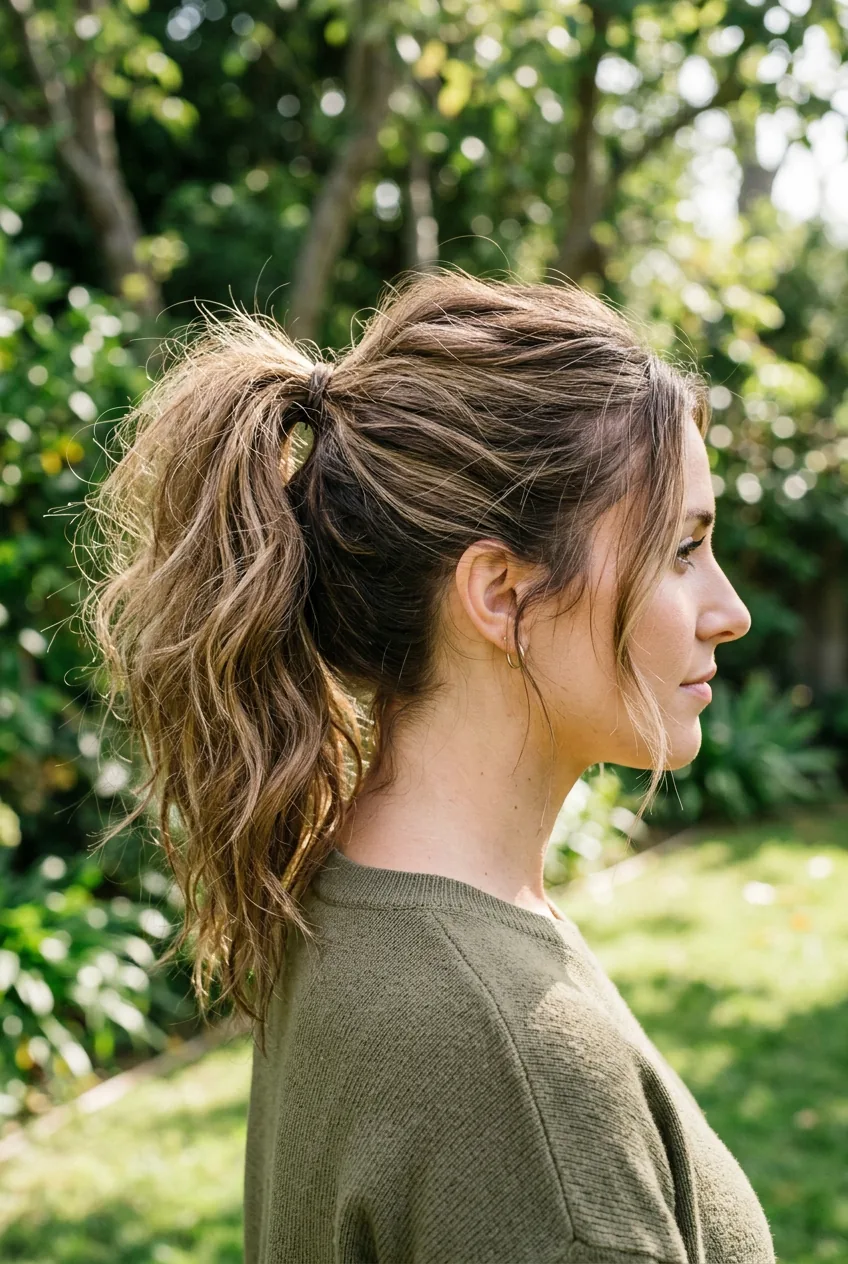
After that wedding, I became obsessed with cracking the messy ponytail code. Through trial and error (and way too many bad hair days), I figured out there are four non-negotiable rules:
Rule #1: Start with dirty hair. I know it sounds counterintuitive, but day-old hair has the perfect amount of grit and texture. Fresh, clean hair is too slippery and won’t hold the intentional messiness. Second-day hair is your sweet spot.
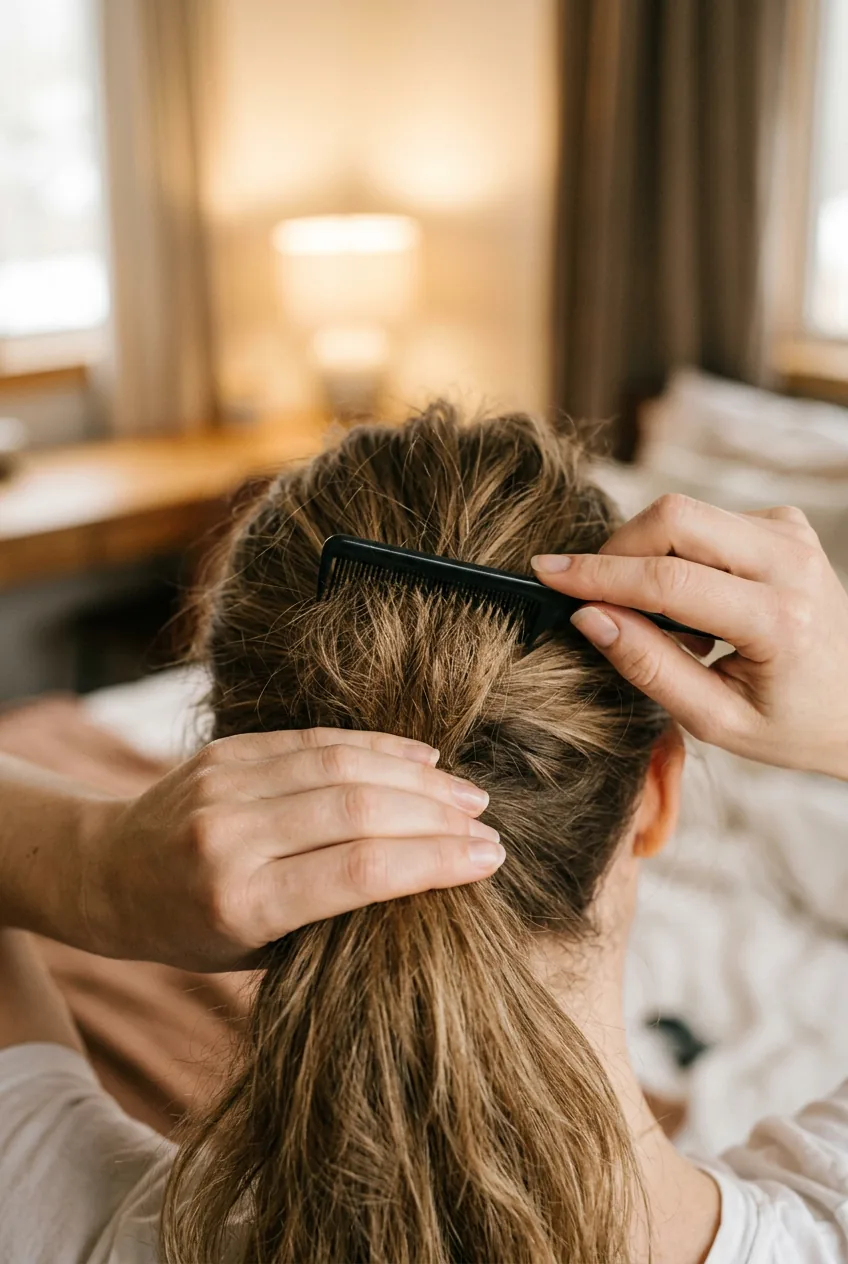
Rule #2: Tease before you tie. This was my game-changer. Gently backcomb the crown section before pulling everything back. It creates volume and prevents that flat-to-the-head look that screams “I gave up.” Just a few quick strokes with a fine-tooth comb — you’re not going for 1980s heights here.
Rule #3: The pancake method. After securing your ponytail, gently tug at sections to create width and texture. Think of it like adding strategic messiness. Pull at the crown, loosen pieces around your face, and don’t be afraid to create asymmetry.
Rule #4: Face-framing pieces are everything. Pull out a few strands around your hairline before you even start. These should be intentional, not accidental. The goal is to soften your face, not look like your ponytail is falling apart.
The key is controlled chaos. You want it to look effortless, but every “messy” piece should serve a purpose — whether that’s adding volume, softening your features, or creating movement.
Here’s the Technique in Action
Where I Am Now With My Hair

These days, my go-to ponytail takes about three minutes and looks infinitely better than those perfectly-smooth nightmares I used to create. I finally understand that the best hairstyles work with your hair, not against it.
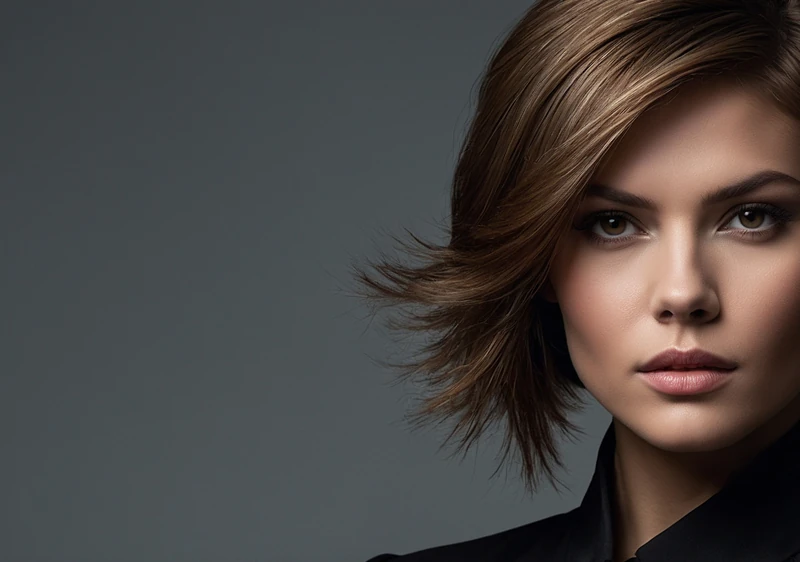
I’ve embraced texture in other areas too. Those edgy pixie cuts I used to think looked “messy”? Now I see the artistry in their deliberate imperfection. Same with natural curls, bedhead waves, and all those lived-in looks I used to dismiss.
My morning routine is so much easier now. Instead of fighting every flyaway and smoothing every bump, I work with what I’ve got. Some days my ponytail lands perfectly on the first try. Other days it takes two attempts to get the right amount of controlled messiness.
But here’s what I’ve learned: perfection isn’t the goal anymore. Movement is. Softness is. Looking like a real human being instead of a walking advertisement for hair gel.
The messy ponytail taught me that sometimes the most beautiful things happen when you stop trying so hard to control everything. In hair, and honestly, in life too.
Questions I Get About This
How do you make a messy ponytail stay put all day?
The secret is using the right elastic and not making it too loose. I use those clear, thick elastics that don’t slip, and I wrap them three times instead of trying to get away with two. Proper securing techniques make all the difference in longevity.
Does this work on fine hair?
Absolutely, but you need to adjust your approach. Fine hair actually holds texture better than thick hair sometimes. Use a texturizing spray before you start, and don’t be afraid to tease more aggressively at the crown. The key is creating the illusion of fuller hair.
What if my hair is too short for a ponytail?
You can adapt these same principles to shorter styles. Focus on the texturing and face-framing pieces. Even a half-up style can benefit from that intentional messiness. It’s more about the attitude and technique than the length.
How messy is too messy?
If pieces are falling out unintentionally or it looks genuinely unkempt (not artfully tousled), you’ve gone too far. The goal is controlled imperfection. Each “messy” element should look like it belongs there, not like an accident.