







Last Tuesday, I had fifteen minutes before a Zoom call and thought I’d whip up one of those “effortless” buns I see everywhere. Forty-five minutes later, I was still wrestling with bobby pins and questioning my entire existence. Sound familiar? The world of easy hair updos is full of beautiful lies, and I’m here to tell you the messy truth.
The 20-Minute “Quick” Updo That Takes 45
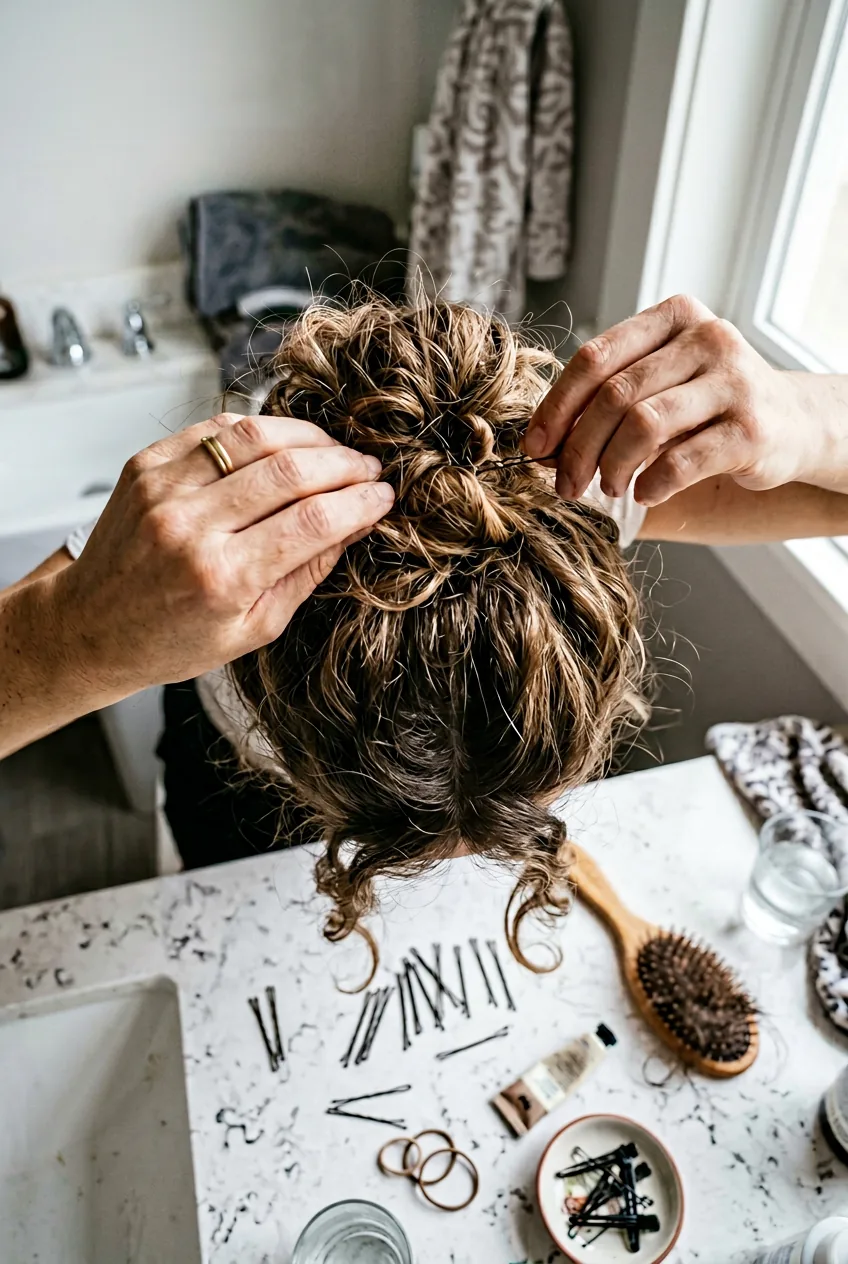
Here’s what really happens when you attempt that “super easy” twisted bun. You gather your hair — easy enough. You twist it around — sure, that part works. But then you try to secure it and suddenly you need three hands. The twist unravels while you’re reaching for bobby pins. Your arm starts cramping from holding it overhead.
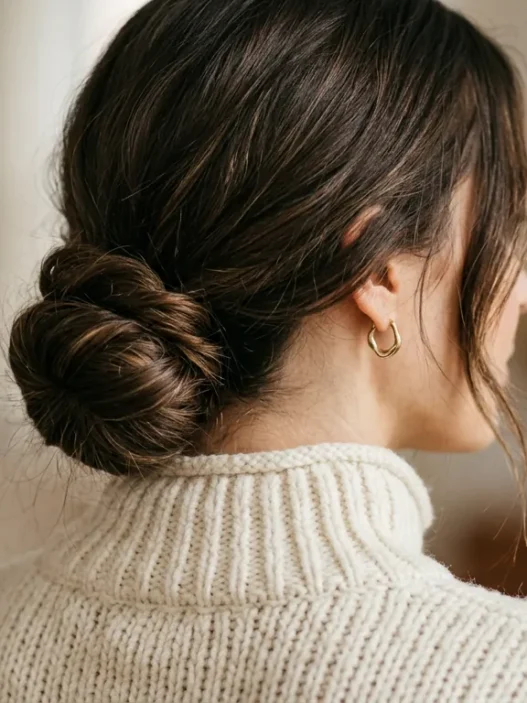
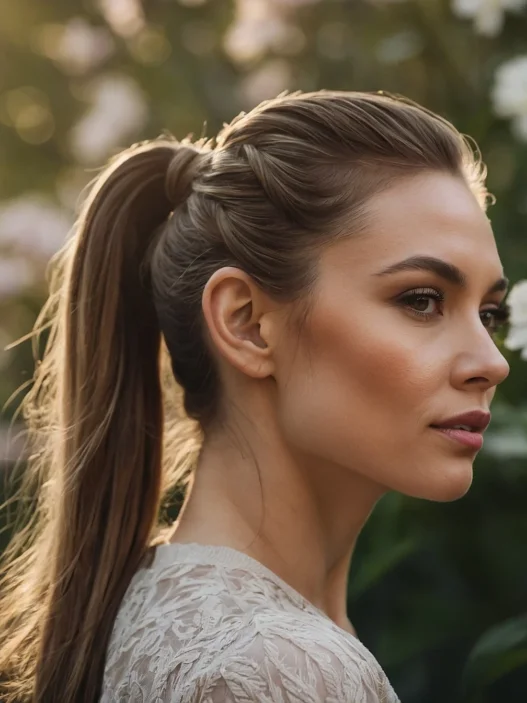
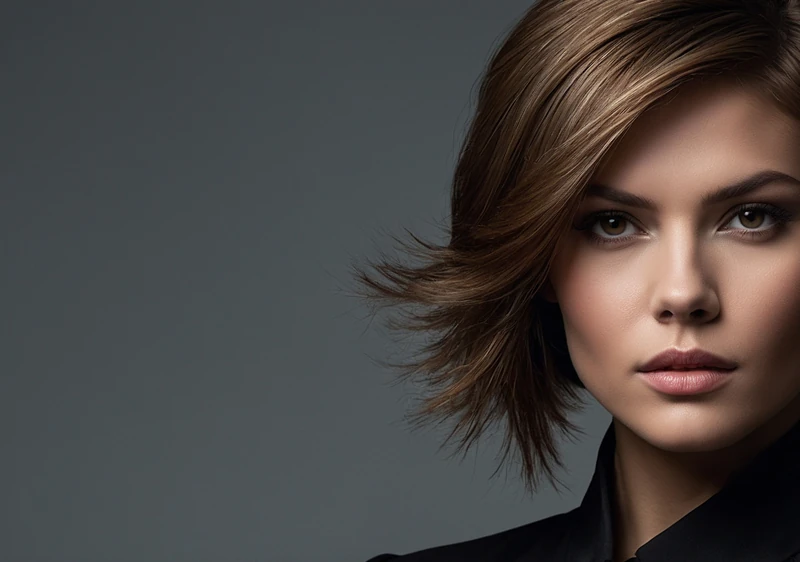
The woman in the photo makes it look effortless, but notice how perfectly placed every strand is? That didn’t happen accidentally. I’ve learned that “easy” updos require a specific technique for holding the hair while securing it. You have to twist tighter than feels natural, then use your non-dominant hand to hold everything in place while your dominant hand does the pinning work.
And here’s the kicker — your hair texture matters more than anyone admits. Fine hair slips out of twists. Thick hair creates too much bulk. Curly hair has its own agenda entirely. The “easy” part only applies if your hair behaves exactly like the model’s.
What They Don’t Show You in Tutorials
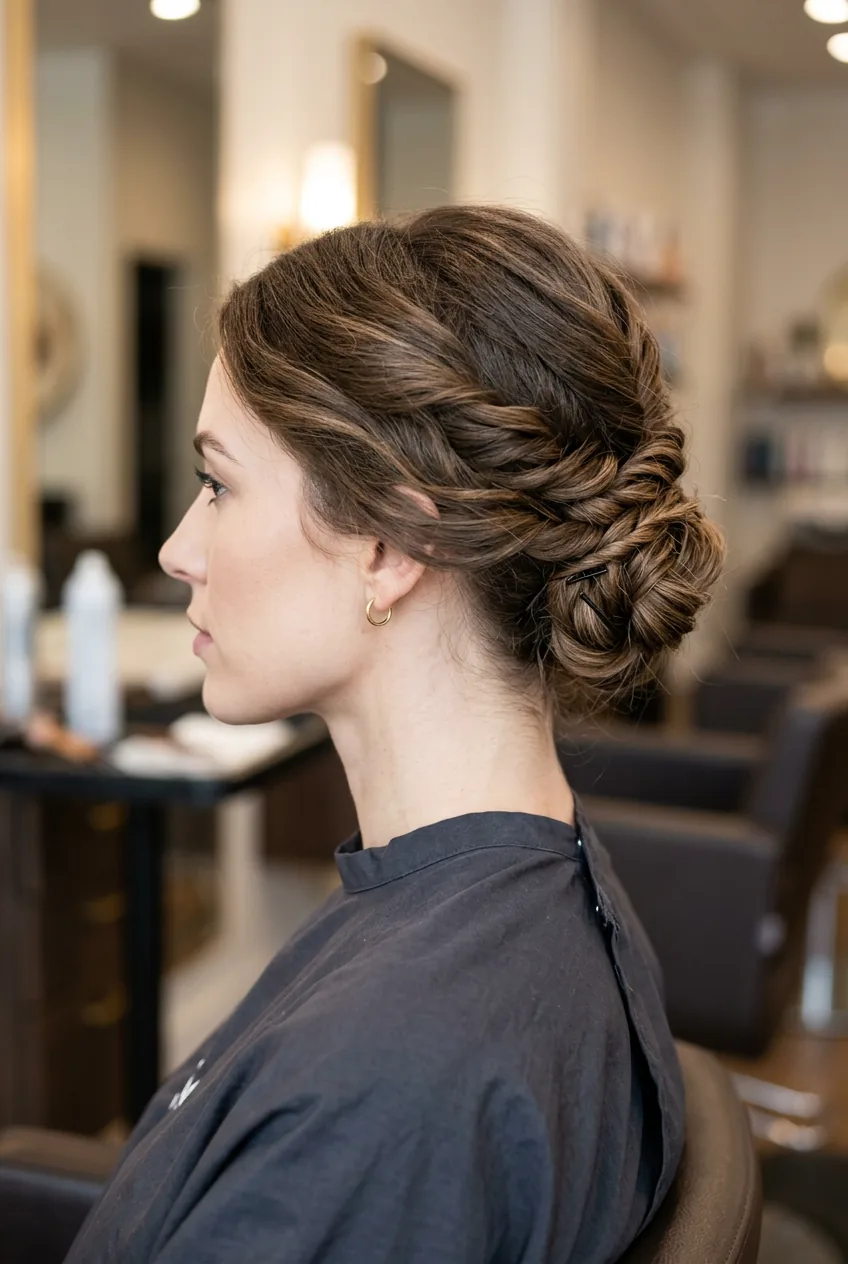
Those seamless tutorial videos? They’re lying by omission. Nobody shows you the prep work. The texturizing spray that gets applied beforehand. The fact that this is probably take number six, and the model’s hair has been professionally prepped.
Real talk: your hair needs to be slightly dirty to hold an updo properly. Day-old hair with some texture spray works infinitely better than freshly washed, silky strands. I learned this the hard way after multiple slippery failures on clean hair.
They also don’t show you fumbling with bobby pins for five minutes. Or the moment when you think you’ve got it secured, only to have half the style collapse when you let go. The editing makes it look like one smooth motion, but there’s always pausing, readjusting, and starting over.
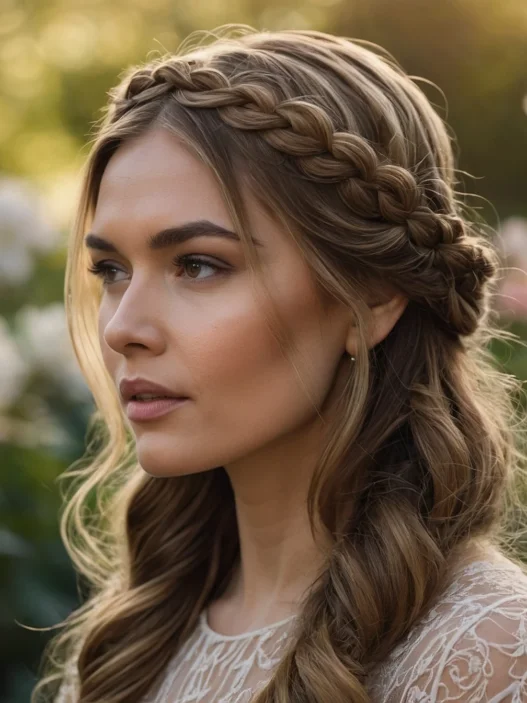
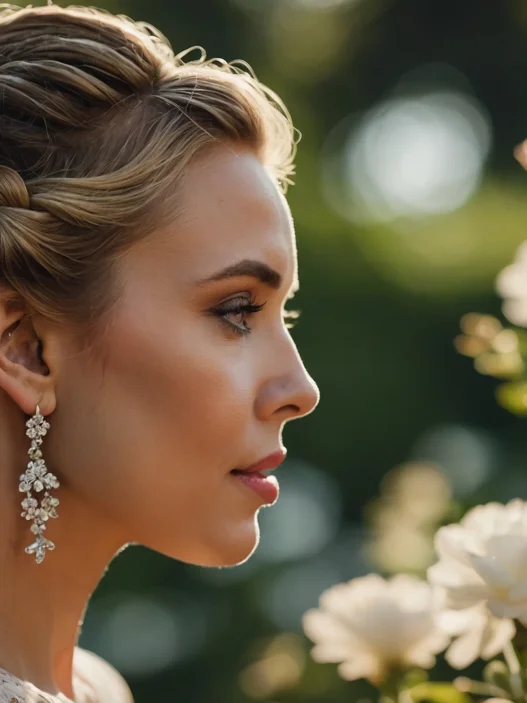
For special occasions, you might want something more elaborate than these everyday styles. Romantic braided updos require even more prep time, but they’re worth it for events.
The Secret Nobody Mentions About Grip
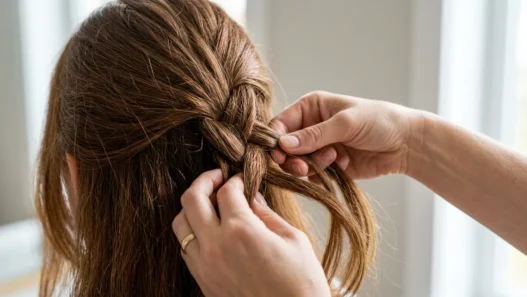
The biggest revelation I’ve had about updos? It’s all about the foundation grip. Before you even think about the pretty twisted parts, you need to create a secure base. This means sectioning your hair, creating a ponytail or half-up section first, then building your updo on top of that anchor point.
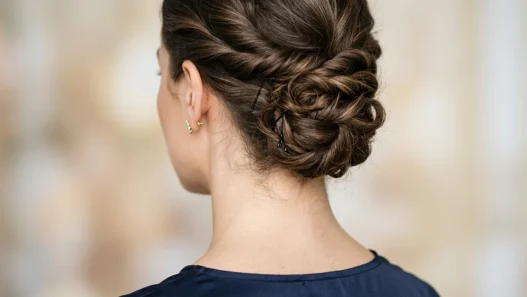
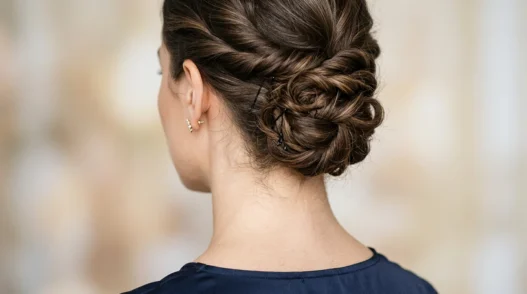
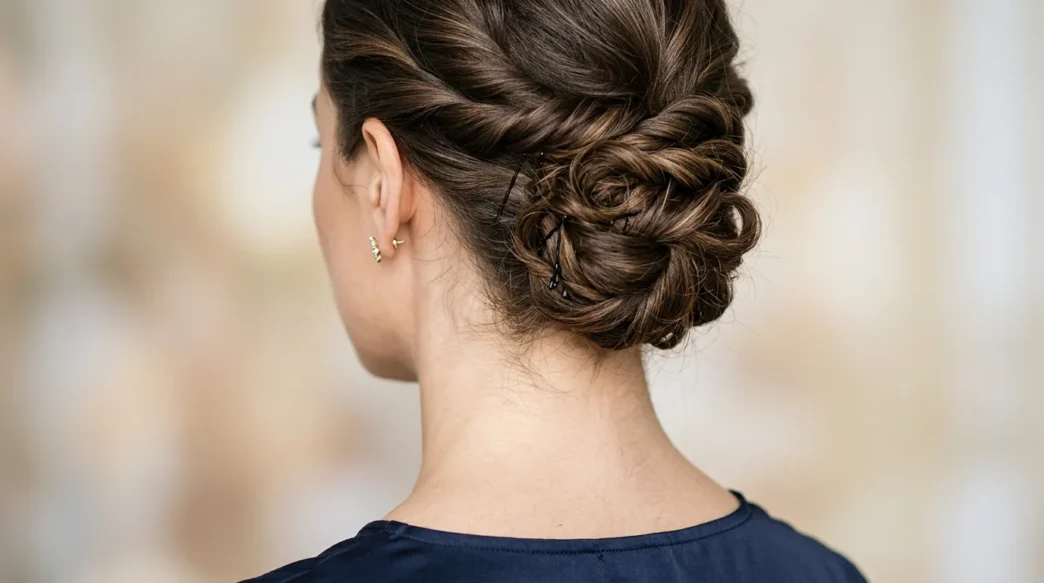
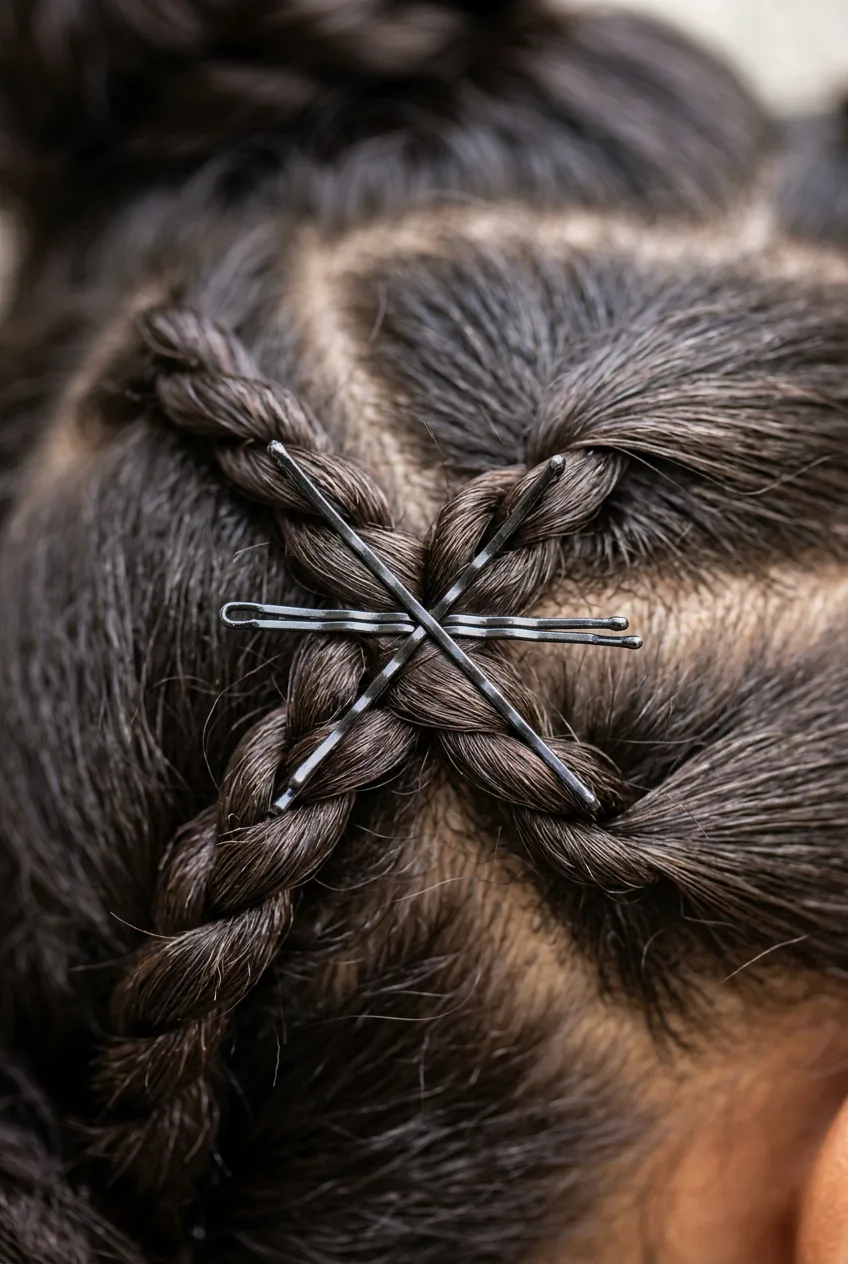
Look at how she’s positioned the pins in this image — they’re not just stuck in randomly. Each bobby pin crosses over another one, creating an X pattern that locks the hair in place. This is the technique they skip in those “quick and easy” tutorials because it takes time to explain properly.
I also discovered that professional-grade bobby pins make a massive difference. The cheap drugstore ones are too weak and smooth. Invest in pins with a matte finish and better grip — they’ll actually stay put and do the work you need them to do.
Here’s my controversial opinion: most “easy” updos aren’t actually easy — they’re just simplified versions of complex styles. The truly easy ones? They look messy on purpose, because perfect takes forever.
Why Your Hair Falls Down (And How to Fix It)
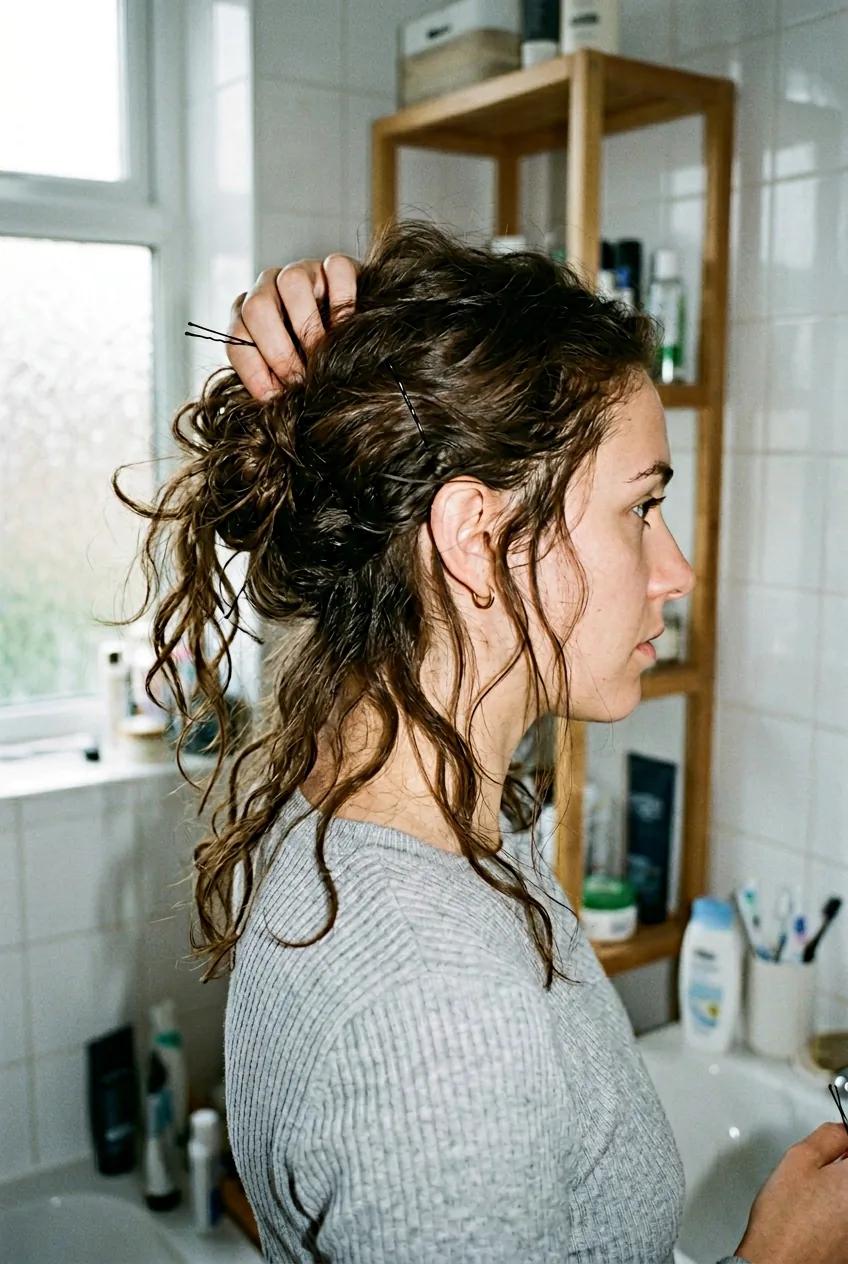
Let me tell you about gravity — it’s not your friend when it comes to updos. Your hair has weight, and physics will win every time if you don’t plan for it. The reason professional updos last all day isn’t magic; it’s strategic engineering.
Short answer: you’re not using enough bobby pins. I used to think five or six pins would do it. Wrong. A proper updo needs twelve to fifteen pins minimum, sometimes more. Each section needs to be pinned individually, and then you need extra pins for insurance.
The other culprit is pin placement. You can’t just shove them in wherever. They need to grip the scalp hair underneath, not just the surface layer. This means pushing the pin down through the updo and catching some of your natural hair at the root level. Professional styling techniques can teach you the proper angles.
And here’s what nobody warns you about — hairspray timing. If you spray before styling, the hair becomes too slippery to work with. If you wait until after, it might be too late to fix any loose pieces. The sweet spot is light texturizing spray before, then finishing spray after.
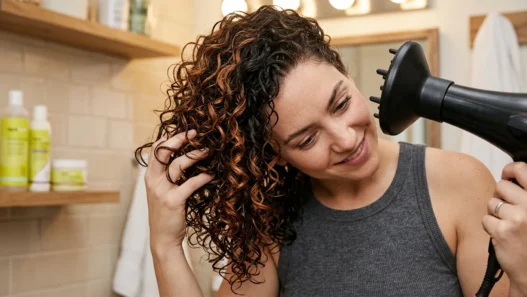
If you’re working with naturally curly hair, you have different challenges entirely. Curly updos work with the texture instead of against it, but they require their own set of techniques.
The Part That Takes the Longest
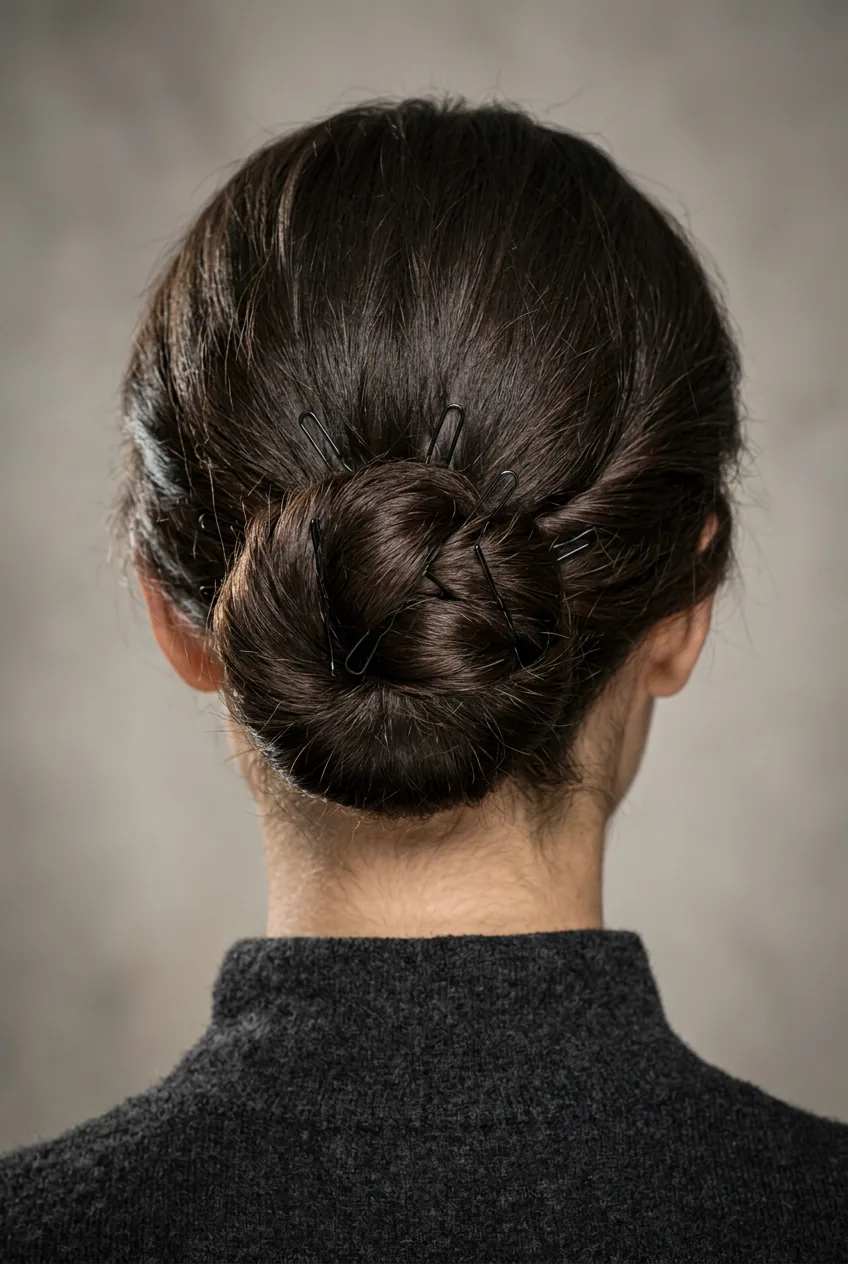
Want to know the most time-consuming part of any updo? It’s not the twisting or the pinning. It’s the fixing. Those little pieces that won’t lay flat. The sections that stick out at weird angles. The baby hairs that have their own agenda.
This is where I spend at least ten minutes per updo — just troubleshooting. Smoothing down flyaways. Re-pinning sections that looked secure but aren’t. Adjusting the height or tightness because something doesn’t look quite right.
Professional stylists make this look effortless because they’ve done thousands of updos. They know which pieces to leave deliberately messy and which ones need to be perfectly smooth. They can spot structural problems before they become disasters.
But here’s the thing — once you accept that updos take practice and patience, they become genuinely useful. I can create a presentable bun for work meetings. I can do something fancier for dinner out. The key is managing expectations and giving yourself enough time to work through the process.
The reality is that “easy” updos become easy only after you’ve done them wrong fifteen times. Each disaster teaches you something new about your hair’s personality and what works for your lifestyle. Common styling mistakes are part of the learning process, not a sign that you’re hopeless at this.
Questions I Get About This
Why do my updos always look messy compared to tutorials?
Tutorials use models with perfectly prepped hair and professional lighting. Your bathroom mirror and rushed morning routine create different results. Focus on techniques that work for your hair texture instead of copying exactly what you see.
How many bobby pins should I actually use?
For a simple bun, plan on 12-15 pins minimum. Complex updos can need 20 or more. If it feels like too many, you’re probably using the right amount. Better to over-pin and have it stay put all day.
Should my hair be clean or dirty for updos?
Day-old hair works best because it has natural texture and grip. If you must start with clean hair, use texturizing spray or dry shampoo first to create some friction and hold.
What’s the biggest updo mistake beginners make?
Not creating a secure foundation. People jump straight to the decorative twisting without establishing a solid base like a ponytail or half-up section. The foundation is what actually holds everything up.
So there you have it — the unvarnished truth about easy hair updos. They’re not as easy as promised, but they’re absolutely achievable once you know what you’re actually signing up for. Give yourself grace, stock up on bobby pins, and remember that even stylists had to start somewhere.