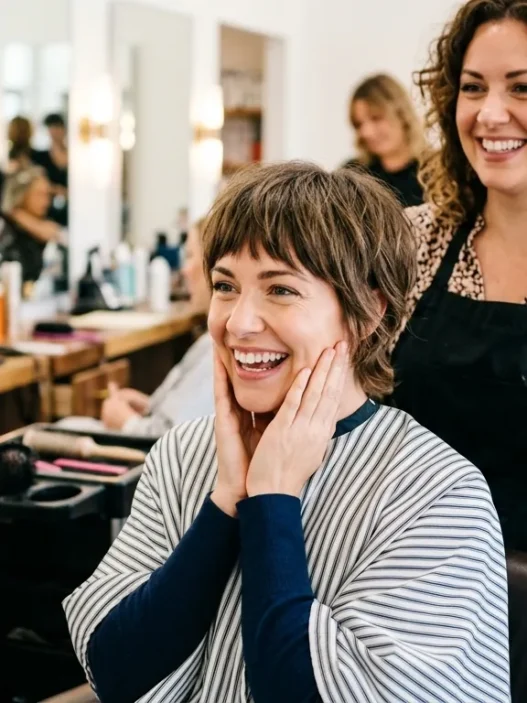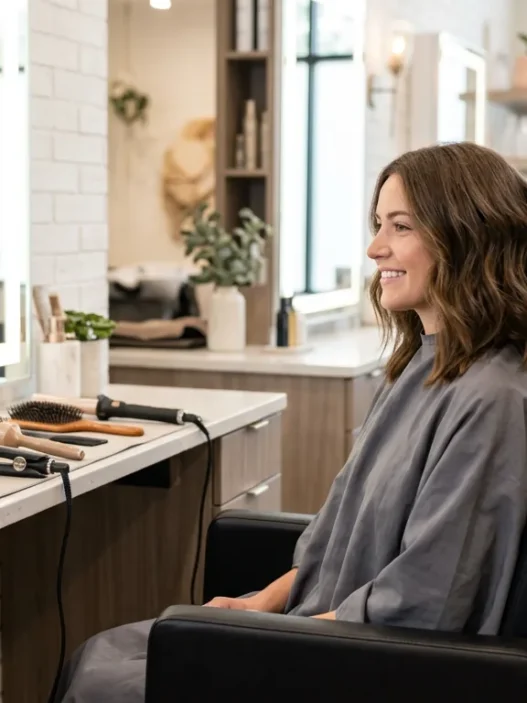









I spent years believing I had to hide behind blunt bangs because of my forehead. Every stylist would automatically suggest straight-across fringe, and I’d leave feeling more covered up than confident. Then I met a colorist who looked at me like I was crazy when I asked for “forehead-hiding bangs” and everything changed.
Myth: Straight-Across Bangs Are Your Only Option
This is the biggest styling trap I see women fall into. The logic seems sound — straight bangs create a horizontal line that “shortens” your forehead. But here’s what really happens: blunt bangs make your forehead look like it’s hiding behind a curtain.
I tried every variation of straight bangs for three years. Micro bangs that looked like I cut them with safety scissors. Heavy fringe that required daily straightening. Wispy versions that never stayed put. They all had the same problem — they created a harsh line that actually emphasized what I was trying to minimize.
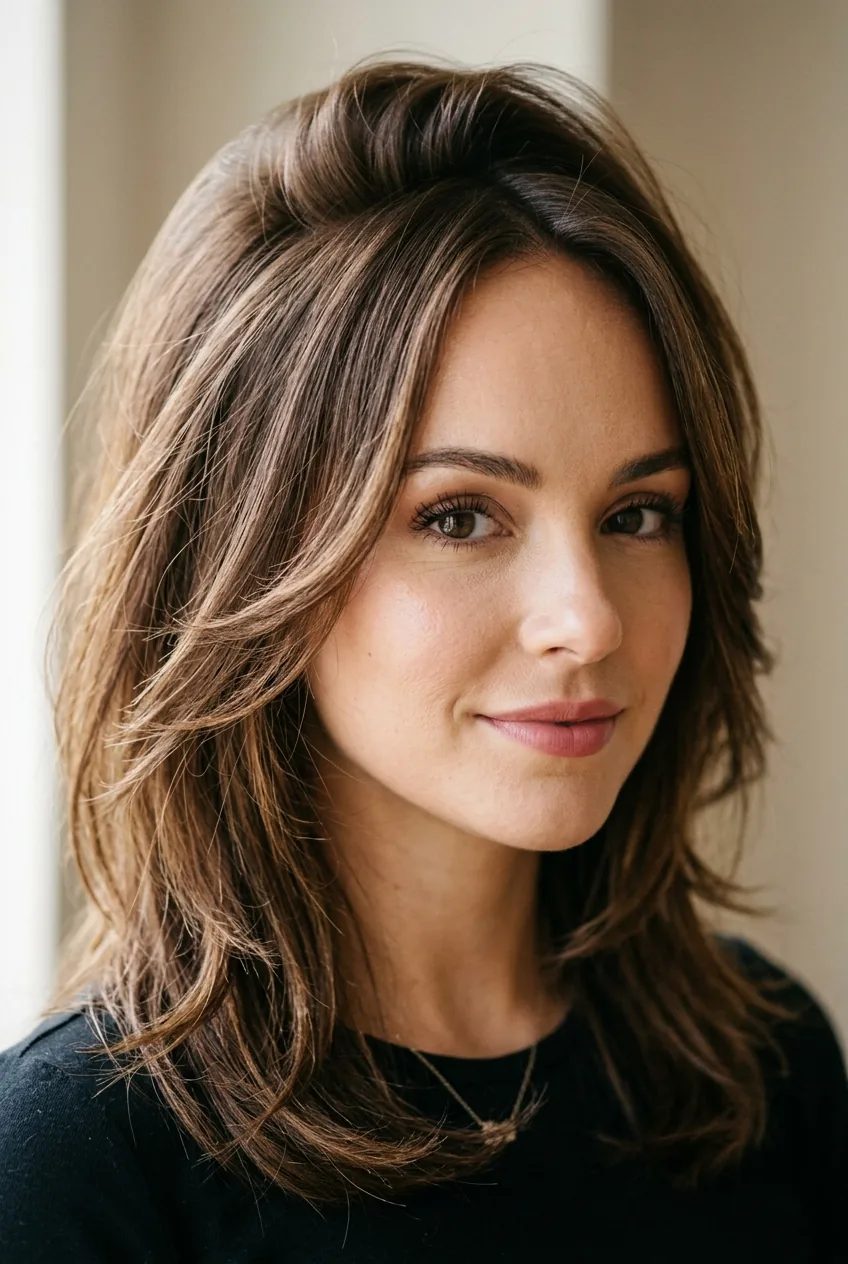
The real solution? Thick hair hairstyles with textured, piece-y bangs that blend into face-framing layers. When you break up that horizontal line, your forehead becomes part of your overall face shape instead of something you’re actively hiding.
What Actually Works: Strategic Volume
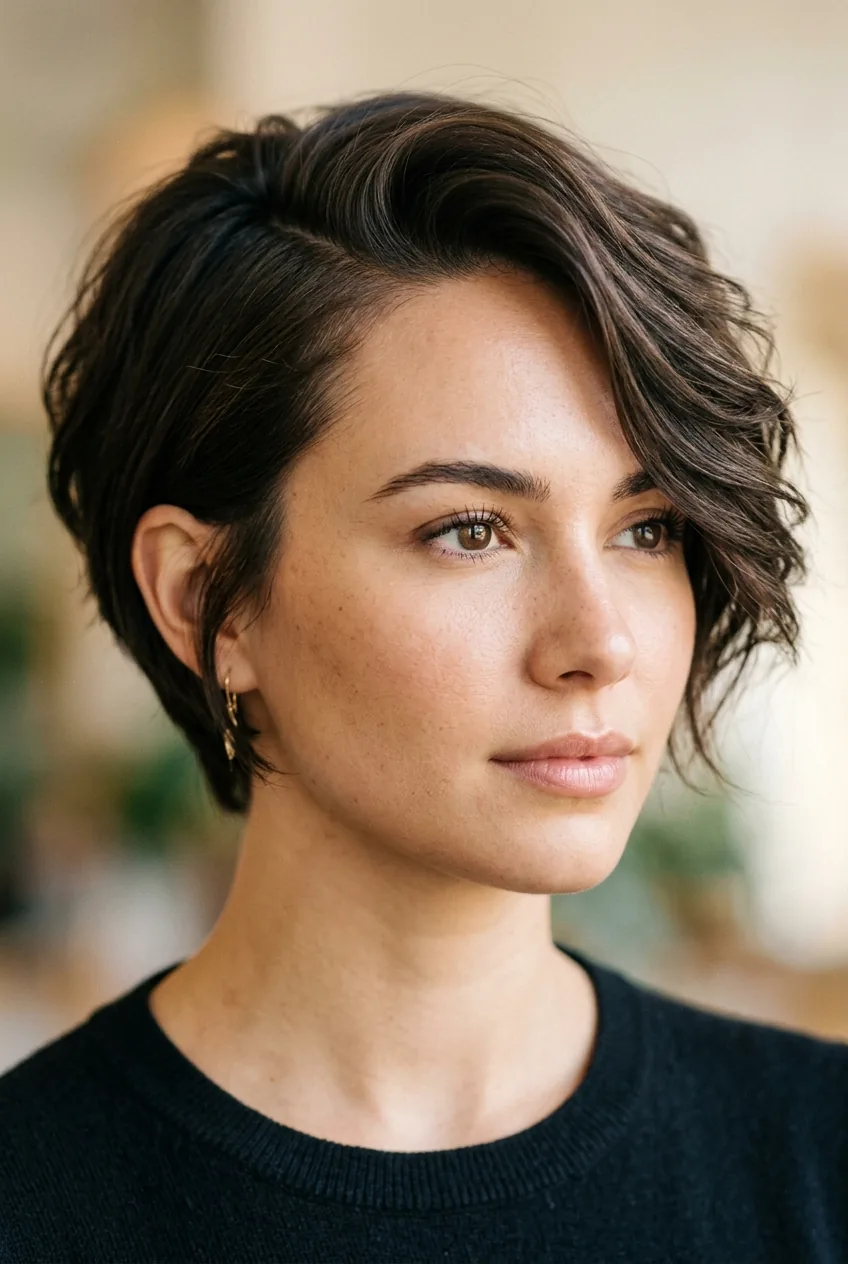
Everyone told me to avoid volume on top because it would “make my forehead look bigger.” Wrong, wrong, wrong. Strategic volume is actually your secret weapon, but it’s all about placement.
The key is creating volume that starts about two inches back from your hairline, not right at the roots near your forehead. Think of it like an invisible headband area where you want lift and texture. This creates the illusion of a balanced oval face shape by adding width through the crown area.
I learned this from watching how celebrities style larger foreheads — they never go flat on top. Even when they’re wearing their hair sleek, there’s always subtle height that starts mid-crown. It’s about proportions, not hiding.
My Volume Technique
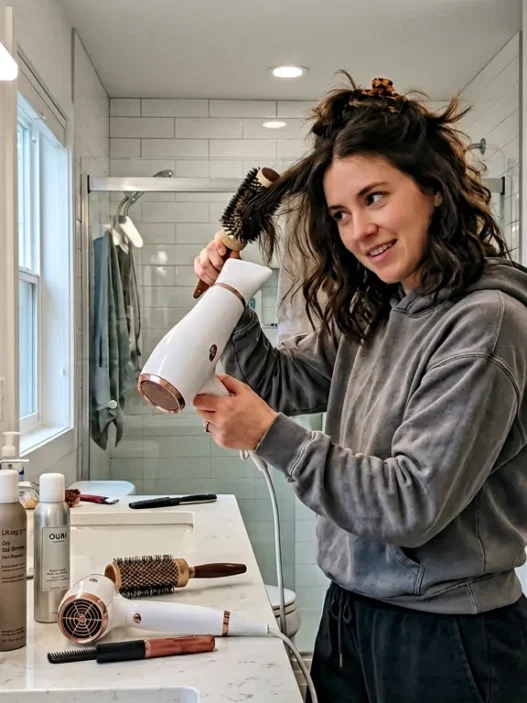
Here’s what I do every morning: I flip my head upside down and blast the crown area with my blow dryer for 30 seconds. Then I use a small round brush to create lift specifically in that mid-crown zone. No teasing, no backcombing — just strategic lift where it matters most.
The Biggest Lie: You Need to Hide Everything

“Your forehead isn’t a flaw to fix — it’s part of what makes your face uniquely beautiful.”
This mindset shift changed everything for me. When I stopped trying to hide my forehead and started working with my natural proportions, I finally found cuts that made me feel confident instead of camouflaged.
The truth is, some of the most stunning faces have prominent foreheads. Rihanna. Tyra Banks. Reese Witherspoon. They don’t hide behind heavy bangs — they embrace strategic styling that enhances their features.
Instead of covering everything up, try these techniques:
- Soft, wispy pieces that graze your forehead without creating a wall
- Side-swept elements that draw the eye diagonally instead of horizontally
- Textured layers that create movement and visual interest
- Strategic highlights that add dimension around your face
Truth About Face-Framing
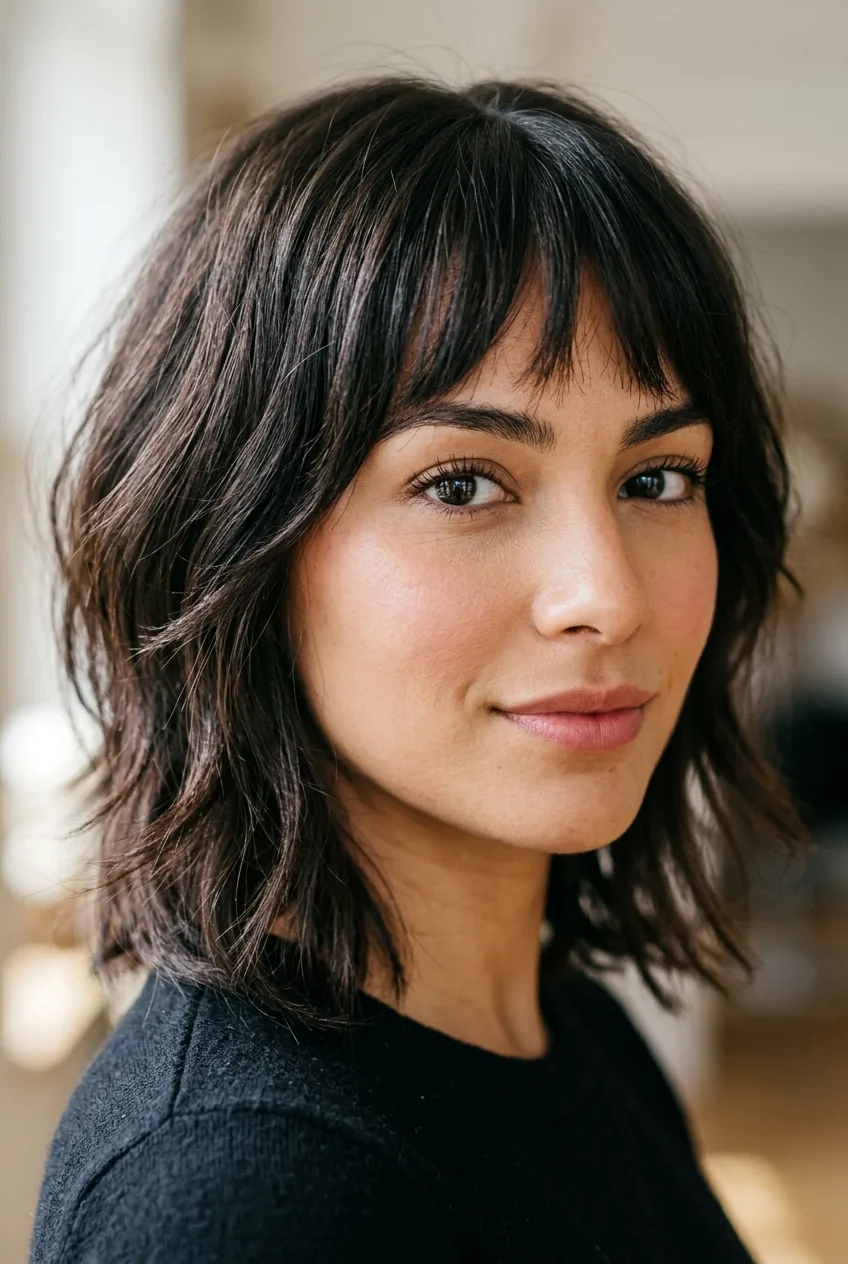
Face-framing layers are everything for bigger foreheads, but most people get them completely wrong. The mistake? Starting the layers too high or making them too chunky.
Proper face-framing for our face shape should start at cheekbone level, not at your temples. These longer pieces create a soft curtain effect that naturally narrows your face width while adding movement that’s way more flattering than blunt lines.
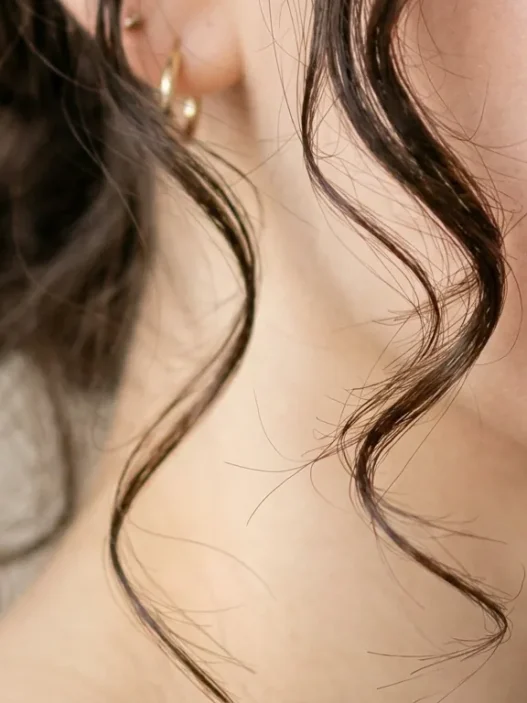
I love how professional layering techniques emphasize the importance of graduated lengths. Each piece should be slightly different — some hitting at your jawline, others grazing your collarbone. This creates that effortless, lived-in texture that makes any cut look more expensive.
And here’s something most stylists won’t tell you: the angle matters more than the length. Pieces that angle forward toward your face are more flattering than ones that angle back toward your ears. It’s subtle, but it makes a huge difference in how the layers interact with your facial structure.
Why Side Parts Beat Center Parts

Center parts are having a moment, but they’re not your friend if you have a larger forehead. Here’s why: that straight line down the middle creates a visual highway that leads directly to… your forehead.
Side parts, especially deep ones, are magic for our face shape. They create asymmetry that’s naturally more interesting to look at, and they allow you to sweep more hair across your forehead area without looking like you’re hiding behind bangs.
My favorite ratio is about 70/30 — definitely not subtle, but not so extreme that it looks like a combover. The heavier side should fall naturally forward, creating that face-framing effect I mentioned earlier.
For occasion hairstyles, I’ll sometimes exaggerate this even more with a dramatic side part that starts almost at my ear. It sounds extreme, but it creates this gorgeous swooping effect that’s way more glamorous than trying to hide behind perfectly symmetrical hair.
Finding Your Perfect Part
Here’s a trick I learned from my colorist: your natural part isn’t necessarily your most flattering part. Use the end of a rat-tail comb to try different positions. Start with a deep side part and gradually move it toward center until you find the sweet spot where your hair falls naturally but still creates that flattering asymmetry.
Questions I Get About This
Will these techniques work on fine hair?
Absolutely. Fine hair actually benefits more from these techniques because you’re working with texture and movement instead of trying to create bulk with blunt cuts. Use a volumizing mousse at the roots and focus on that strategic crown lift I mentioned.
How do I explain this to my stylist?
Bring photos of what you want, not what you don’t want. Show them examples of textured bangs, face-framing layers, and strategic volume. Most stylists default to “forehead hiding” techniques because that’s what clients usually ask for.
What if I have cowlicks?
Cowlicks are actually your friends when it comes to creating natural-looking texture. Work with them instead of against them — they’ll help create that piece-y, lived-in texture that looks so much better than perfectly smooth hair.
How long does it take to style this way?
Once you get the cut right, it’s actually easier to style than blunt bangs. I spend maybe five minutes with a blow dryer and round brush focusing on that crown area, then run some texturizing cream through the ends. No flat ironing or precise bang trimming required.
The biggest revelation for me was realizing that confidence comes from working with your features, not against them. These techniques aren’t about hiding anything — they’re about creating balance and movement that makes your entire face look more harmonious. Trust me, once you stop fighting your forehead and start styling strategically, you’ll wonder why you spent so many years hiding behind those blunt bangs.