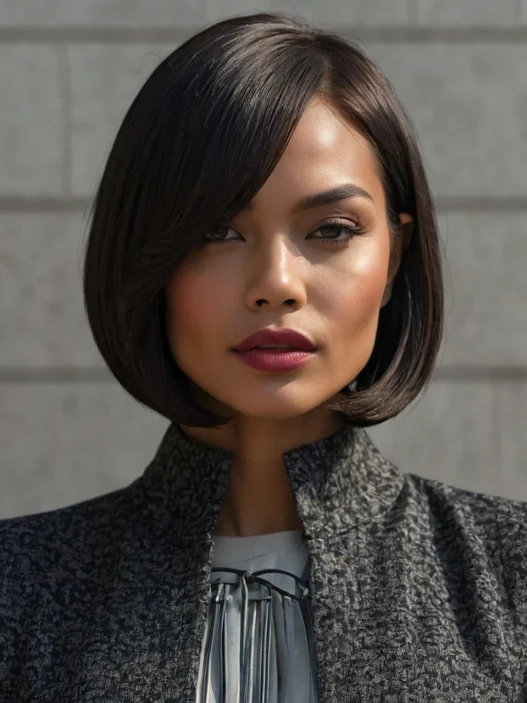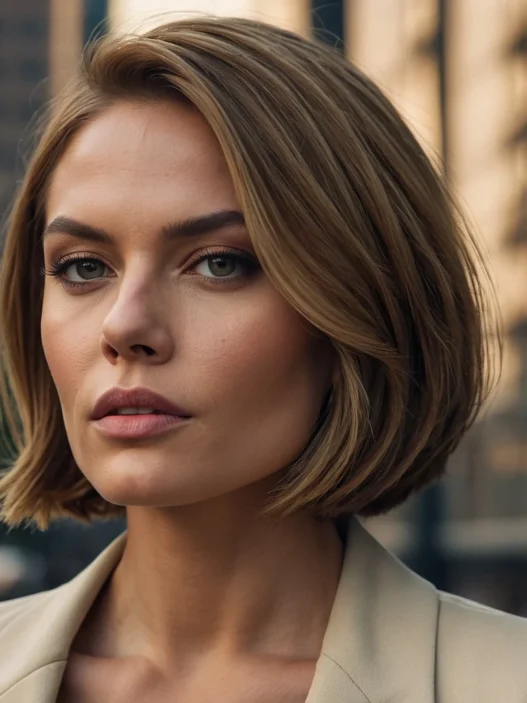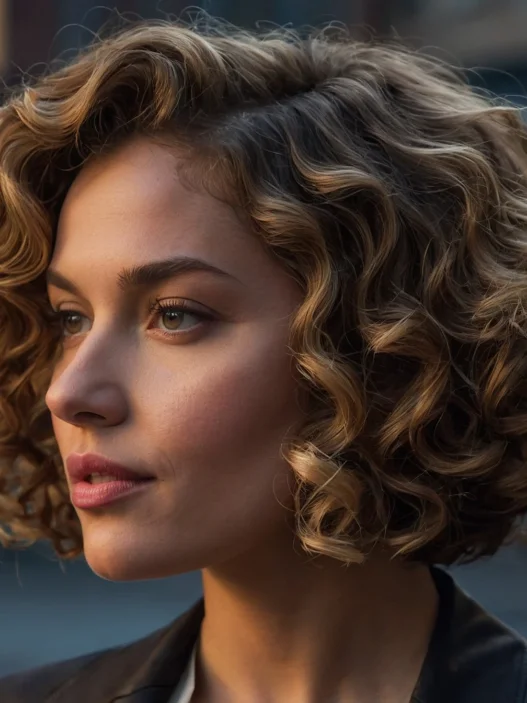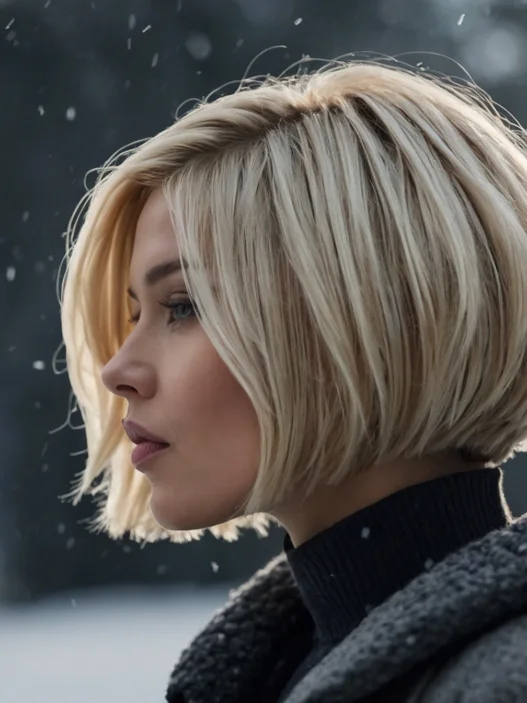







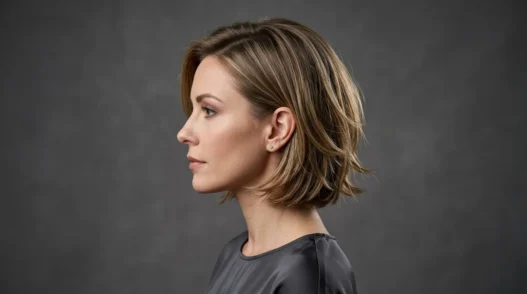
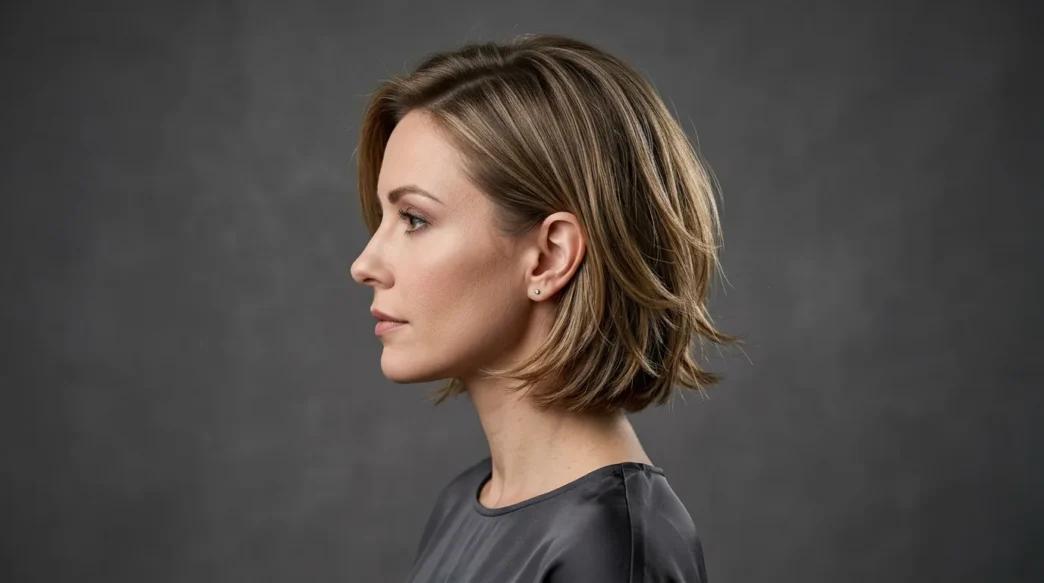
I’ve been a little obsessed with the 90s layered bob revival happening right now — and honestly, I don’t think it ever fully left. It just needed a decade or two to feel fresh again. What I love most about this cut is how adaptable it is. The layers do different things depending on where they’re placed and how you part the hair, which means it genuinely works across face shapes. Not every cut can say that. So I broke it down by face shape, because a one-size-fits-all approach to haircut advice has always annoyed me.
1. For Round Faces — Lengthening the Line
The goal with a round face is to create the illusion of length — and the 90s layered bob is genuinely great at this when styled the right way. The key is keeping the layers long enough that they graze the jaw or fall just below it. A chin-length bob with heavy blunt layers can actually widen a round face, so the 90s version works better here because the interior layering removes bulk and adds vertical movement.
A deep side part is your best friend. It disrupts the symmetry in a way that adds length to the face. Think of the way so many 90s icons wore their bobs — slightly off-center, with that one curtain of hair falling across the forehead. That asymmetry does a lot of visual work. Pair that with face-framing pieces that angle forward toward the chin and you’ve got a really flattering combination.
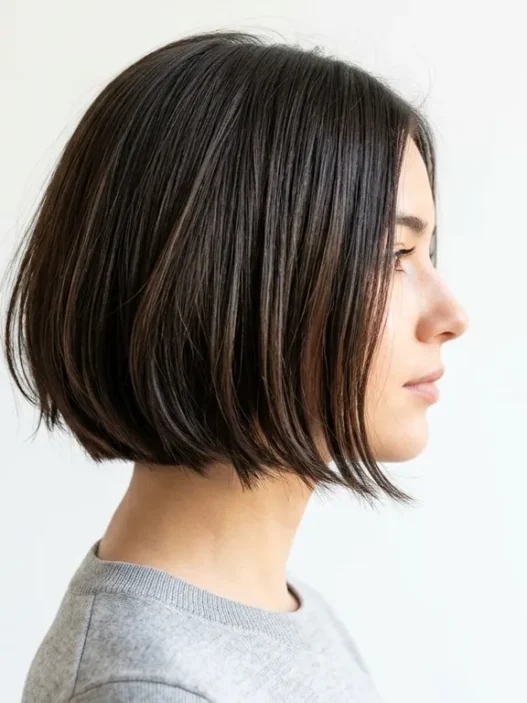
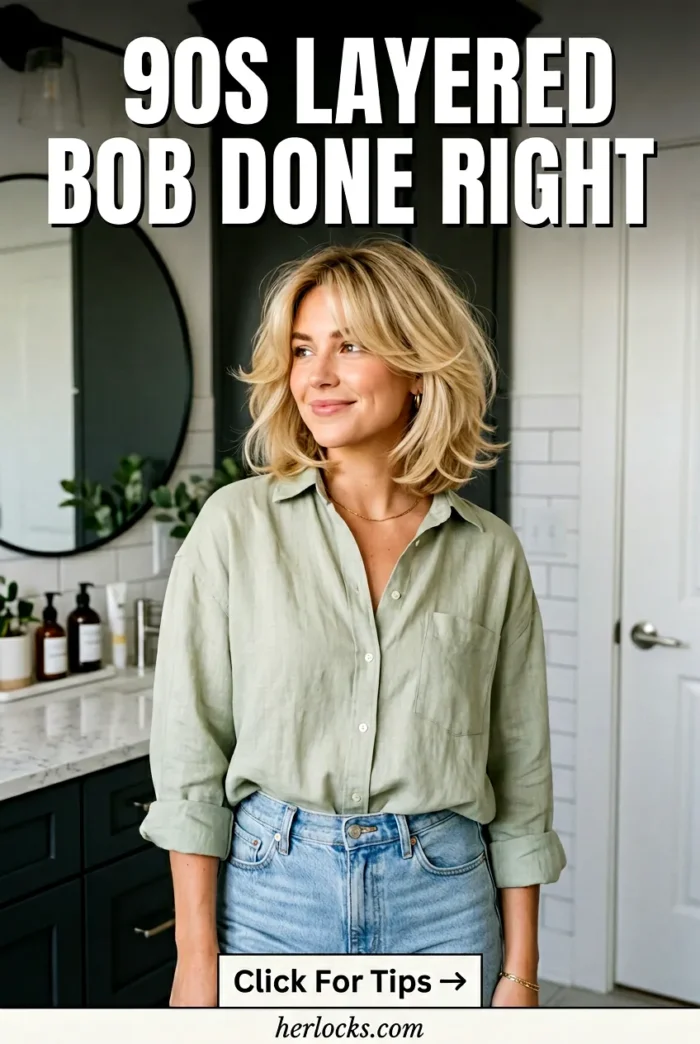
Look at how she’s wearing hers in the photo — that slight forward-angled layer hitting just below the jaw is exactly what I mean. It draws the eye down and creates a longer silhouette. You can also explore stylish bob hairstyles that use similar length-forward techniques if you want more visual references.
2. For Square Faces — Softening Angles
Strong jaw? The 90s layered bob can either fight it or work with it — and working with it is so much more interesting. The layering in this cut naturally creates movement and softness around the lower half of the face, which is exactly what a square face benefits from. You want the layers to wave or bend slightly outward rather than lying flat and blunt against the jawline.
Wispy, feathered ends are the real MVP here. Very 90s, very flattering. When a stylist texturizes the ends — especially around the jaw — it breaks up that sharp horizontal line. A middle part can work beautifully on square faces too, because it draws attention upward and elongates. Add soft curtain bangs and suddenly you’ve softened the whole frame of the face without hiding anything.
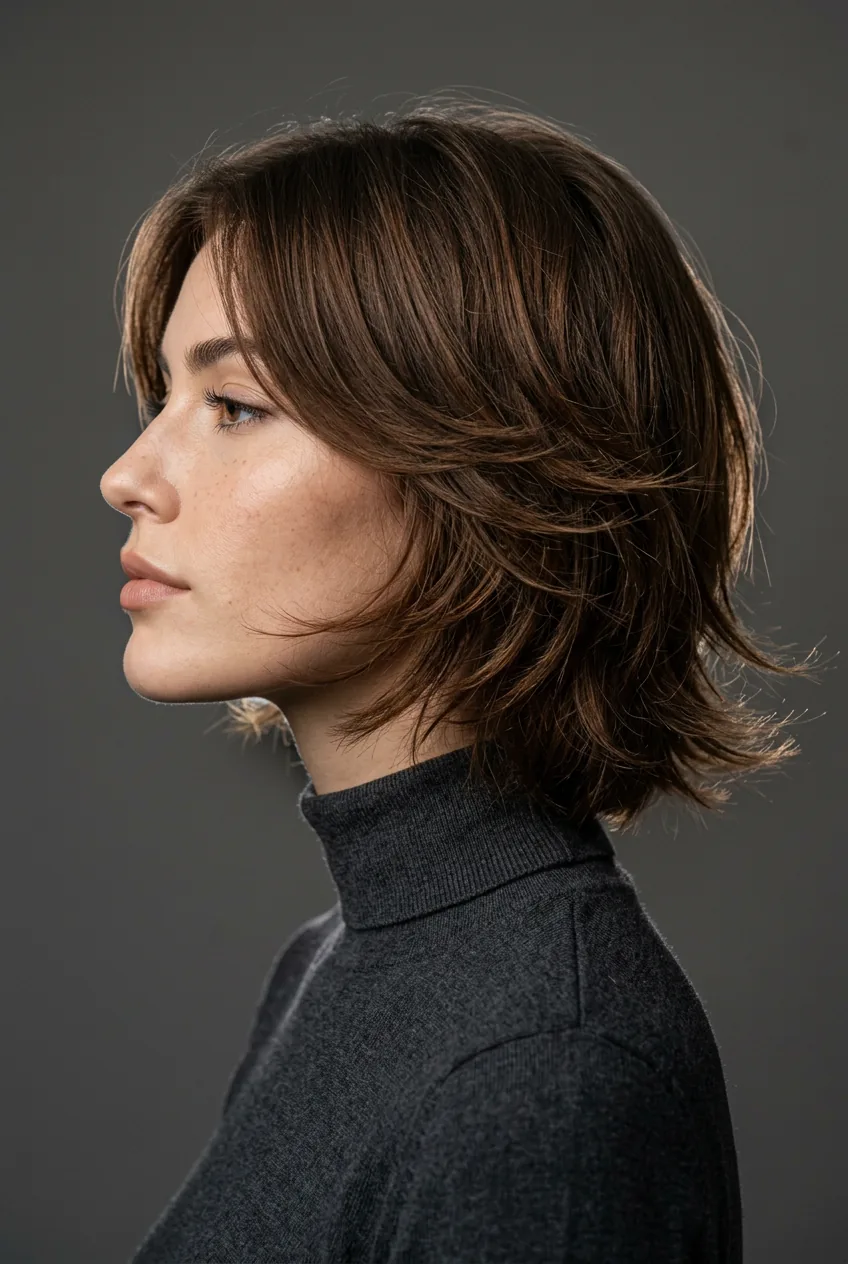
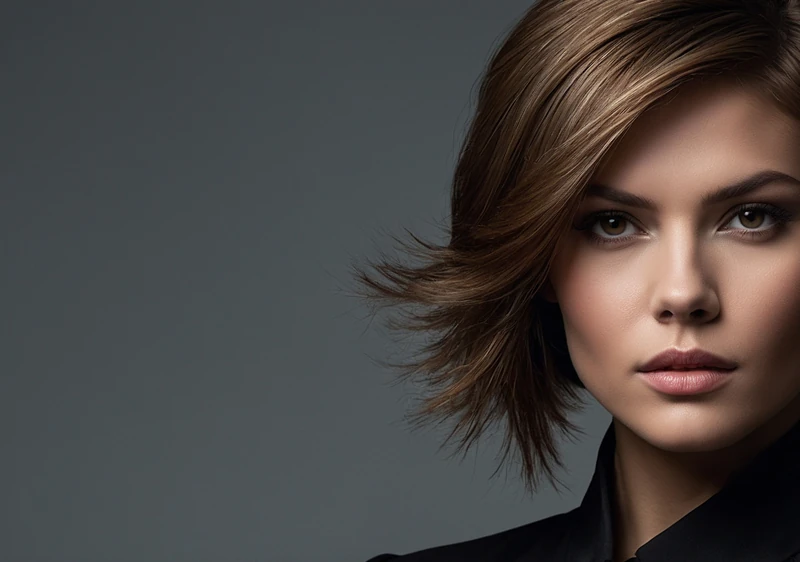
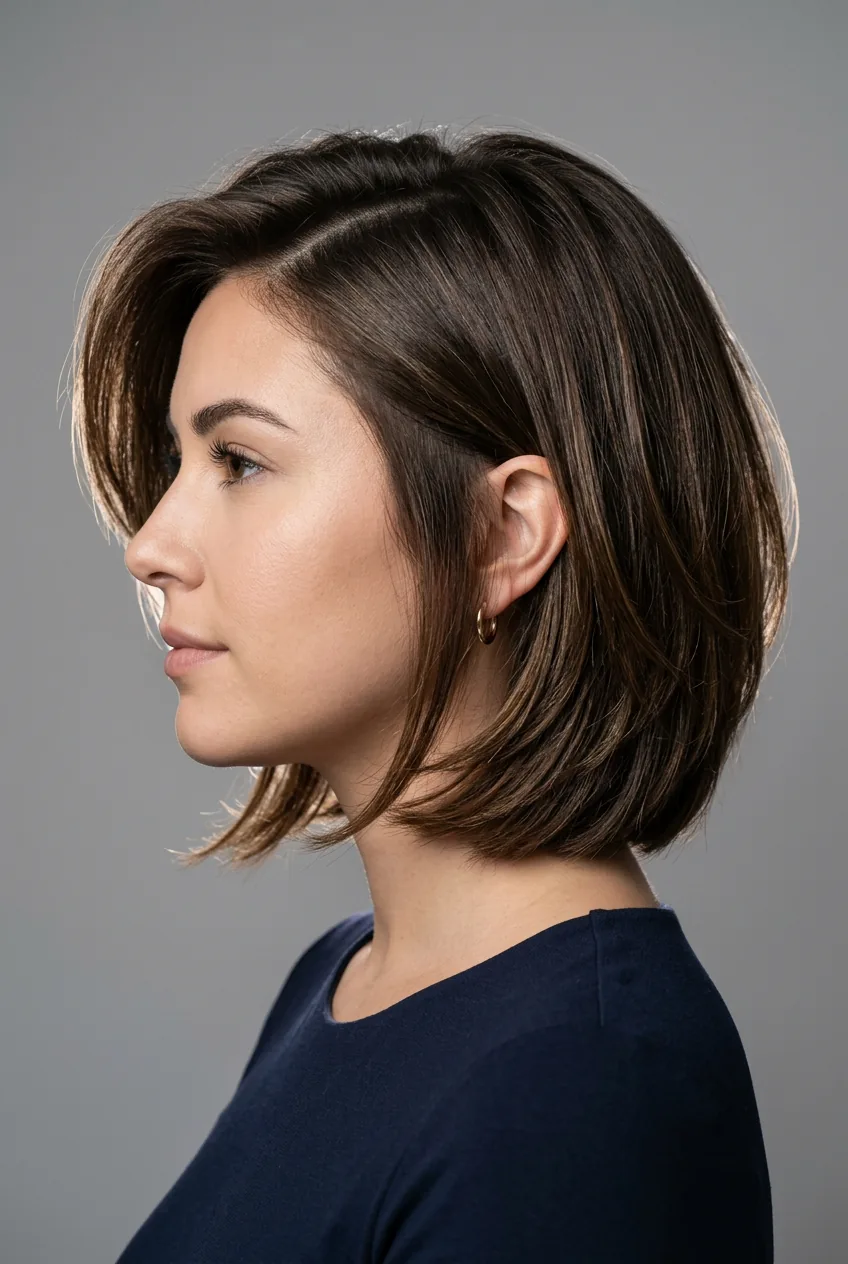
She’s got a strong jaw in this image, and see how those wispy layers dancing outward at cheek level completely soften the whole look? That’s the texture doing its job. Texture spray styling can help recreate that lived-in, slightly tousled 90s movement at home.
A Stylist Walk-Through That Actually Clicked for Me
3. For Heart Shapes — Balancing the Jaw
Heart-shaped faces have a wider forehead and a narrower chin — so the layered bob strategy shifts entirely. You actually want to add volume and weight lower down, around the jaw and chin area, to balance out that top-heavy proportion. This is where the 90s bob really shines: those interior layers create fullness without adding too much bulk at the crown.
A chin-length or slightly below-chin cut works best. The length hits right at the narrowest part of the face and adds visual width there. Avoid super heavy bangs that cover the forehead — a light fringe or side-swept bang is more flattering because it doesn’t draw even more attention to an already-wide forehead.
My personal pick for heart-shaped faces is the classic 90s shaggy bob with curtain bangs — just long enough to graze the chin, layered heavily through the mid-lengths, and parted down the middle. It balances the face shape beautifully AND looks incredibly cool. Every time I see this combo I think, why isn’t everyone doing this?
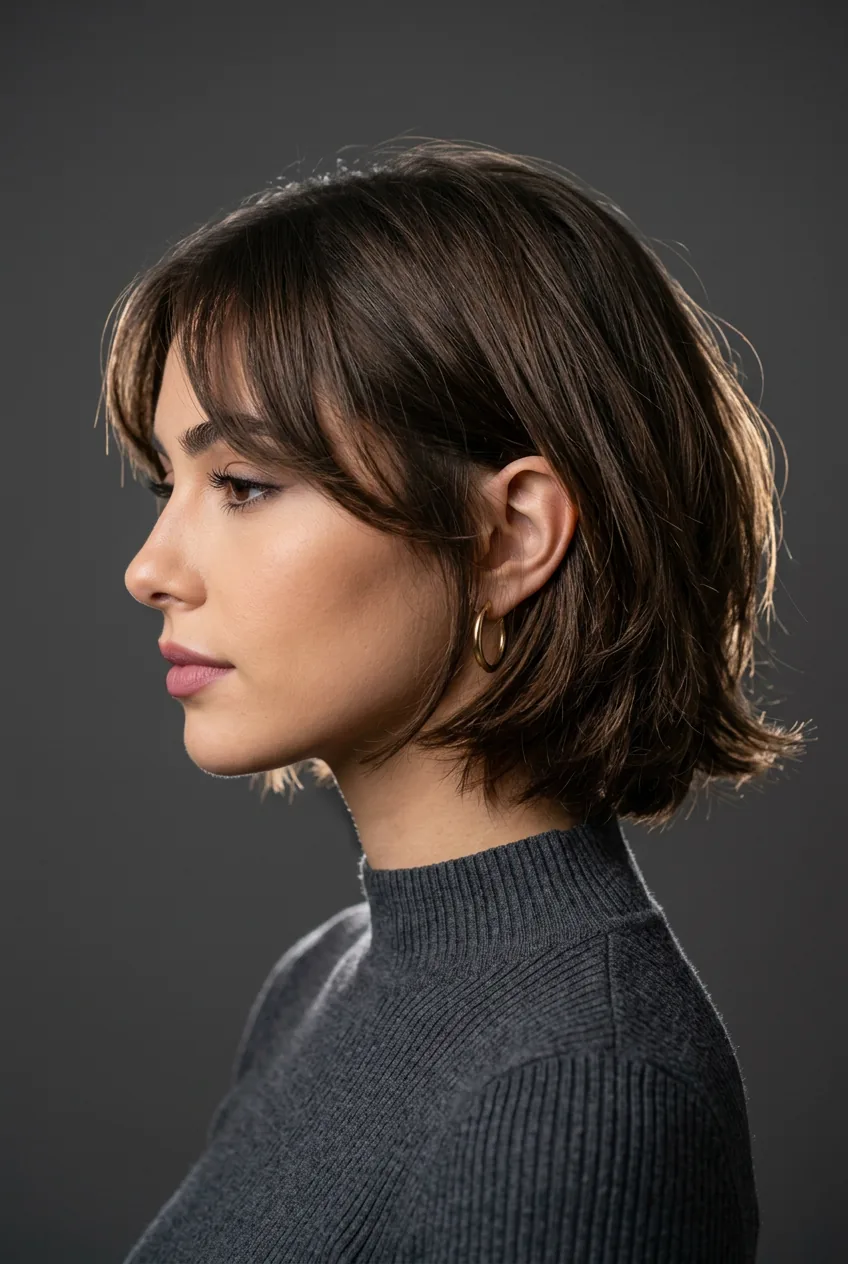
If you want more length options that still carry the layering through, layered medium cuts give you a longer canvas for the same principles. The layered medium hairstyles roundup on this site has some gorgeous examples of this exact balance.
4. For Oval — Almost Anything Works
Oval faces really do have it easy when it comes to haircut choices, and I say that without any jealousy whatsoever (okay, maybe a little). The proportions are already balanced, so you’re not trying to correct anything — you’re just picking what you like. And the 90s layered bob has so many variations that an oval face can pull off all of them.
Want the super choppy, punk-adjacent version with uneven layers and a blunt fringe? Works. Prefer the softer, more polished version with face-framing pieces and a side part? Also works. You’ve got genuine freedom here, which is rare in haircut advice. My suggestion: lean into the most textured, layered version of the cut because those choppy interior layers are what make a 90s bob feel different from a modern one — and oval faces show that detail off beautifully.
5. For Diamond Faces — Playing Up the Cheekbones
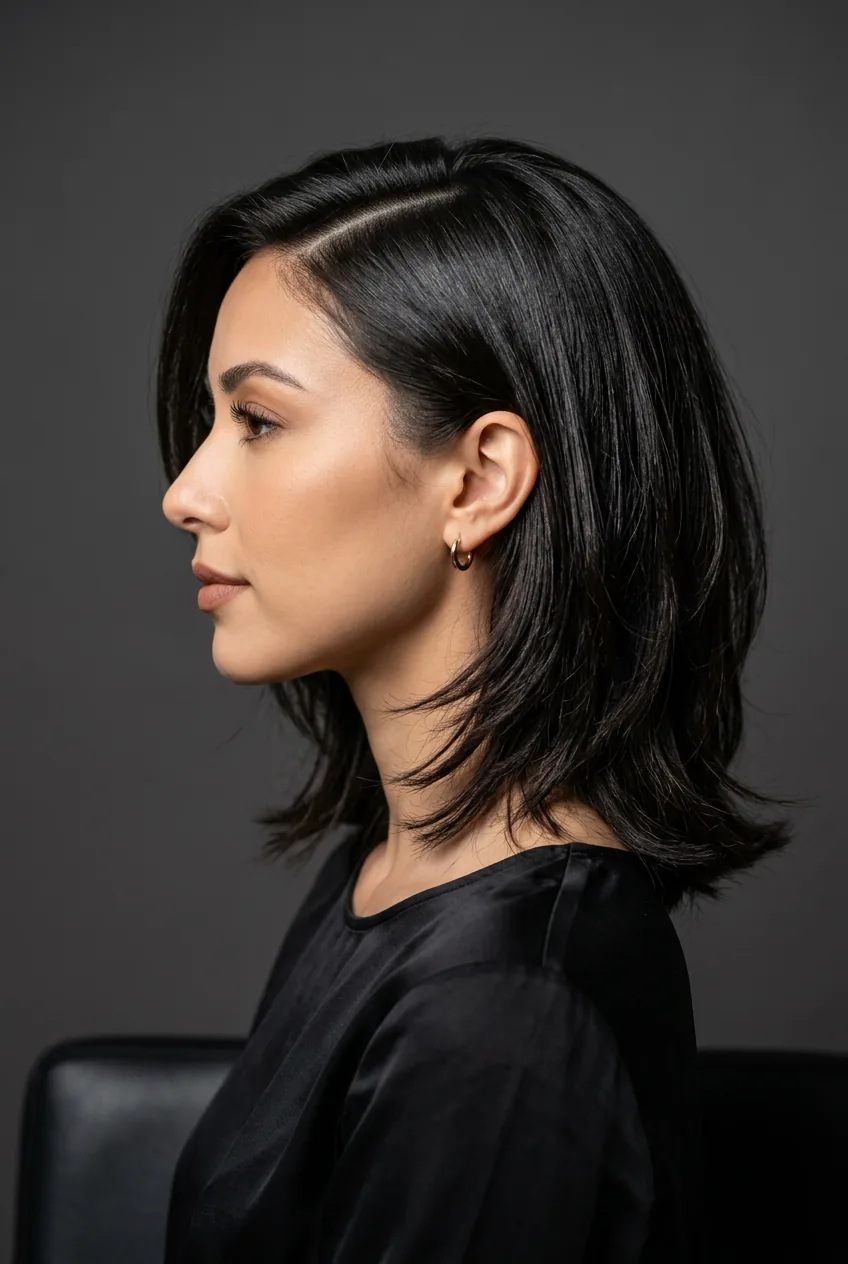
Diamond faces have wide cheekbones with a narrower forehead and chin — and honestly, a face shape like that deserves a cut that celebrates those cheekbones rather than hides them. The 90s layered bob is perfect for this because the layers can be cut to frame and emphasize the widest part of the face rather than sitting flat against it.
A chin-length cut with layers that start right at cheekbone level creates this gorgeous framing effect. Side-swept bangs that skim the forehead add width to the narrower top of the face. And because diamond faces tend to have strong features, the bolder, choppier 90s layering style — think Drew Barrymore circa 1995 — looks incredibly striking rather than harsh.
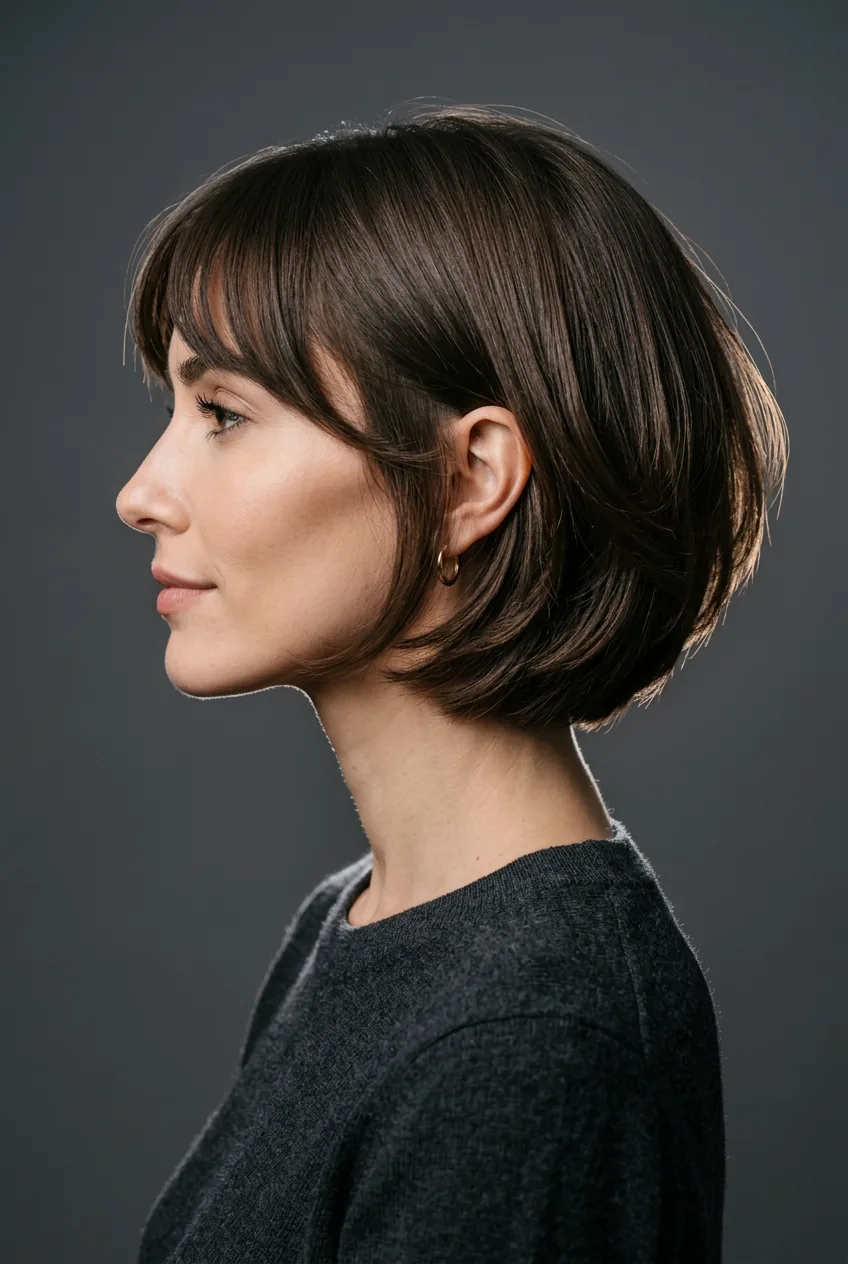
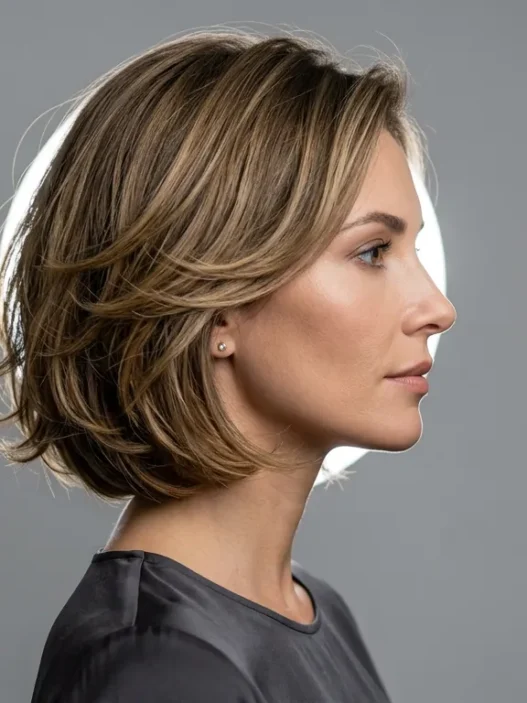
Look at how those layers fan outward right at her cheekbones in this image. That horizontal movement at exactly the right height is what creates that striking, sculptural look. This is also where a long bob lob style can be a useful middle ground — a little more length gives you even more room to place those cheekbone-level layers.
6. For Long Faces — Creating Width
For longer face shapes, the strategy flips from what we do for round faces — instead of adding length, we want to create horizontal width. And the layered bob can absolutely do this, but it requires a few specific choices.
First: avoid super deep side parts. A center or very slight side part distributes volume more evenly and avoids making the face look even longer. Second: keep the length at chin level or just above — this creates a visual horizontal line right at the jaw. Third: layers that flick outward rather than falling inward around the face add apparent width. Think of the full, bouncy 90s blowout bob — that outward flip at the ends is incredibly flattering on longer face shapes.
Bangs also do serious heavy lifting here. A blunt fringe — very 90s, very on-trend right now in 2026 — cuts the vertical length of the face and instantly changes the proportions. It’s one of those transformations that feels dramatic but is actually reversible if you change your mind.
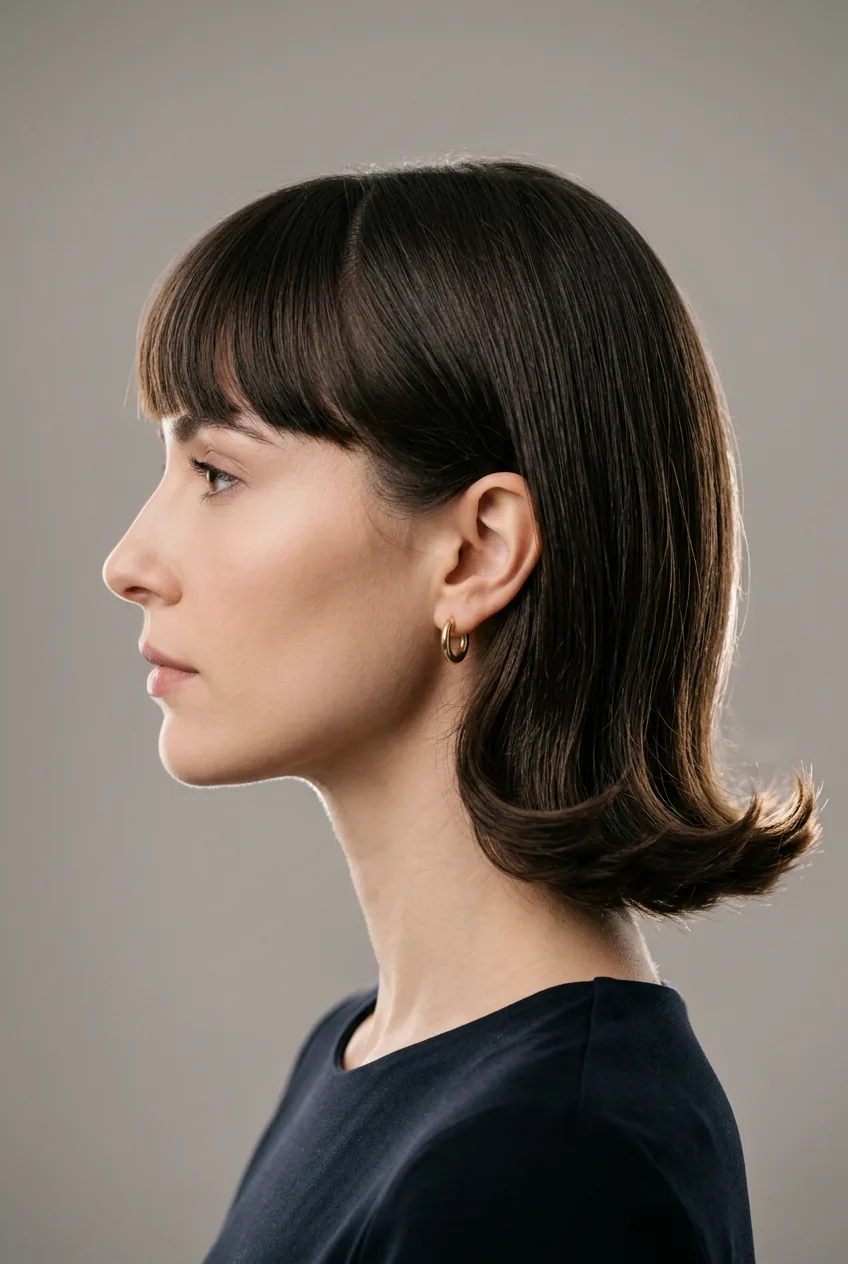
She’s got a longer face shape and that outward-flicking layer at chin level is doing exactly what I described — creating width where the face needs it most. Genuinely love this look. If you have thick hair and find that volume is actually easy to create, check out these layered medium hairstyles for thick hair for more ideas on managing that outward bounce without it getting too big.
7. For Oblong Faces — Adding Curves
Oblong faces are similar to long faces but with softer angles — and the approach here is slightly different. You want to add curves and softness as much as you want to add width. The 90s layered bob does this with texture. Wavy or curly versions of this cut are particularly good for oblong faces because the natural bend of the hair adds roundness and visual mass.
This is actually one of my favorite combinations: a naturally wavy or lightly permed 90s bob on an oblong face shape. The waves add width AND break up the length simultaneously. If your hair is naturally curly, you’re already halfway there — the layered lob hairstyles for curly hair section has some great starting points, and many of those principles apply directly to a shorter bob length too.
Keep the layers soft rather than razor-sharp for oblong faces — you want curves, not harsh angles. And a slightly longer bob that grazes the collarbone adds roundness through the silhouette without sacrificing the essential 90s bob character.
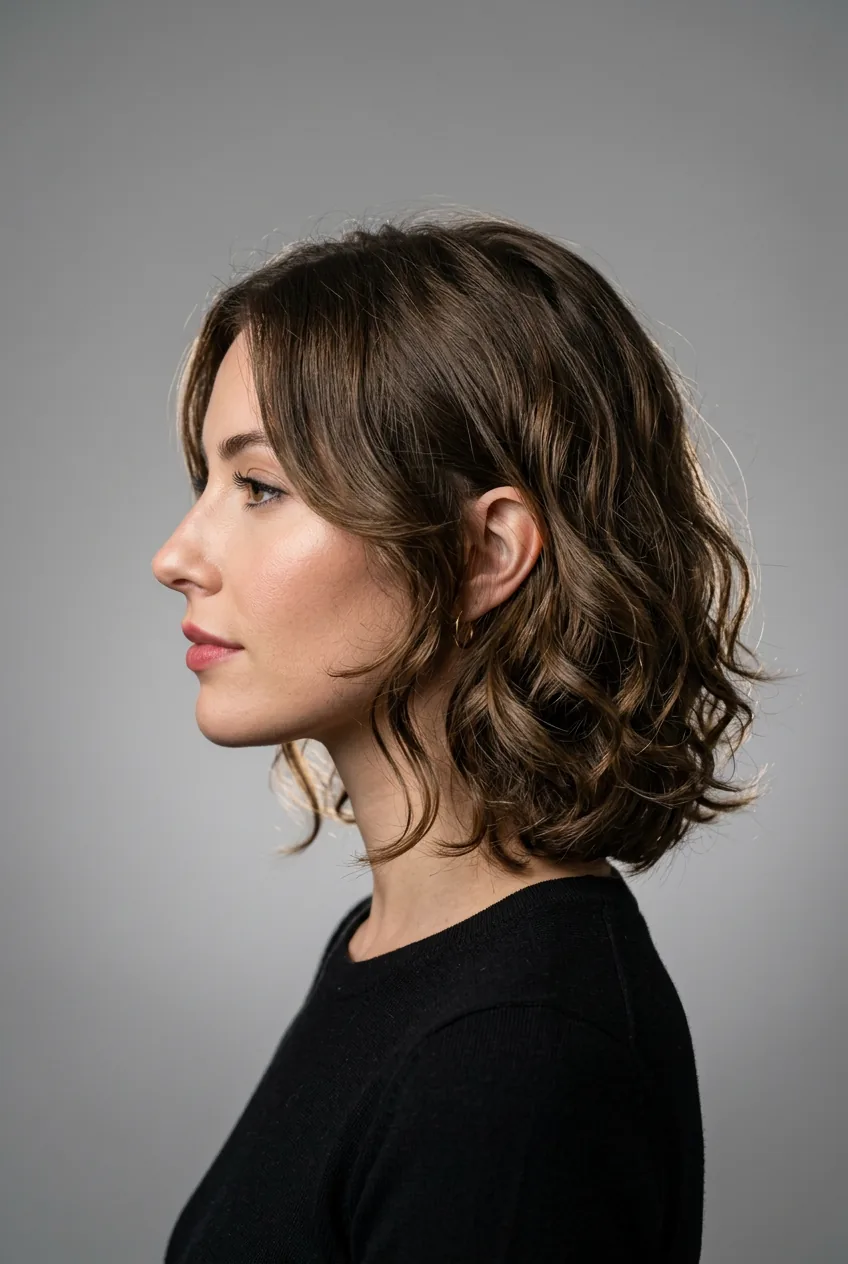
Look at the way the natural wave in her hair adds that soft roundness around her cheeks and temples. That’s the exact effect you’re going for. Enhancing natural waves without heat can keep that texture looking effortless rather than overworked, which is very much the 90s energy this cut is channeling.
Quick Answers
Is the 90s layered bob high maintenance?
Honestly, less than you’d think. The layering actually makes styling easier because the texture does a lot of the work. You’ll want a trim every 6–8 weeks to keep the layers from growing out and losing their shape, but day-to-day styling can be as simple as air-drying with a bit of mousse.
Can I get a 90s layered bob if my hair is very fine?
Yes — in fact it can be one of the best cuts for fine hair because the layers create the illusion of volume and thickness. The key is asking your stylist for soft, point-cut layers rather than razor-cut ones, which can make fine hair look stringy. Keep the length on the longer side of the bob range so there’s enough hair for the layers to build on.
What’s the difference between a 90s layered bob and a modern layered bob?
The main difference is in the ends. A 90s version typically has more dramatic, choppier layers with wispy or feathered ends — there’s more visible texture and movement. Modern bobs tend toward cleaner, blunter lines. The 90s cut also often incorporates stronger face-framing pieces that angle sharply toward the chin, which gives it that distinctive retro silhouette.
How do I ask my stylist for this cut specifically?
Bring reference photos — always. Describe it as a “layered bob with interior layers for movement, face-framing pieces, and textured or feathered ends.” Mentioning 90s-inspired or shaggy bob gives most stylists an immediate mental image. Tell them your face shape and ask them to adjust the layer placement to suit it — a good stylist will know exactly what to do with that information.
The 90s layered bob is one of those cuts that looks intentional and effortless at the same time — which is the whole vibe, right? I genuinely believe there’s a version of it for every face shape, and I hope breaking it down this way makes it easier to walk into your next salon appointment knowing exactly what to ask for. Go get the cut. You’ll thank yourself.