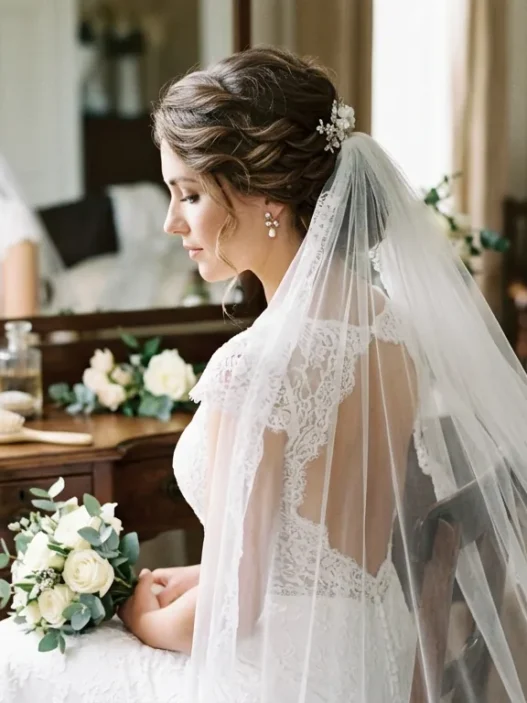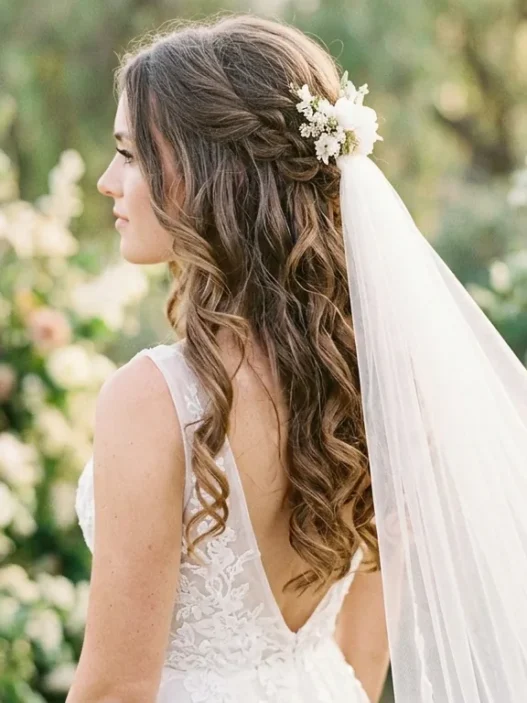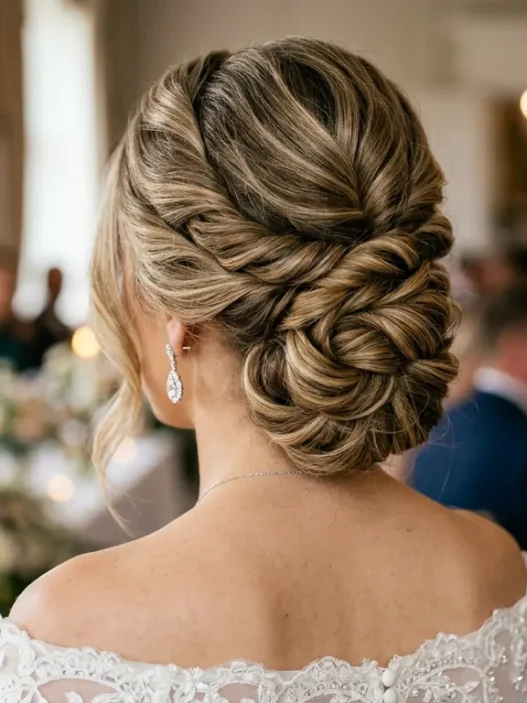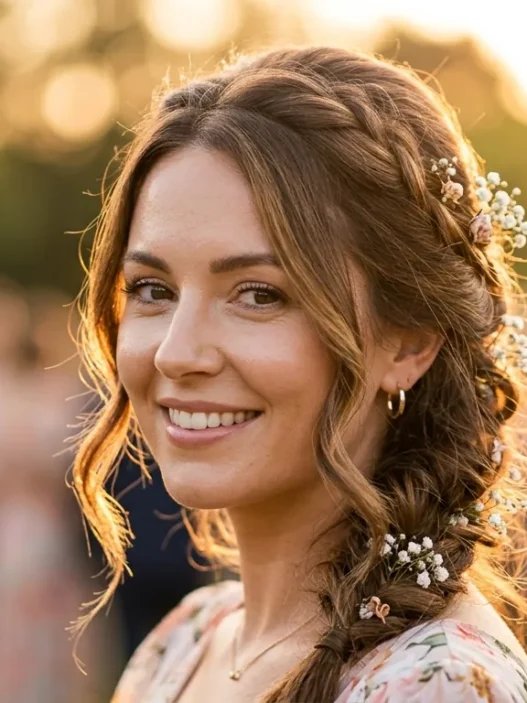



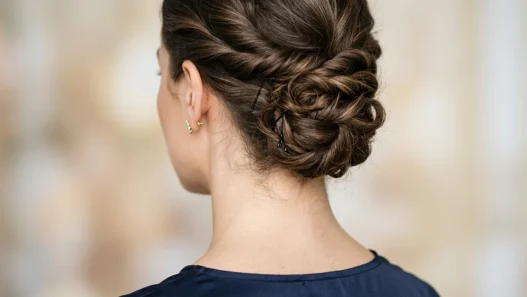






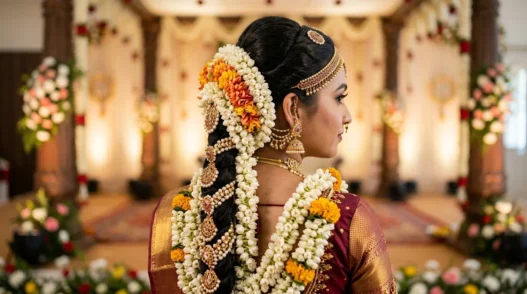
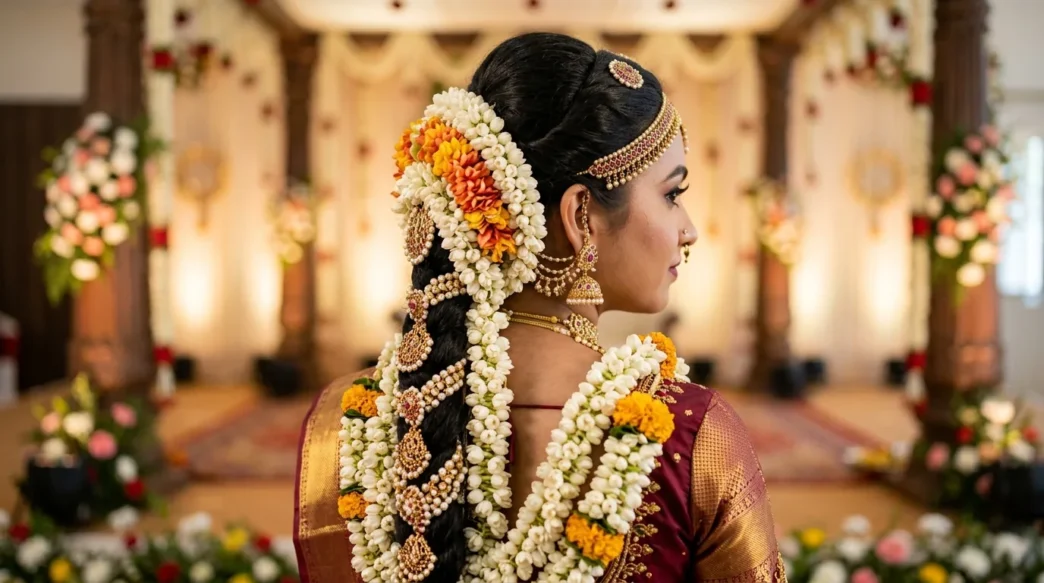
I’ll never forget the first South Indian wedding I attended as a bridesmaid. The bride texted us at midnight: “Hair starts at 4 AM sharp.” I thought she was joking. She wasn’t. What followed was the most beautiful, exhausting, and surprisingly emotional hair experience I’ve ever witnessed.
The 4 AM Wake-Up Call Nobody Mentions
Here’s what no one tells you about South Indian wedding hairstyles braids: they don’t happen in the dreamy, golden-hour Instagram photos you see. They happen in the dark, when the world is still asleep and your eyes are barely open.
The hairstylist arrives with what looks like a mobile salon. Three large cases, a portable chair, and enough bobby pins to build a small fortress. The bride sits there in her pajamas, sipping coffee that’s gone cold twice already. Her mother hovers nearby, making suggestions that sound more like gentle commands.
But here’s the thing — this early start isn’t about being difficult. South Indian bridal braids are architectural. They’re engineering projects disguised as hairstyles. The base alone takes 45 minutes to get right. Every section has to be perfectly placed because once those flowers go in, there’s no going back.
What They Don’t Show You About Flower Prep
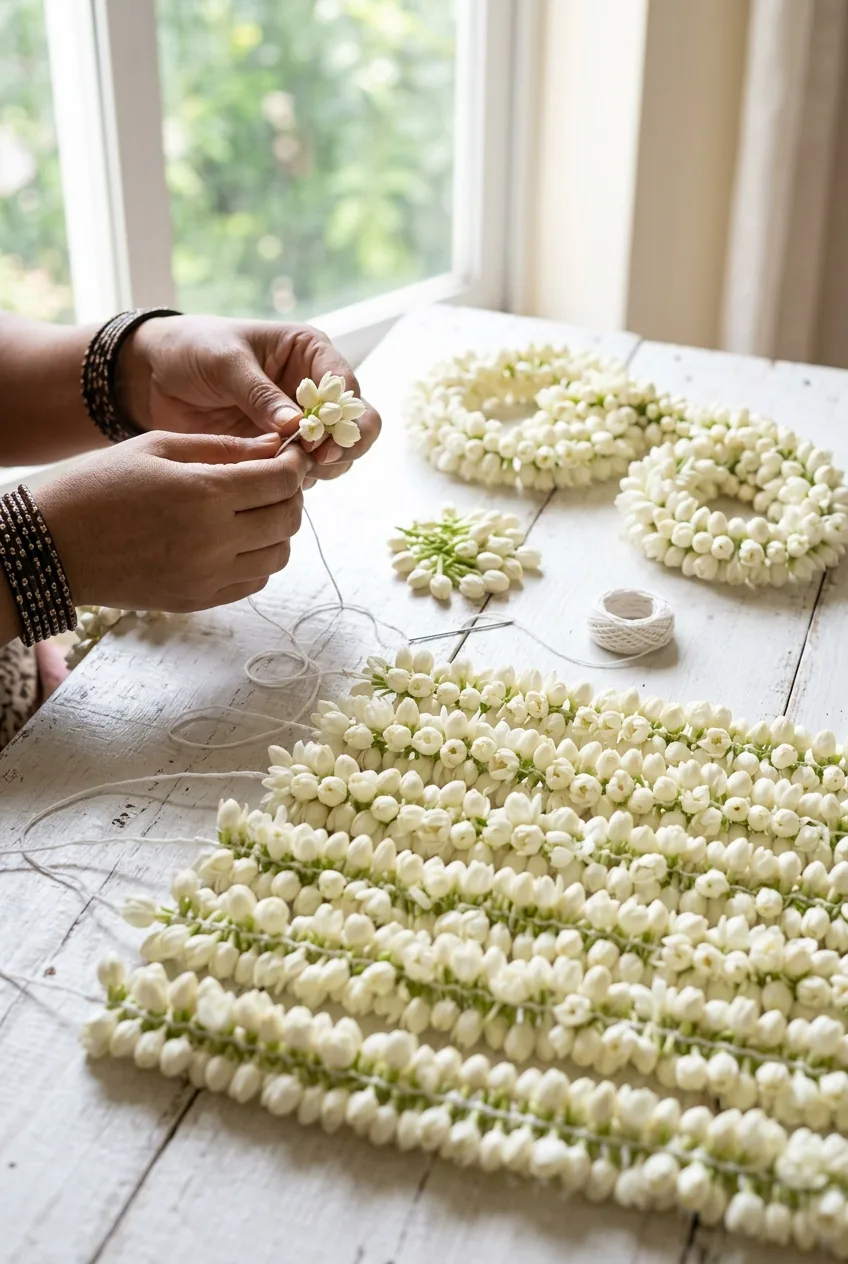
You know those gorgeous jasmine garlands woven through traditional braids? Someone has to prep every single flower. I watched the bride’s aunt spend two hours the night before, carefully removing wilted buds and creating perfect chains of uniform blooms.
The flowers arrive fresh that morning, but they’re finicky. Too much moisture and they slip out of the braid. Too little and they look sad by hour three of the ceremony. The stylist tests each garland’s weight and flexibility before deciding where it goes. Some flowers are backup flowers. Yes, that’s a thing.
And the smell? Jasmine at 5 AM is intoxicating in a way that makes you slightly dizzy. By the end of the session, everyone in the room smells like they’ve been living in a flower shop. Not complaining — it’s actually lovely. But it’s intense.
The Part That Takes the Longest
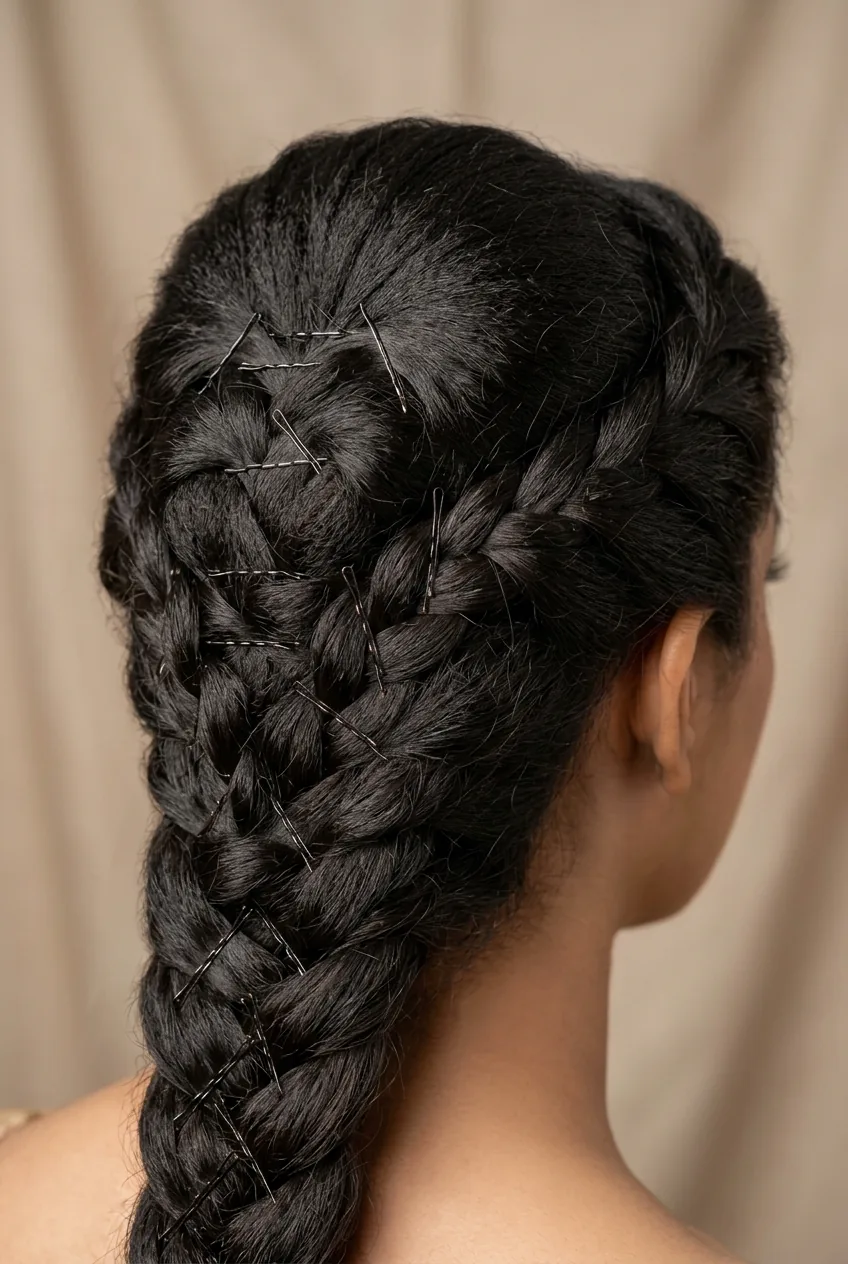
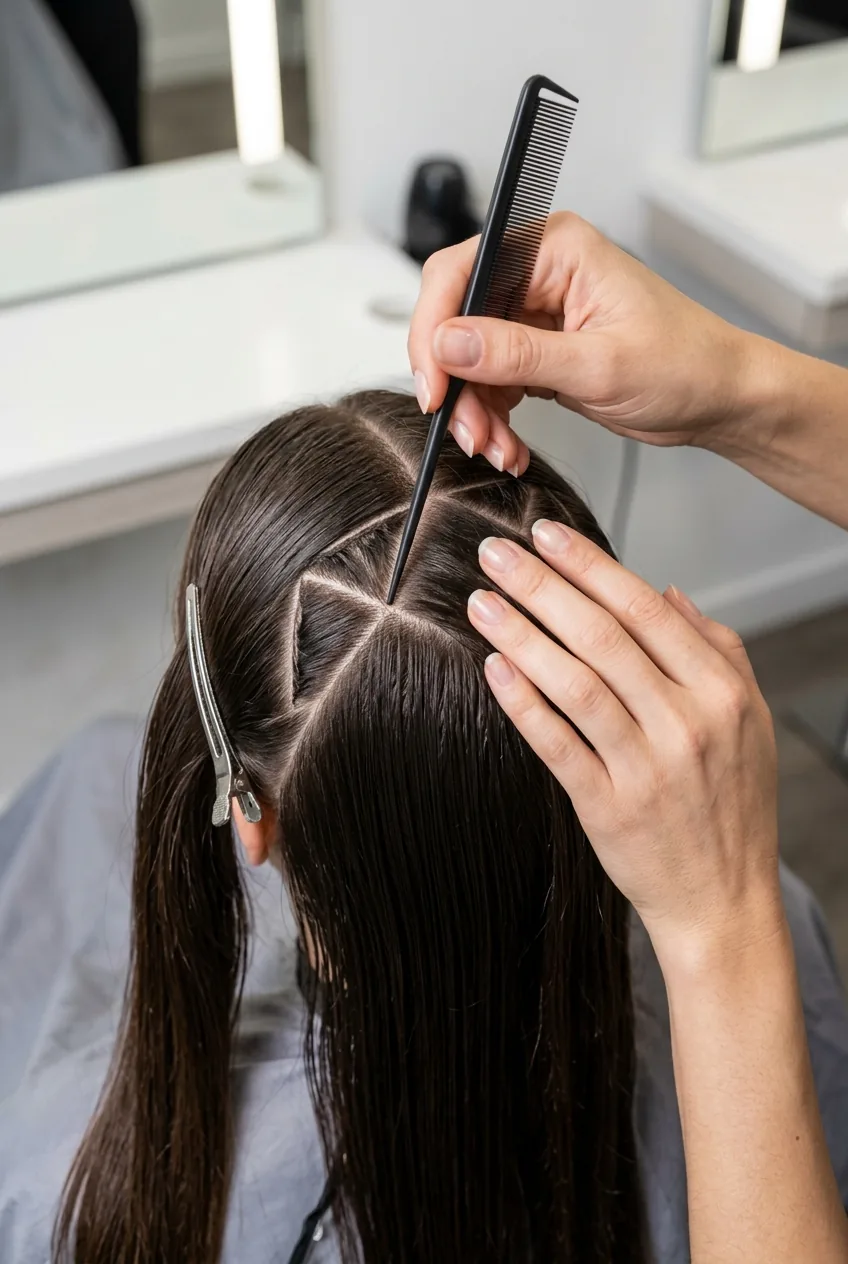
You’d think the longest part would be the actual braiding, right? Wrong. It’s the foundation work — the sectioning, the teasing, the strategic bobby pin placement that creates the structure for everything else.
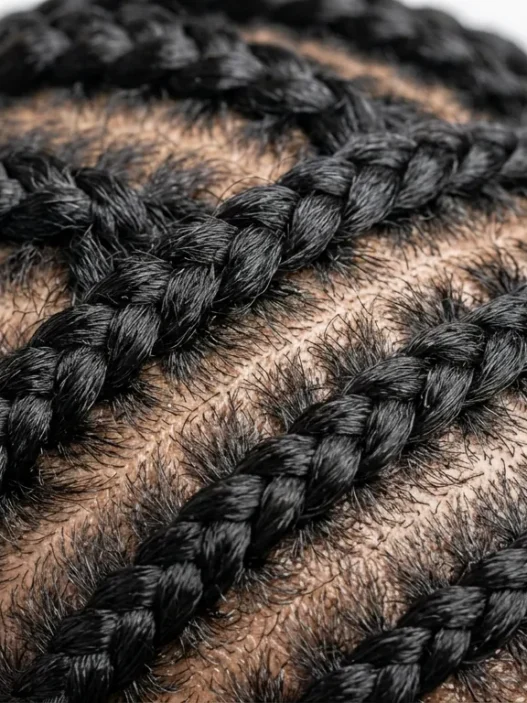
The stylist uses a rattail comb to create sections so precise they look like geometric art. Each parting has to be mathematically perfect because South Indian wedding hairstyles with braids are all about symmetry. One wonky section throws off the entire look.
I watched her redo the same section three times because the part wasn’t quite right. Three times. The bride never complained, but I could see her getting tired. That’s when the aunties stepped in with snacks and stories, turning the styling session into an impromptu family gathering.
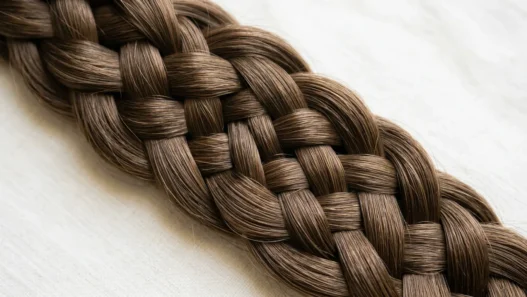
The actual braided wedding hairstyles come together surprisingly quickly once the foundation is right. But getting there? That’s where the magic happens, slowly and methodically.
See the Foundation Work in Action
When Everything Goes Wrong
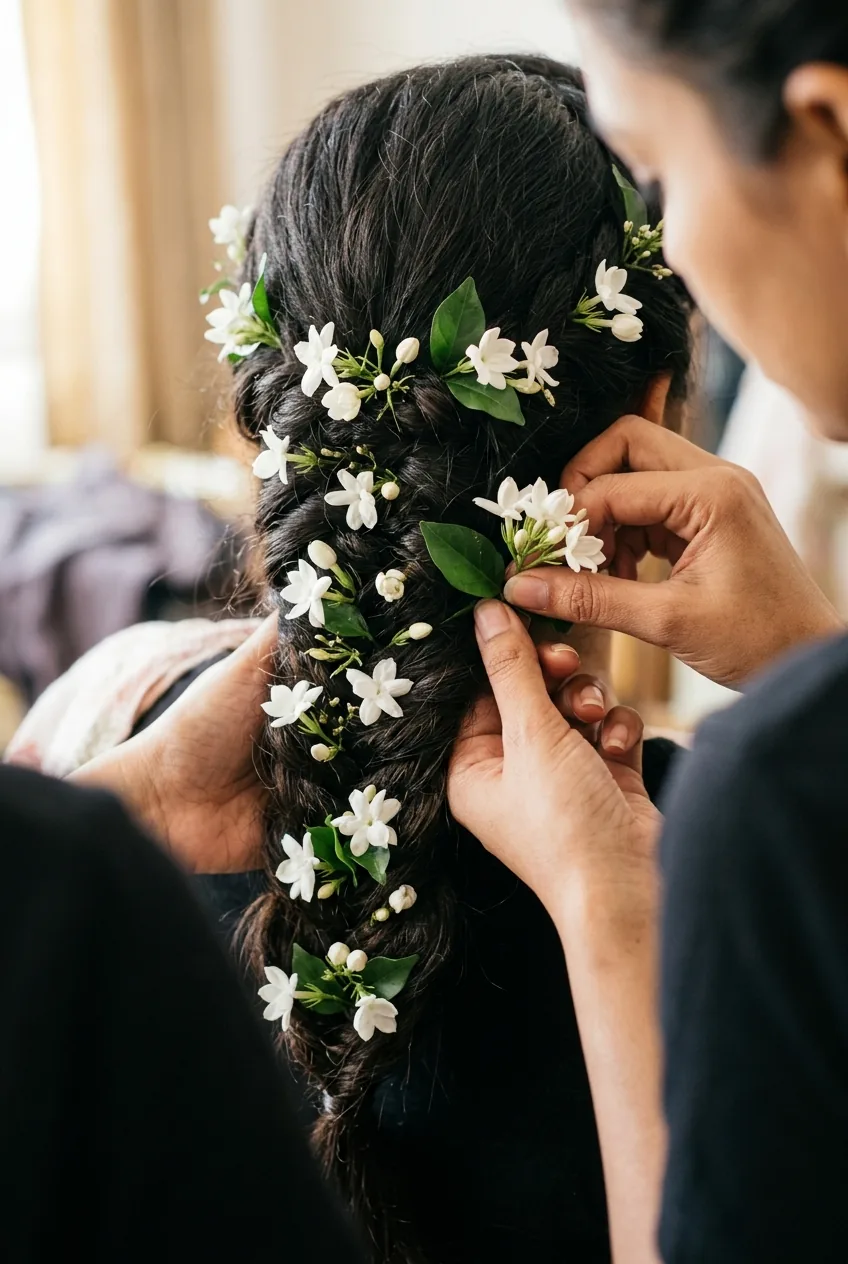
Murphy’s Law applies to bridal hair too. During one wedding, the main jasmine garland snapped right as the stylist was weaving it through the finished braid. I’ve never seen someone move so fast to salvage a hairstyle.
Another time, the bride’s hair was freshly washed and too slippery for the bobby pins to grip properly. The whole elaborate updo kept sliding. The solution? Dry shampoo and texturizing spray applied strategically to give the hair enough grip. Crisis averted, but it added another 30 minutes to an already long process.
The worst incident I witnessed was a curling iron malfunction that left one side of the bride’s hair limp while the other side had perfect volume. The stylist had to wet down the good side and start over with a different technique. The bride cried. Her mother cried. I almost cried.
But here’s what I learned: experienced stylists always have a Plan B. And C. And sometimes D. They’ve seen it all, and they know how to fix it all.
The Secret Nobody Mentions
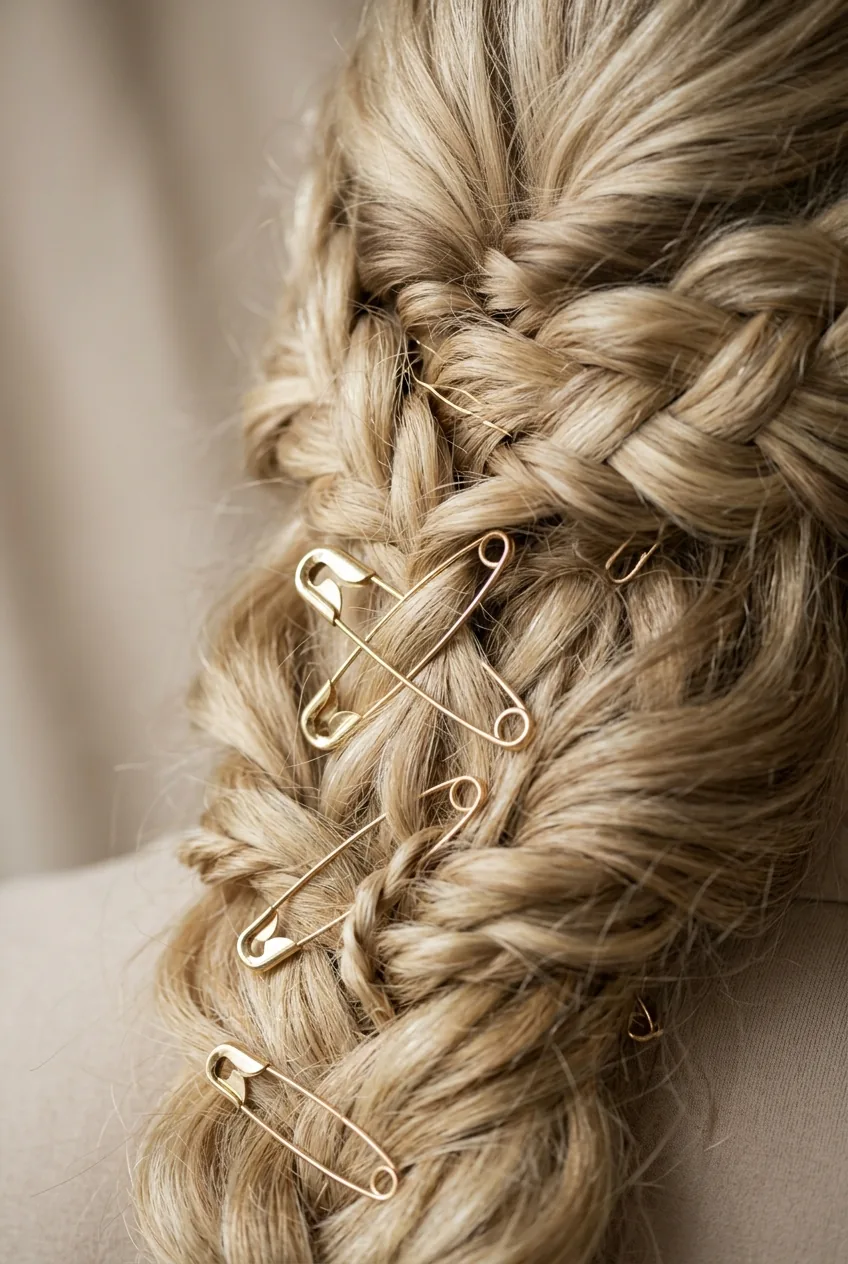
Want to know the real secret behind those stunning South Indian bridal braids that last 12+ hours? It’s not just skill or expensive products. It’s the safety pins.
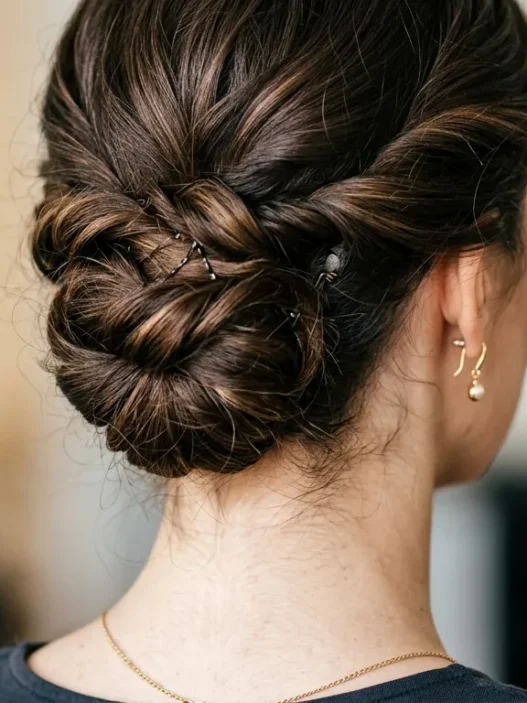
Yes, safety pins. Hidden throughout the hairstyle, they secure flowers, anchor loose sections, and provide backup support for bobby pins that might give way during the long ceremony. I counted 14 safety pins in one bride’s hair. You’d never see them in photos, but without them, that gorgeous braid would have been a hot mess by the second ceremony.
The stylist explained it to me like this: bobby pins are for temporary hold, safety pins are for structural integrity. It’s like the difference between tape and screws when you’re building something that has to last.
Another secret? The hairstyle gets “refreshed” between ceremonies. There’s usually a 30-minute touch-up session where flowers get repositioned, loose pieces get re-pinned, and everything gets a fresh spray of hairspray. Those Instagram photos of the bride looking perfect at 10 PM? She had help maintaining that perfection.
Why It’s Worth It Anyway
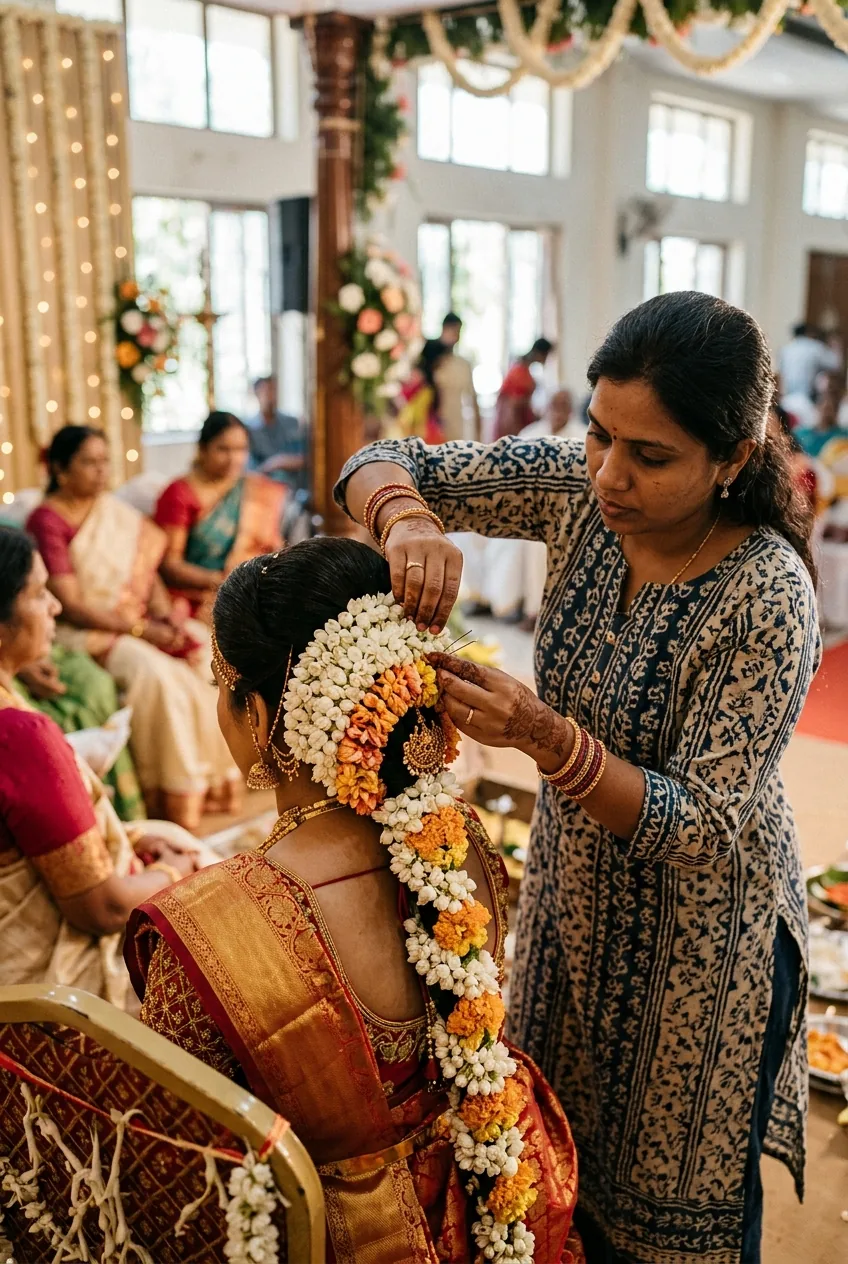
After witnessing this process multiple times, I understand why brides choose this beautiful torture. South Indian wedding hairstyles with braids aren’t just hair — they’re heritage. They’re a connection to generations of women who wore flowers in their hair on their wedding days.
The bride I mentioned earlier? When she finally saw the finished look, her reaction was worth every early morning, every bobby pin disaster, every moment of discomfort. She looked like she was seeing herself as a bride for the first time. That transformation isn’t just about the hair — it’s about stepping into a role that connects her to her culture and her family’s history.
And practically speaking, these hairstyles photograph beautifully from every angle. The structure holds up through emotional moments, dancing, and long ceremonies. When done right, they’re worth every minute of that 4 AM wake-up call.
The memory of that floral scent woven through perfectly placed braids? That stays with you long after the bobby pins come out and the flowers are pressed into keepsakes. Sometimes the behind-the-scenes chaos makes the final result even more meaningful.
Quick Answers About Bridal Braiding
How long do South Indian wedding braids actually take?
Plan for 3-4 hours total, including flower preparation and touch-ups. The braiding itself is maybe an hour, but the foundation work and flower placement take the majority of the time.
Do the flowers really stay in all day?
With proper technique and fresh flowers, yes. But there’s usually a mid-ceremony refresh where loose flowers get repositioned. Fresh flowers need specific handling to last 12+ hours.
Can you sleep in these hairstyles?
Not comfortably. Most brides get their hair done on wedding morning, even for evening ceremonies. The style is designed to look perfect for one very important day, not for overnight wear.
What happens if something goes wrong during the ceremony?
Experienced families always have someone designated as the “hair emergency person” — usually an aunt or sister who knows where the extra bobby pins and backup flowers are stashed. Quick fixes happen during natural breaks in the ceremony.