









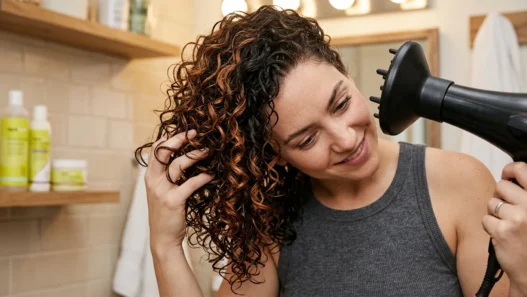
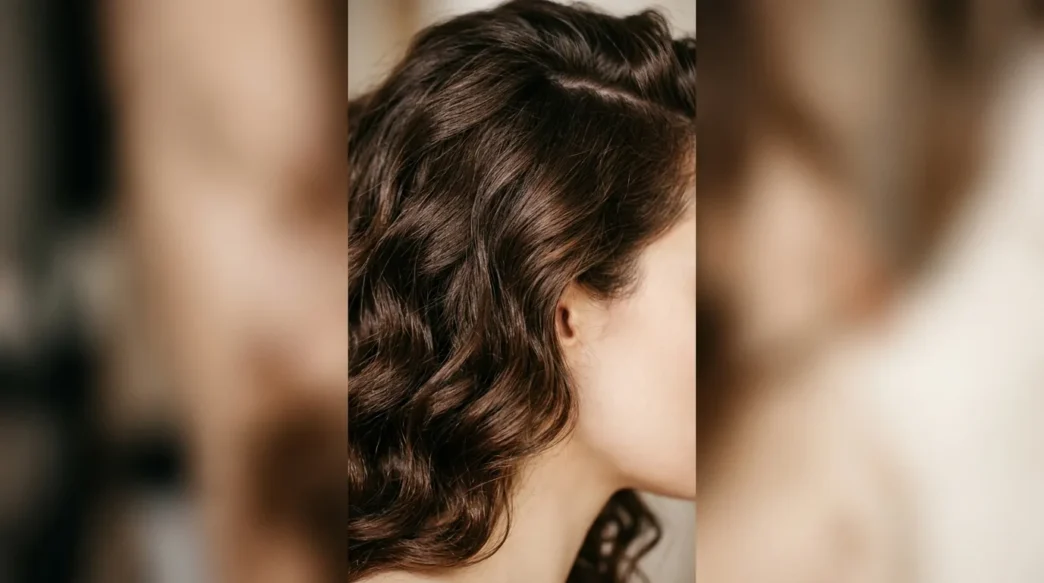
I spent years watching YouTube tutorials thinking I was doing something wrong. Every “5-minute thick hair updo” took me twenty minutes minimum. The sleek ponytails looked chunky. The braids felt heavy by noon. Turns out, when you have thick hair, “easy” hairstyles have a whole different rulebook — one that most tutorials conveniently skip over.
What They Don’t Show You About Prep
Here’s what actually happens before any “easy” thick hair style: I section my hair into at least four parts. Not two like the tutorials suggest. Four minimum, sometimes six if I’m doing anything that needs to look polished.
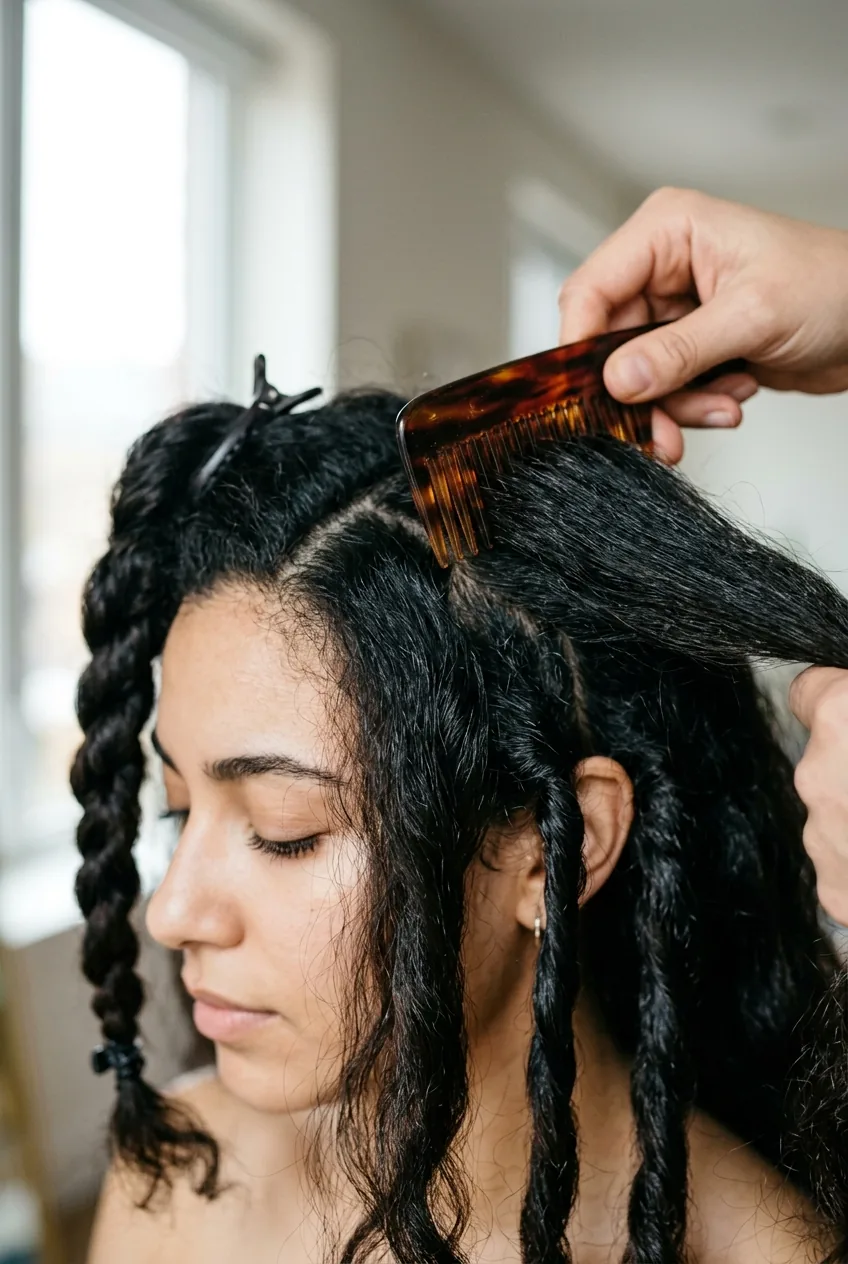
The messy bun everyone raves about? I have to twist each section separately before combining them. Otherwise I get this weird lumpy situation where some pieces are smooth and others are fighting their way out. My hair is so thick that one ponytail holder isn’t enough — I use two, sometimes three stacked on top of each other.
And that “tousled” look that’s supposed to happen naturally? I actually have to work for it. My hair wants to be either completely smooth or completely chaotic. There’s no in-between without some strategic scrunching and texturizing products to break up the weight.
The Part That Takes the Longest
It’s never the actual styling. It’s the detangling.
I can pin up a low chignon in three minutes once my hair is smooth and sectioned. But getting to that point? That’s where the real time goes. If I skip my leave-in conditioner or try to rush through with a regular brush instead of my wide-tooth comb, I’ll spend fifteen minutes just working through knots.
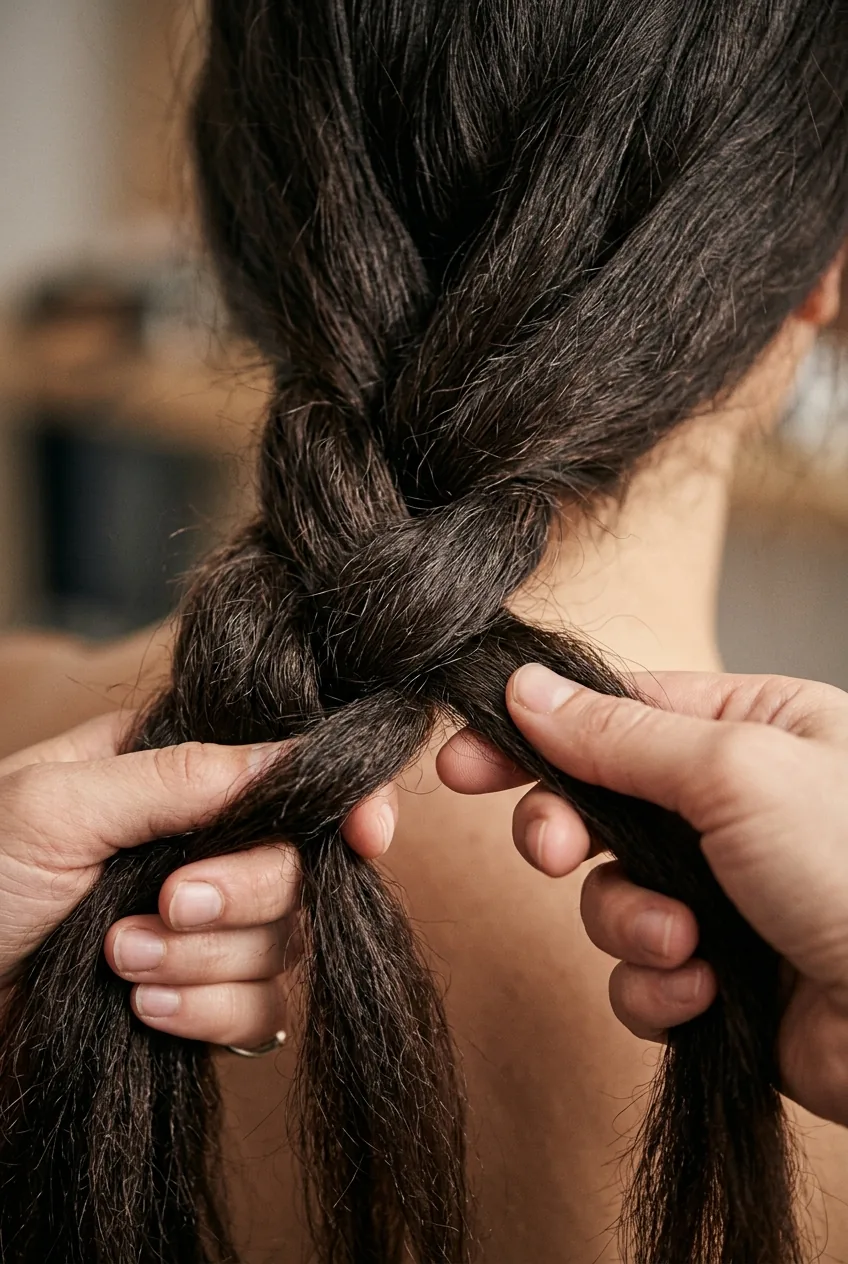
The French braid tutorials that show someone whipping through their hair in one fluid motion make me laugh. My fingers actually get tired holding sections because each piece is so much thicker than normal hair. I have to take breaks. Sometimes I’ll braid one side, shake out my hands, then do the other.
What helps: I start detangling from the ends and work up. Always. And I use way more conditioner than any bottle recommends — probably double what they suggest for thick hair, which is already more than the standard amount.
The Secret Nobody Mentions About Tools
Regular bobby pins are basically decorative on thick hair. They look like they’re holding something, but they’re not actually doing any structural work. I learned this the hard way when my “secure” updo started sliding out during a work presentation.
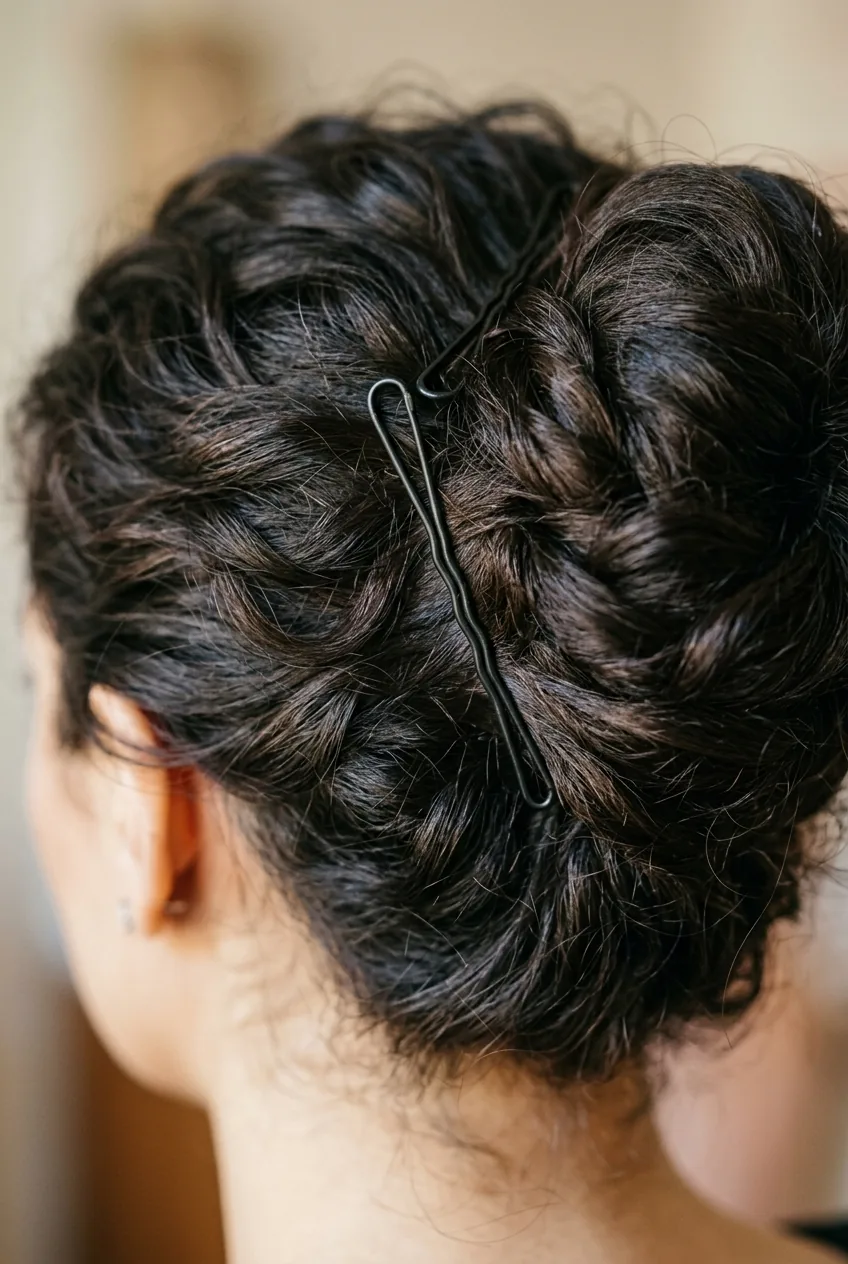
Now I use jumbo bobby pins exclusively — the kind that are almost as thick as a pencil. And I cross them in X patterns instead of just sliding them in parallel. Two crossed jumbo pins hold better than eight regular ones.
Hair elastics are another thing entirely. Those tiny clear ones everyone shows in tutorials? They snap on my hair. Not stretch and break — actually snap like a rubber band hitting its limit. I stick to fabric-covered elastics or the phone cord style ones that can actually expand enough.
The weirdest discovery was about brushes. I thought I needed the biggest, strongest brush possible. Turns out, a smaller paddle brush works better because it doesn’t try to grab too much hair at once. Who knew that working with less hair per stroke would actually be faster?
This Stylist Gets It Right
Why Weight Distribution Changes Everything
This is the part no one talks about, but it’s probably the most important. When you have thick hair, where you place the weight determines whether your style lasts two hours or all day.
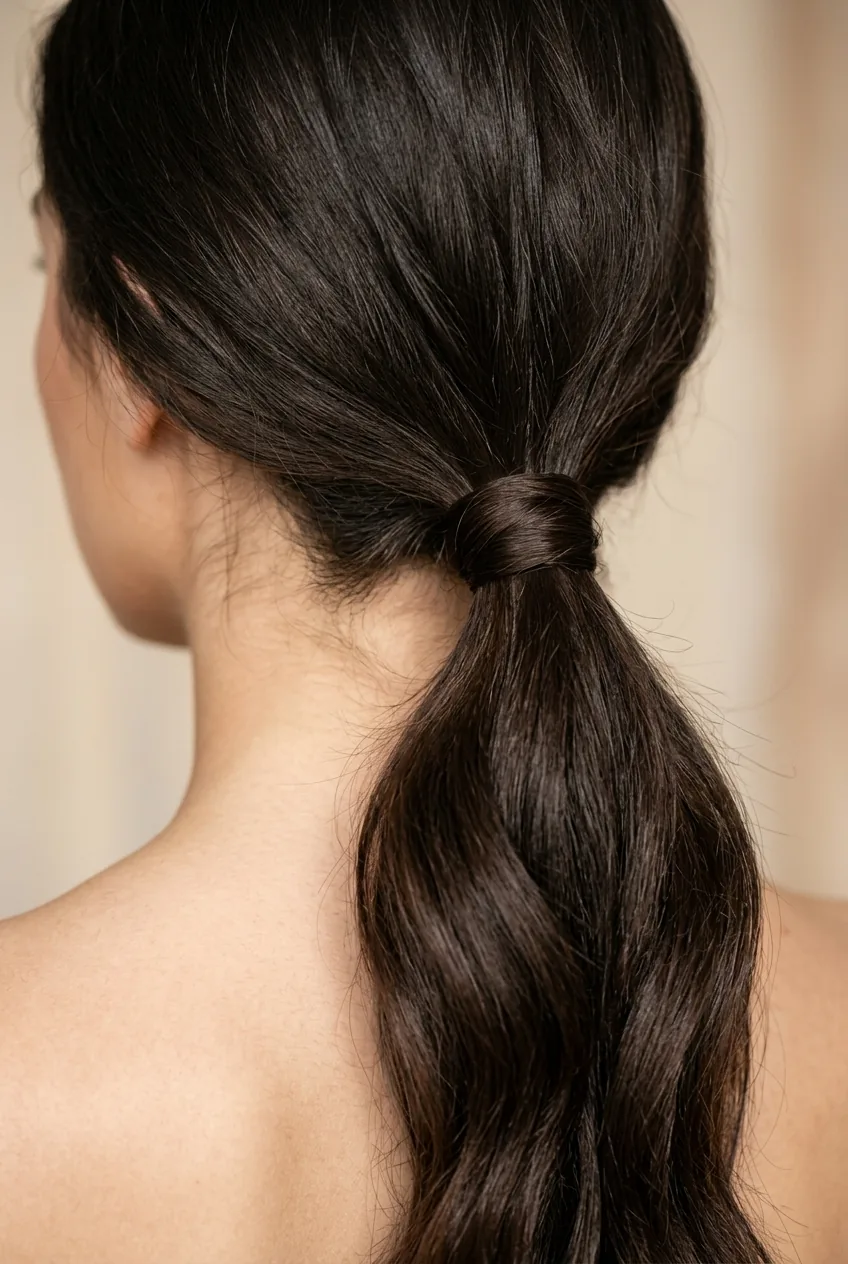
High ponytails look amazing for about thirty minutes, then the weight starts pulling everything down. I’ve learned to do mid-level ponytails instead — right at the occipital bone where there’s more skull support. Less dramatic than a high pony, but actually stays put.
For hairstyles thick hair can actually handle, I think about triangle shapes instead of circles. A circular bun wants to roll and fall because all the weight is in one spot. A triangular base — wider at the bottom, tapered at the top — distributes the weight better.
Side parts work better than center parts for the same reason. All that hair falling to one side creates an unbalanced weight that pulls everything down. A slightly off-center part gives me the asymmetrical look I want without the structural problems.
Even braids need strategy. I can’t do one thick braid — it’s too heavy and puts stress on my scalp. Two side braids or one braid that starts loose and gets tighter toward the ends work much better. Proper braiding techniques can make the difference between a style that hurts and one that feels secure.
The Trick That Finally Made It Click
The breakthrough moment came when I stopped trying to make my thick hair look like everyone else’s and started working with what I actually have.
Instead of trying to create volume (which I definitely don’t need), I focus on controlled texture. Instead of fighting the weight, I use it as an anchor for styles that would look limp on fine hair. My low buns actually stay in place because there’s enough hair to grip itself.
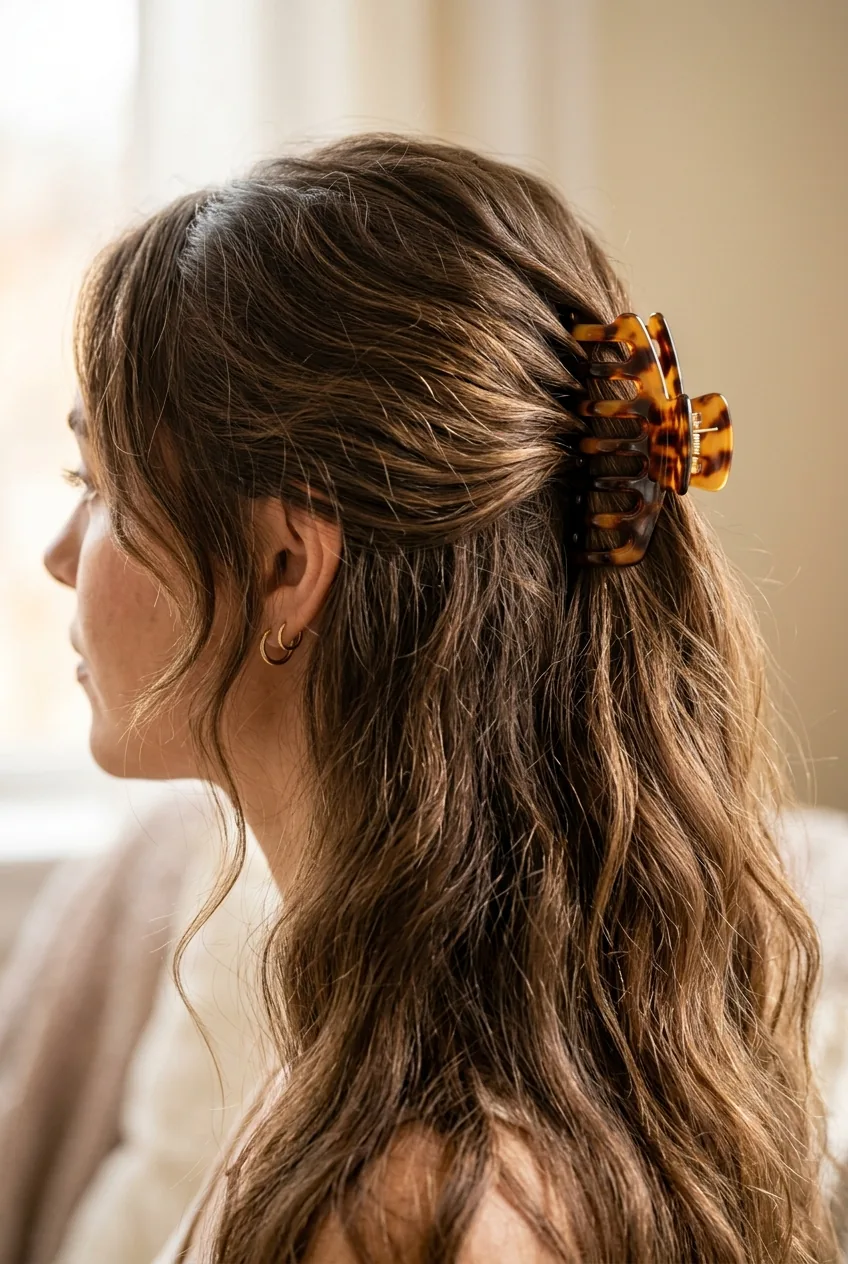
The half-up style that changed everything for me isn’t from a tutorial — it’s something I accidentally discovered. I twist just the front sections back and secure them with one of those claw clips, leaving all the length and weight down. It gives me the face-framing effect of an updo without trying to defy gravity with all that hair.
And here’s my controversial opinion: most “easy” styles for thick hair aren’t actually meant to be worn all day. They’re photo styles. The perfectly messy bun, the effortless waves, the slicked-back ponytail — they look great for an hour or two, but they’re not built for real life with real thick hair.
What actually works for everyday? Simple styles that respect the weight and texture. Low ponytails with a small braid detail. Half-up styles with texture spray. Easy winter braids that start loose and secure gradually. French twists pinned at the nape instead of the crown.
Quick Answers About Styling Thick Hair
How long should I actually expect these styles to take?
Add at least 10 minutes to whatever the tutorial says. What takes someone with medium hair 5 minutes will take you 15-20 minutes minimum, and that’s with practice.
Why do my ponytails always look bumpy?
You’re probably gathering all your hair at once instead of sectioning it first. Try dividing into top and bottom sections, smooth each separately, then combine them at the elastic.
Can I really do updos without bobby pins breaking?
Yes, but you need the right pins. Jumbo bobby pins and hair pins (the longer U-shaped ones) are your friends. Regular bobby pins are basically useless on thick hair.
Should I thin my hair to make styling easier?
I’ve tried it and honestly regretted it. Thinning can make your hair look stringy and actually makes some styles harder because you lose that natural grip thick hair provides. Work with what you have instead.
The reality of styling thick hair isn’t Instagram-perfect, but it’s definitely doable once you know what you’re actually working with. Your hair has superpowers — it just needs different rules.