







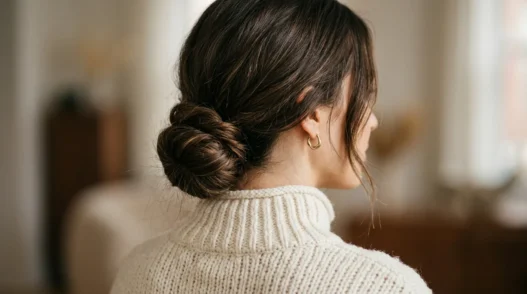
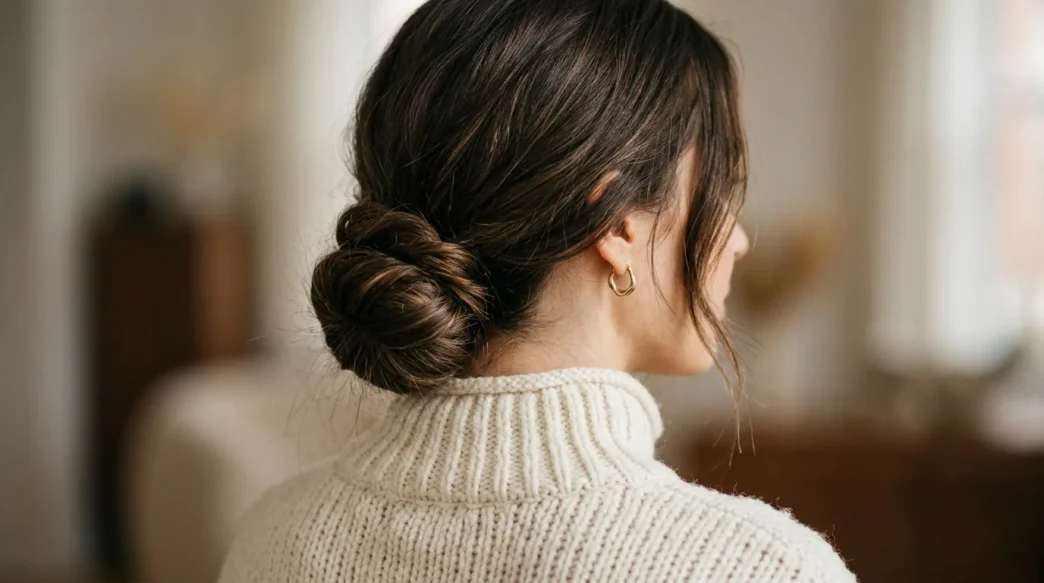
I live where winter means a damp morning, a windy lunch break, and dry heat indoors by dinner. My hair has seen it all. These are the cozy winter updos I actually reach for when I want to look pulled-together without fighting frizz every hour.
I tested each one with a beanie, with rain, and on second-day hair. Some surprised me. One became my everyday uniform. Here are my nine favorites that just work, season after season.
My Weather-Proof Updo Lineup
- 1. The Low Twisted Bun That Holds Up Under a Beanie
- 2. The Soft French Twist That Survives Humidity
- 3. The Braided Low Bun That Adapts From Summer to Winter
- 4. The Messy Top Knot That Is Wedding-Ready in Any Weather
- 5. The Sleek Chignon That Survives Wind and Rain
- 6. The Double-Braid Crown That Holds Up Under a Beanie
- 7. The Pinned-Up Gibson Roll That Survives Humidity
- 8. The Side-Swept Braid Bun That Adapts From Summer to Winter
- 9. The Claw-Clip Twist That Is Wedding-Ready in Any Weather
1. The Low Twisted Bun That Holds Up Under a Beanie
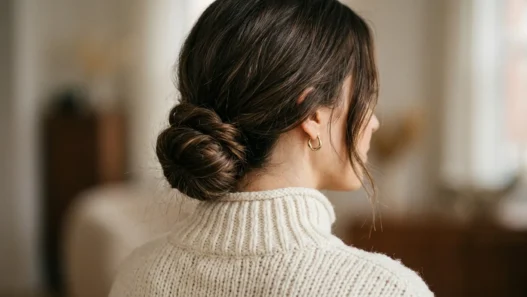
This is my Monday-morning savior. I part my hair in the middle, twist two low-set sections toward the nape, then coil them into a soft bun. It sits flat enough that a beanie slides right over it without squashing everything.
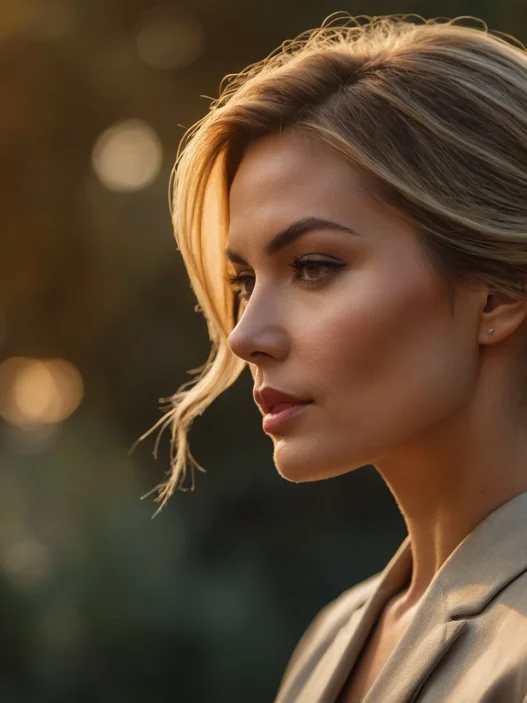
Look at how she is wearing hers in the photo below, low and tucked right at the nape. That placement is exactly why it survives hats. Nothing pokes up, nothing dents. And when I pull my beanie off at the coffee shop, I just fluff the front pieces and go.
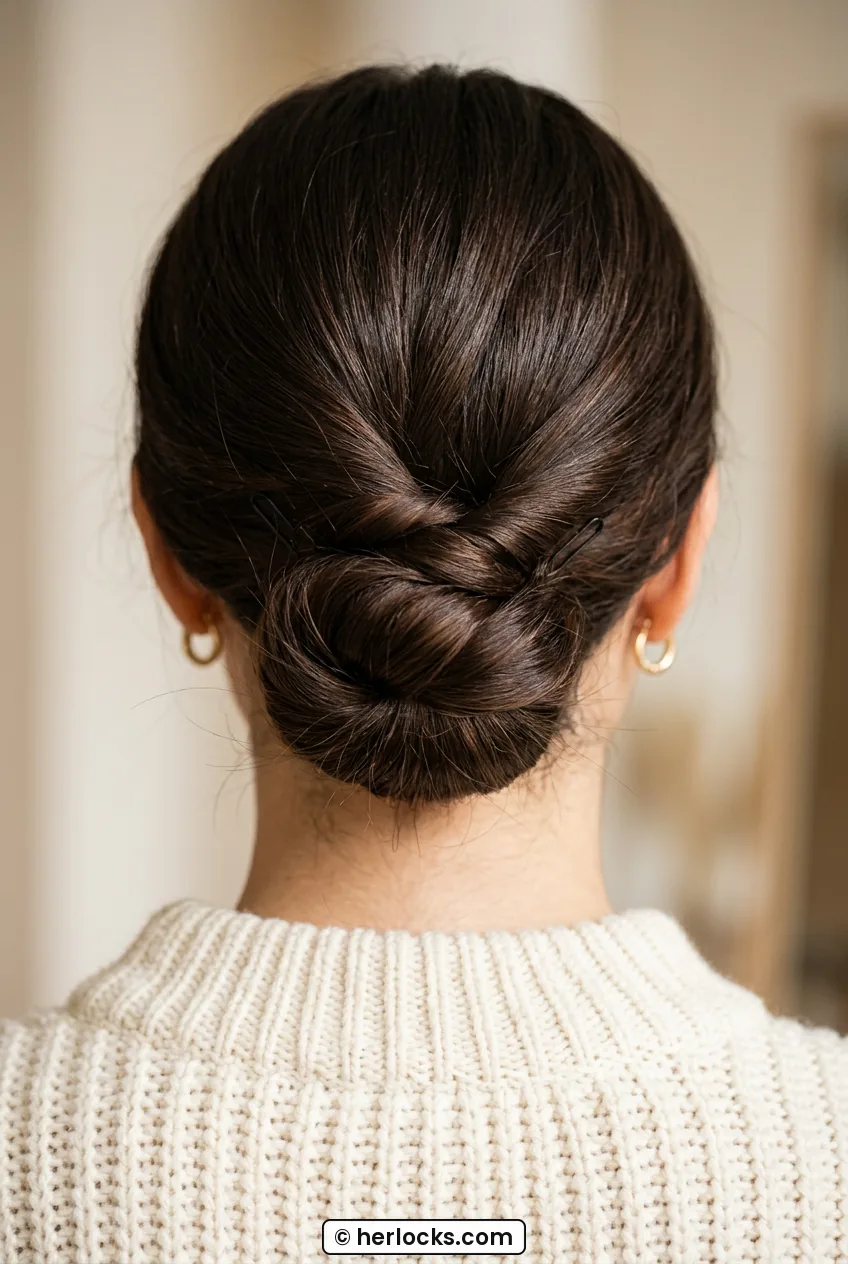
In humidity, this one holds better than a regular ponytail because the double twist locks the hair in. I add a pea-sized amount of cream and two U-pins in an X shape. You can read about keeping texture smooth with tips on frizz control for textured hair tucked into your routine before you twist.
Summer version? I wear the same bun with damp hair and let it air-dry into loose waves later. Winter version is brushed smooth with a wool scarf wrapped over it. Wind barely moves it. For chic warm winter hairstyles, this low shape is the easiest starting point I know.
2. The Soft French Twist That Survives Humidity
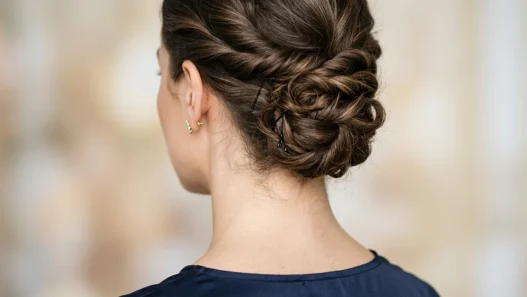
I used to think a French twist was only for fancy dinners. Then I tried a loose, imperfect one on a rainy school-run day and never looked back. It keeps the ends hidden, which I love when the air is damp and my ends want to frizz first.
She has hers pinned with a little softness on top in this photo, not shellacked flat. See how it lifts just a bit at the crown? That airy volume keeps it from looking severe, and it also means second-day hair works even better than clean hair.
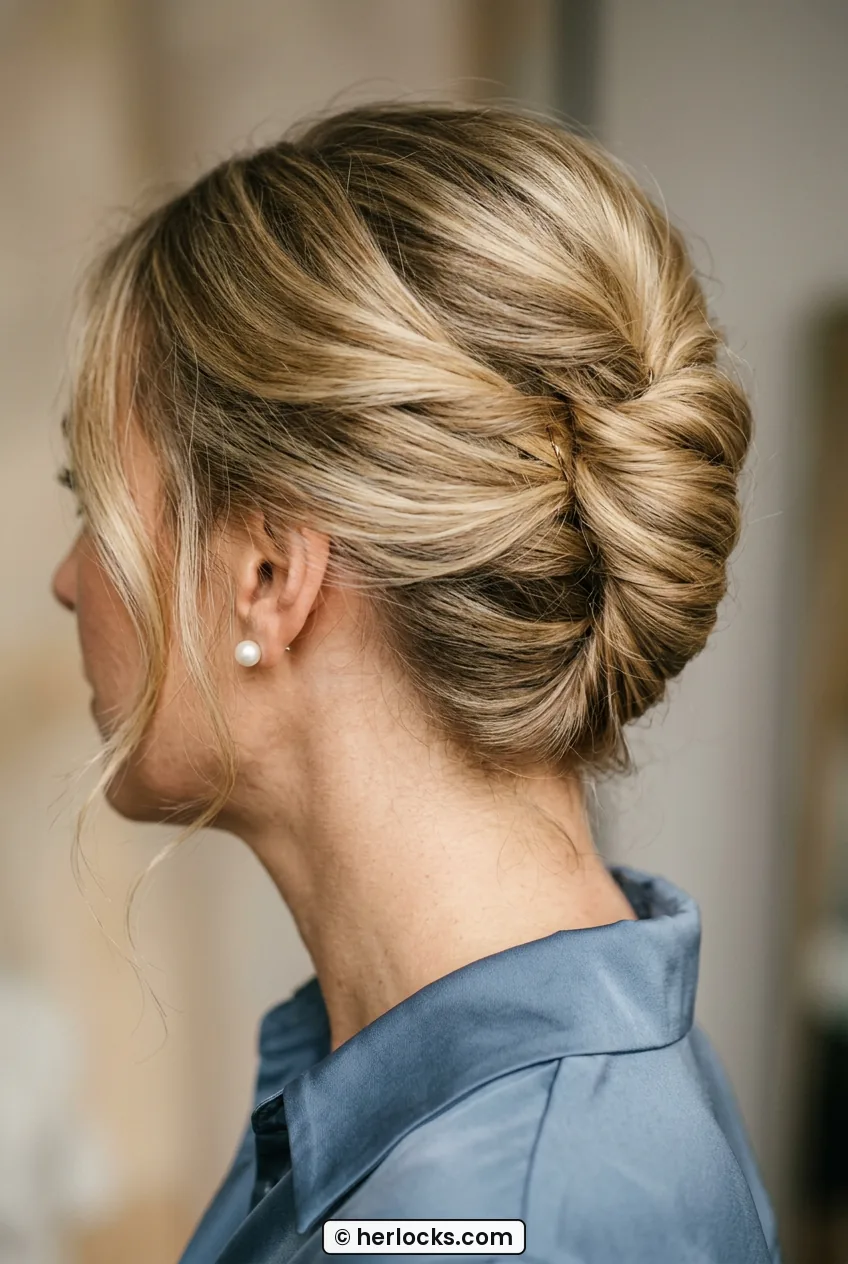
Humidity behavior is surprisingly good. Because the hair is rolled inward, the outer layer acts like a wind-breaker. A light mist of flexible hairspray is enough. I keep a mini claw at the top for extra hold on long days, and no one notices it tucked in.
Hat-friendly? Yes, if you keep it low and soft. A slouchy beanie fits over it. A tight skull cap will flatten the top, so I save this one for beret days or for indoors. It goes from office to holiday party without a restyle, which feels like a small miracle in December.
3. The Braided Low Bun That Adapts From Summer to Winter
If you only learn one winter braid, make it this one. I do a low three-strand braid, pancake it a little for fullness, then wrap it into a bun. It sounds like a lot of steps, but it takes me under six minutes now.
This is my pick for sweaty-to-dry transitions. In summer I wear it after a swim or a bike ride because the braid keeps everything contained. In winter it stops that annoying scarf tangle at the nape. My hair used to knot into a dreadlock every February. Not anymore.
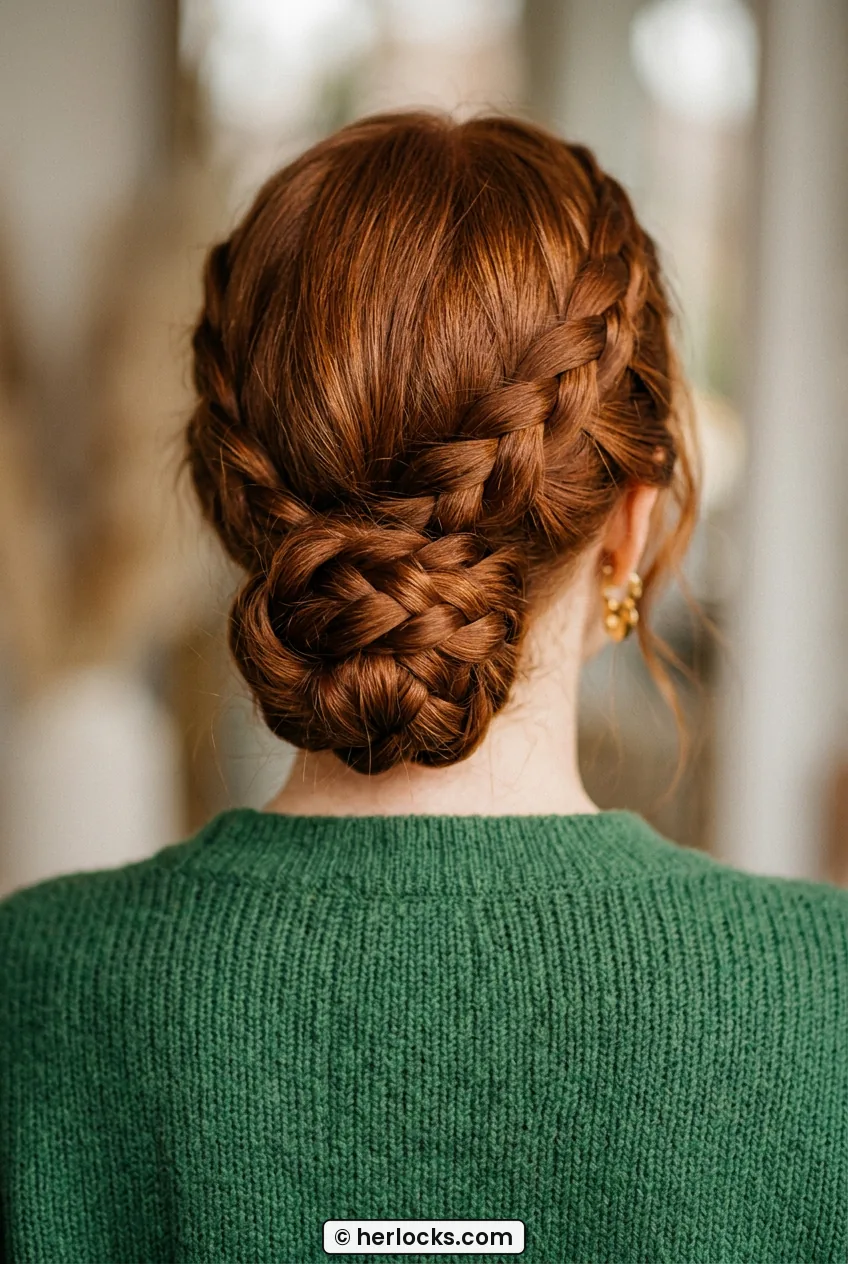
For rain, I love this style because even if a few pieces get damp, the braid pattern hides the wave. I finish with a water-resistant wax stick on the part line. If braids slip on your hair, try a texturizing powder at the roots first. Guides to braiding techniques for grip helped me finally get mine to stay without pulling too tight.
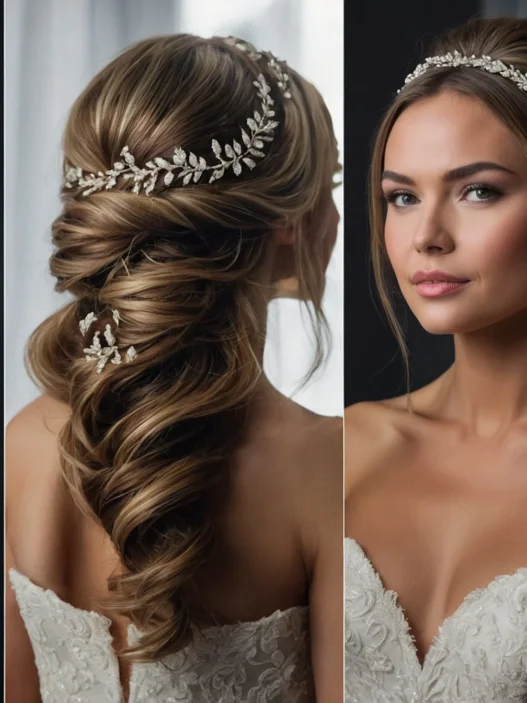
When I want a dressier feel, I pull two face-framing pieces out and curl them once. It instantly reads romantic. I have worn a version of this to two cold-weather weddings, and it photographed beautifully from the back. Similar to winter wedding braided hairstyles, the low placement works with turtlenecks and statement earrings.
See My Braid To Bun Technique Live
4. The Messy Top Knot That Is Wedding-Ready in Any Weather
Okay, I know a top knot sounds too casual for a wedding. But hear me out. A soft, well-anchored top knot is one of the most wind-proof styles I own. I wore mine to an outdoor December ceremony in Chicago and it did not budge.
The trick is placement and prep. I put mine slightly back from the hairline, not right on top of my head. That way a faux-fur headband or a beanie still fits in front of it. I tease the base just a touch, twist loosely, and pin in four directions.
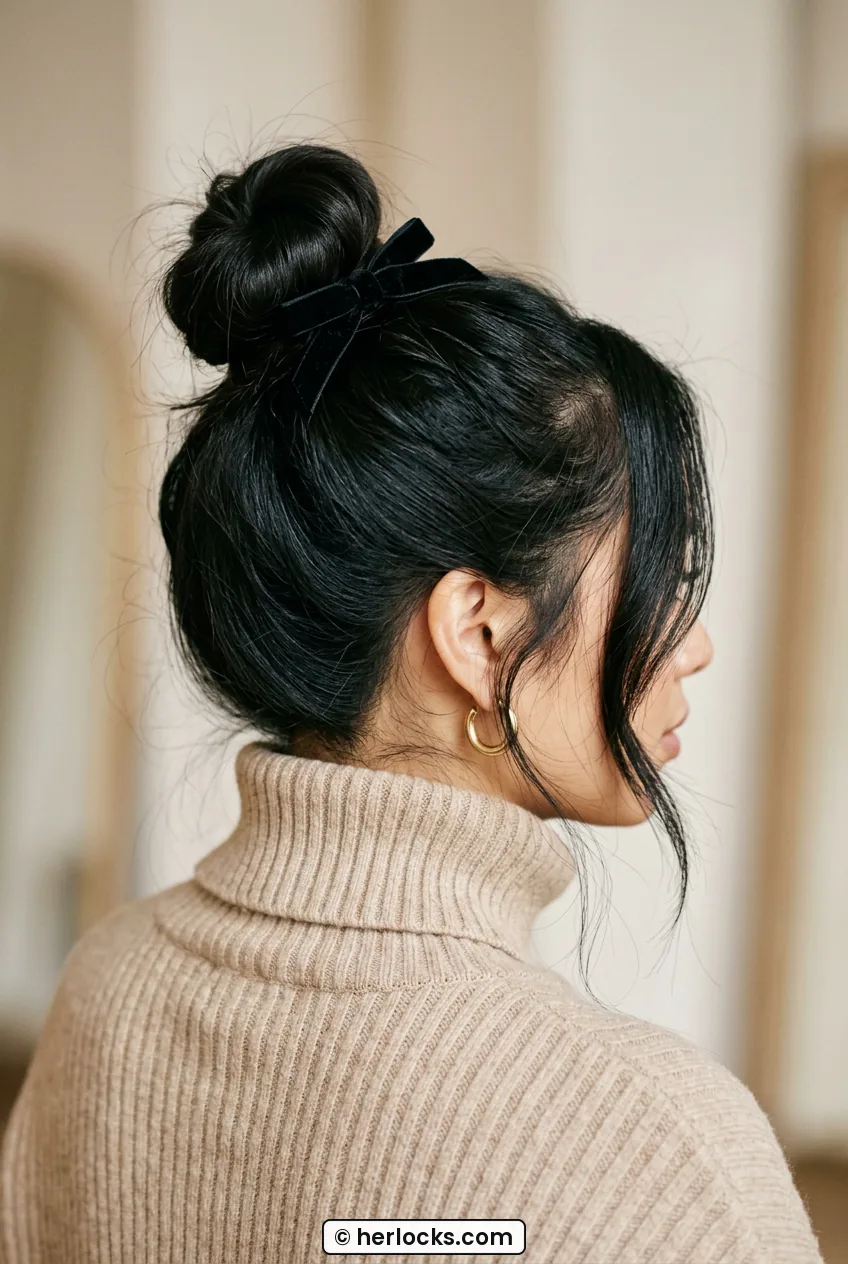
Frizz? It actually likes a little texture here. I skip the smoothing serum and use dry shampoo instead. Static is the bigger enemy in winter, so I run a dryer sheet over my hands and pat the knot down. Sounds weird, works great.
This is my personal pick for busy weeks. I can do it half-asleep, it survives school drop-off wind, grocery store heat, and still looks cute for wine night.
If you need it fancier, add pearl pins or a velvet bow at the base. Suddenly it is bridesmaid-approved. I love how the high shape balances a chunky sweater, and it keeps my neck warm and free at the same time. Total win.
5. The Sleek Chignon That Survives Wind and Rain
Some days I want to feel polished, even if the sky is gray and spitting freezing rain. That is chignon day. I slick my hair into a low ponytail, twist, and tuck the ends under with pins.
She is wearing a super-clean version in the photo, with that smooth sweep over the crown. This is the length I am talking about for medium to long hair, long enough to tuck once and hide the ends completely. Shorter hair can fake it with a small hair donut.
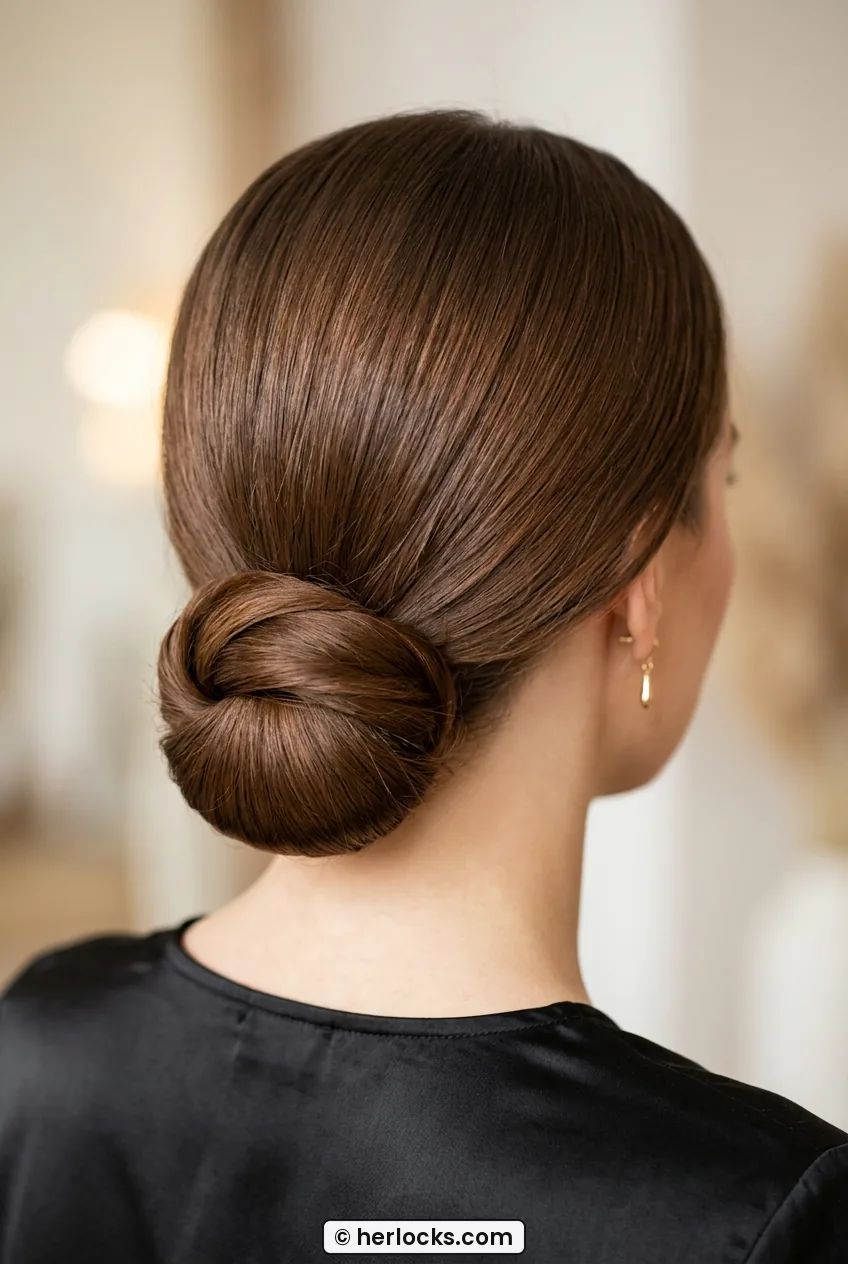
How does sleek hair survive rain? Two things. First, I style it with a water-based gel, not oil, so damp air does not make it separate. Second, I carry a silk scarf for downpours. Thirty seconds covered saves the whole style. You can learn more about smoothing without stiffness from advice on sleek low bun methods applied lightly through the mid-lengths before pinning.
Across seasons, this is my job-interview and date-night updo. In July I wear it with dewy skin and a sundress. In January I wear it with a wool coat and gold hoops. Same technique, totally different mood. For more cold-weather polish, I browse cozy fall hairstyles for latest trends when I need fresh pin placement ideas.
6. The Double-Braid Crown That Holds Up Under a Beanie
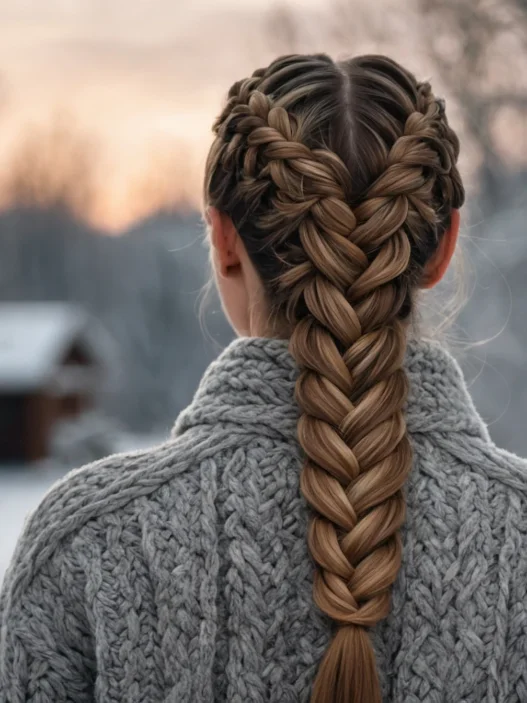
Do you live in beanies from November to March like I do? This crown was made for us. Two Dutch braids that meet at the back and tuck into a mini bun sit flat under any hat.
I love that it solves hat hair. When I take my beanie off, I still have a defined pattern on top instead of a flat dent. I just shake the back out a little. The braids act like a built-in headband, so flyaways stay put even in gusty parking lots.
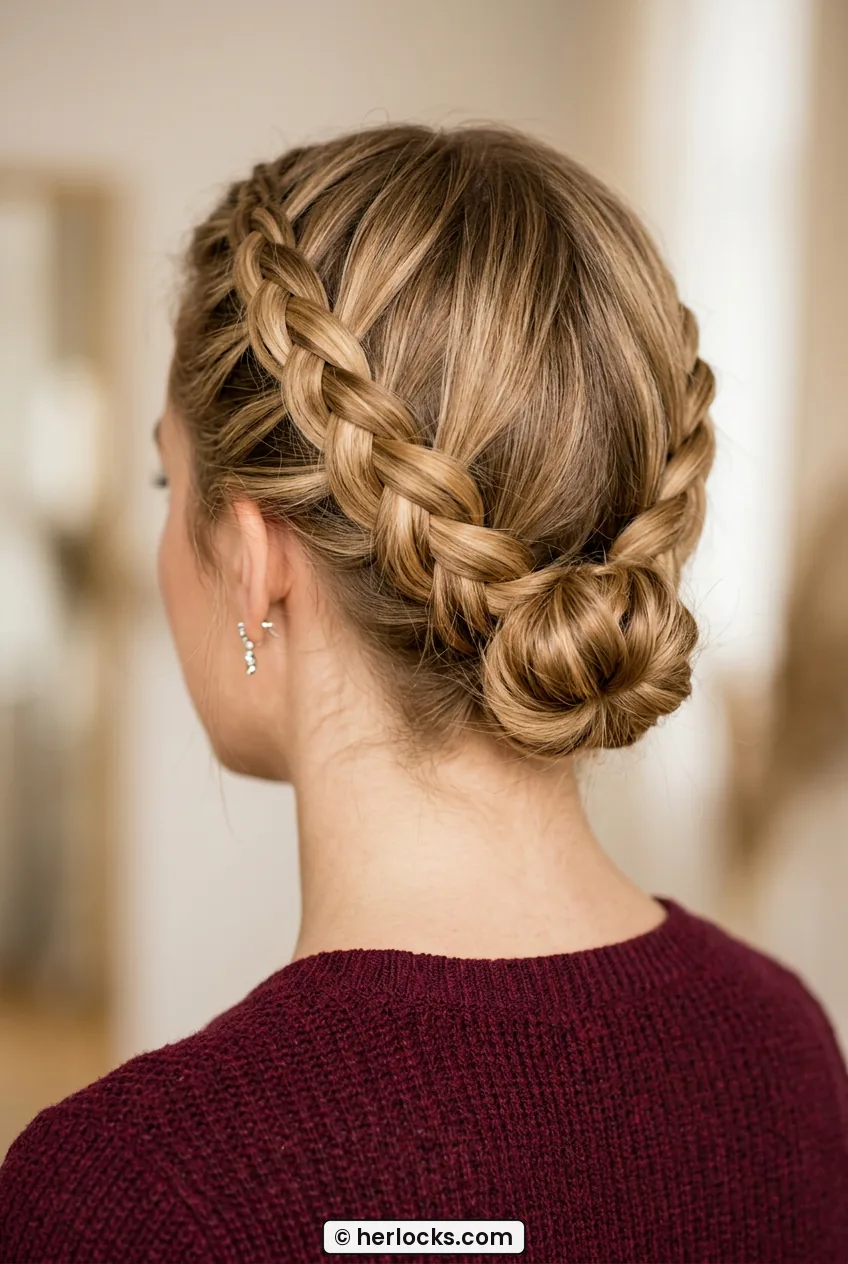
In high humidity, braids swell a bit and look even better. In dry indoor heat, I get a little halo frizz, so I smooth a tiny drop of oil over the tops with my palms. Wind cannot get under it because everything is anchored close to the scalp. That is the four-season magic.
Practice tip that saved me: braid slightly damp hair with a little mousse. My first attempt on dry, silky hair slid out by lunch. The second attempt, on almost-dry hair, lasted two days. I even slept in it once and it still looked fine.
7. The Pinned-Up Gibson Roll That Survives Humidity
This vintage-inspired roll feels so cozy to me, like hot cocoa in hair form. You gather hair low, roll it upward, and pin along the crease. It looks complicated, but it is really just tuck and pin, tuck and pin.
She has a similar hair density to mine, fine but lots of it, and honestly this roll looks incredible on her from behind. See how clean the nape looks? No stray ends sticking to a scarf. That is why I wear it when I know I will be layering turtlenecks all day.
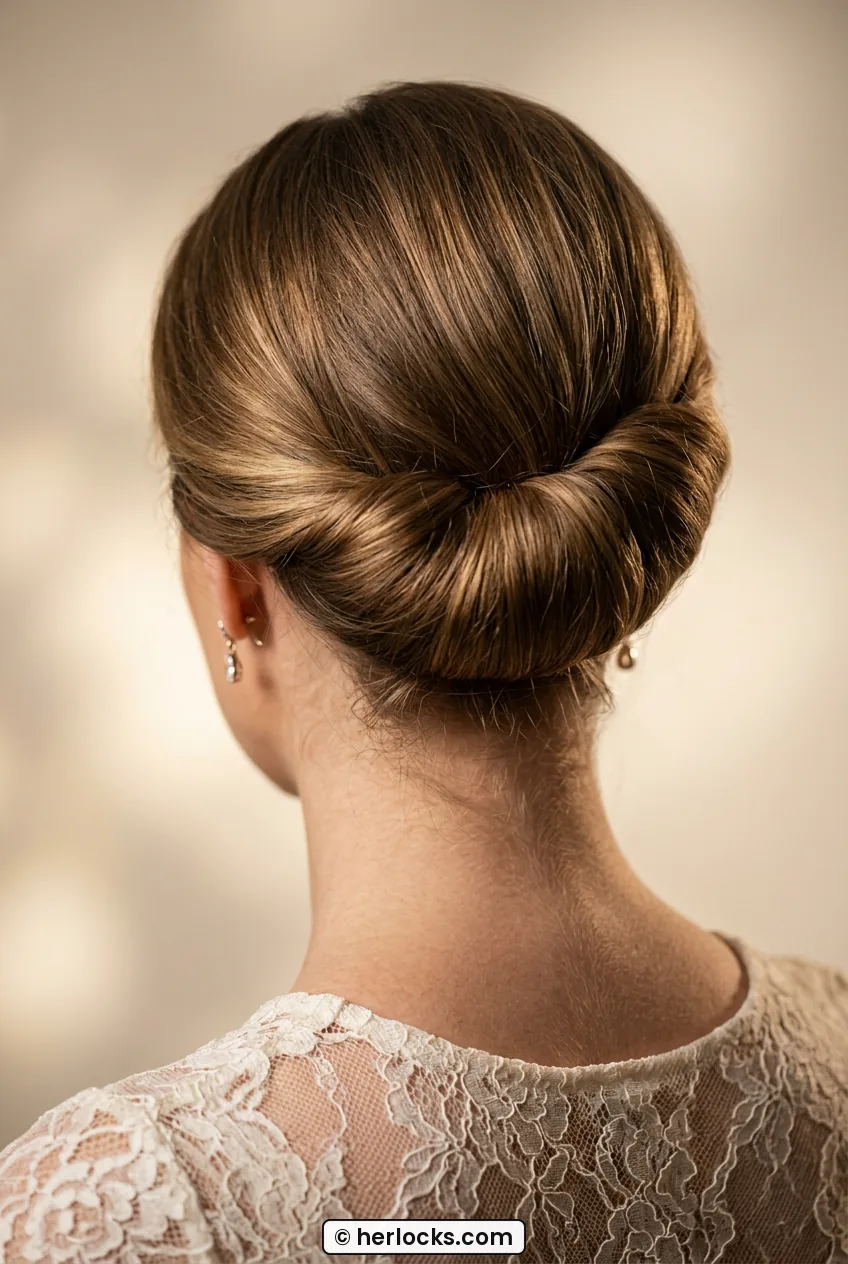
Rain-tested? Yes. I wore it through a misty Seattle weekend and the roll kept its shape because the bulk of the hair is folded inside. Mist sits on the surface and brushes right off. A few bobby pins in a criss-cross pattern hold better than one big clip.
It also transitions well to spring. I loosen it a bit, add a floral clip, and it feels fresh again. If you love nostalgic shapes, festive updos for Christmas for every hair length has more tuck-and-roll ideas that work way past December.
8. The Side-Swept Braid Bun That Adapts From Summer to Winter
Some updos feel too serious. This one does not. I sweep everything to one side, make a loose side braid, then coil just the tail into a low side bun behind my ear. It is soft, a little playful, and super flattering with earrings.
Why does it work year-round? In summer the side placement keeps hair off a sweaty neck without a high ponytail headache. In winter it sits above your coat collar instead of bunching underneath. I learned that the hard way after a center bun kept getting caught in my zipper.
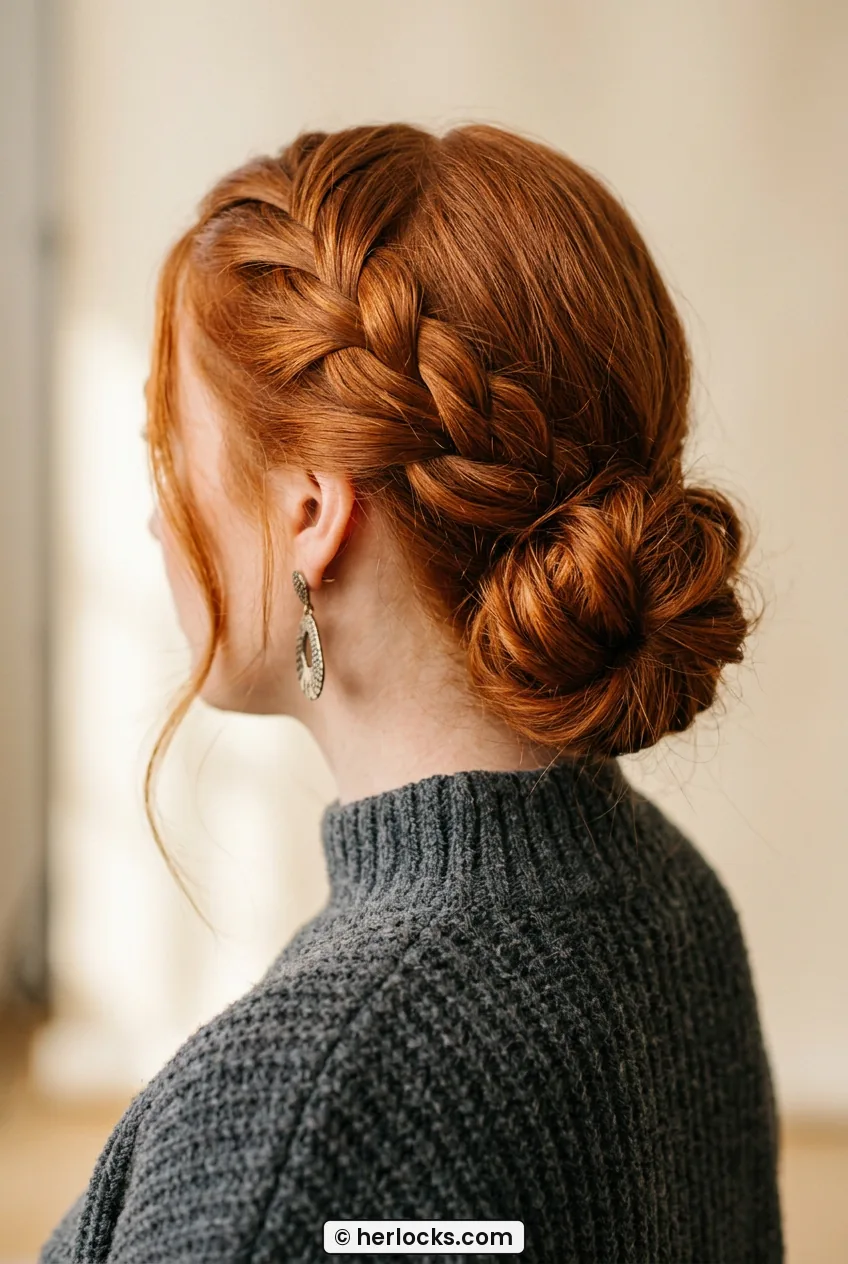
Wind is the only challenge, since one side is more exposed. My fix is to braid a little tighter on the windy side and leave the bun end looser. A U-pin at the jawline side keeps it from flopping forward when I bend down for groceries or chase my dog.
I get compliments on this one more than any other. It looks intricate in photos but feels easy. For shoulder-length girls, cozy chic shoulder length hairstyles for winter shows how to fake fullness with a little backcombing before you wrap the bun.
9. The Claw-Clip Twist That Is Wedding-Ready in Any Weather
Last but not least, my lazy-girl luxury. I gather hair like a low pony, twist it up the back of my head, and clamp a medium claw clip over it. Tuck the ends in or let them fan out for a 90s feel. Done in forty seconds.
Is a claw clip really wedding-ready? With the right clip, yes. I wore a tortoise matte clip for a rehearsal dinner and a gold metal one for the actual winter wedding, and both looked intentional. The twist hides second-day roots and holds through hugs, dancing, and happy tears.
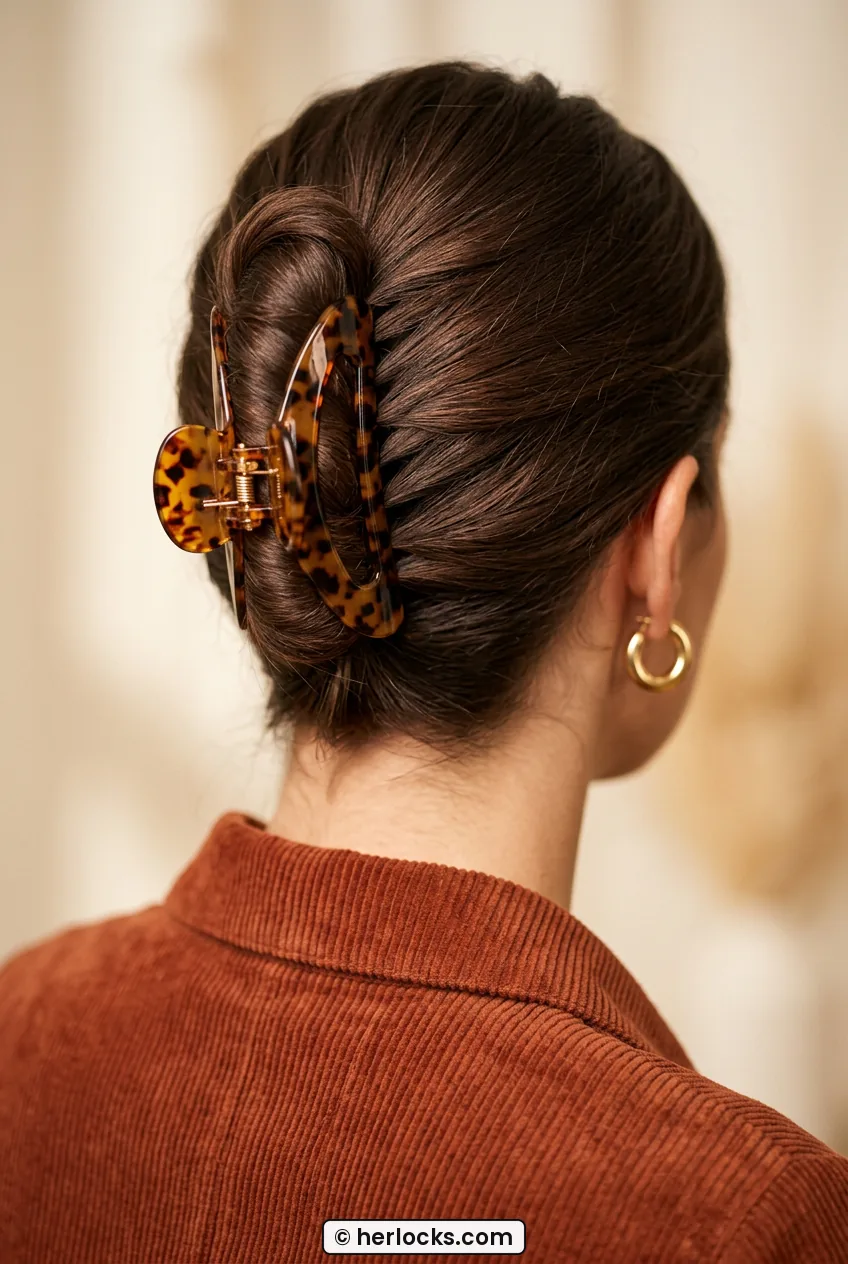
Weather-wise, this is the most adaptable of all. Humid day? The clip allows airflow so my scalp does not get sweaty. Freezing day? It sits low enough for a beanie on top. Rainy day? I tuck the ends fully in so nothing drips. If your clip slips, the issue is usually size, and reading about claw clips for secure hold made me finally buy the right one for my thick hair.
I keep one clip in my bag, one in my car, one on my desk. That tells you everything. It is not precious, it just works, and on tired winter hair that is priceless.
What People Ask Me About Cozy Cold-Weather Updos
How do I stop static when I wear updos all winter?
I swear by a silk pillowcase, a tiny bit of leave-in on the ends, and metal or acetate pins instead of plastic combs. And I never take a beanie off fast, I lift it slowly to avoid that zap.
Which updo lasts longest under a beanie?
The low twisted bun and the double-braid crown. Both sit flat at the nape and do not create a bump on top, so the hat does not rub them loose.
Can I do these styles on fine hair?
Yes, just prep first. Dry shampoo or texture powder at the roots gives fine hair grip. I also use smaller pins and avoid heavy creams that pull the style down by noon.
What is the quickest wedding-guest updo for bad weather?
The claw-clip twist with a dressy clip, or a low chignon. Both take under five minutes, photograph well from behind, and survive wind and light rain without a touch-up.
That is my full winter rotation. If you try just one, start with the low twisted bun and tell me how it holds under your favorite beanie. I am usually curled up testing the next one, so come back soon for more.