






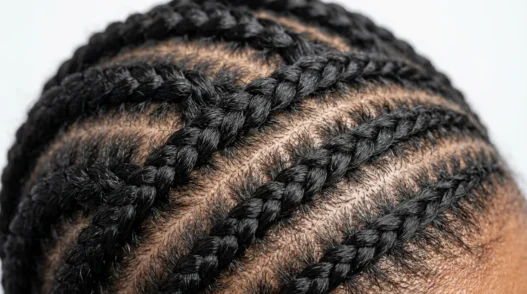
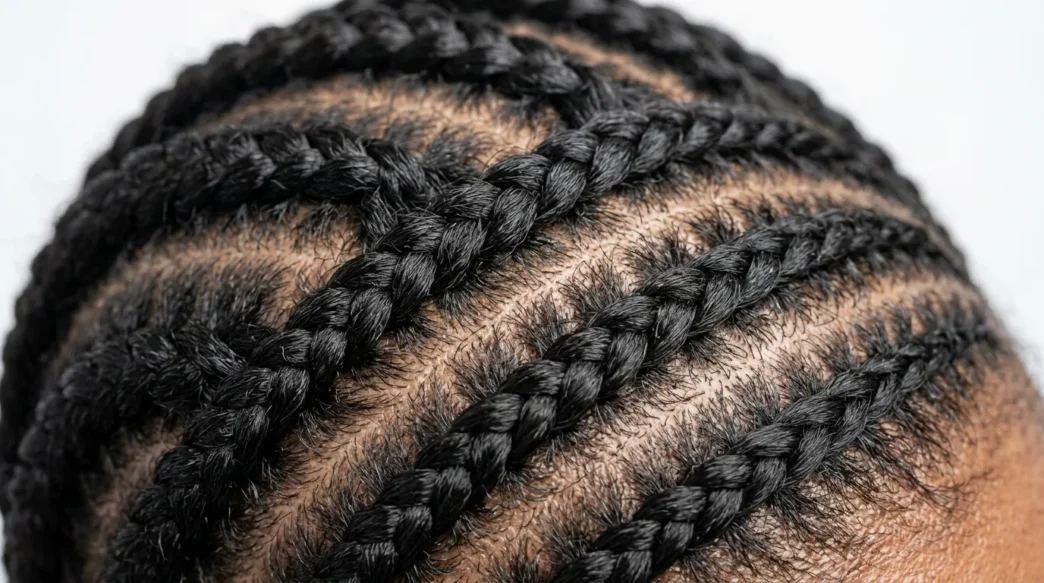
I’ve been wearing cornrows since I was seven years old, sitting between my aunt’s knees while she worked magic with a rattail comb. But it wasn’t until I went natural in college that I truly understood how versatile cornrow hairstyles natural hair can be. They’re not just protective — they’re stunning, practical, and work on literally every hair type I’ve encountered.
For Fine & Delicate Hair
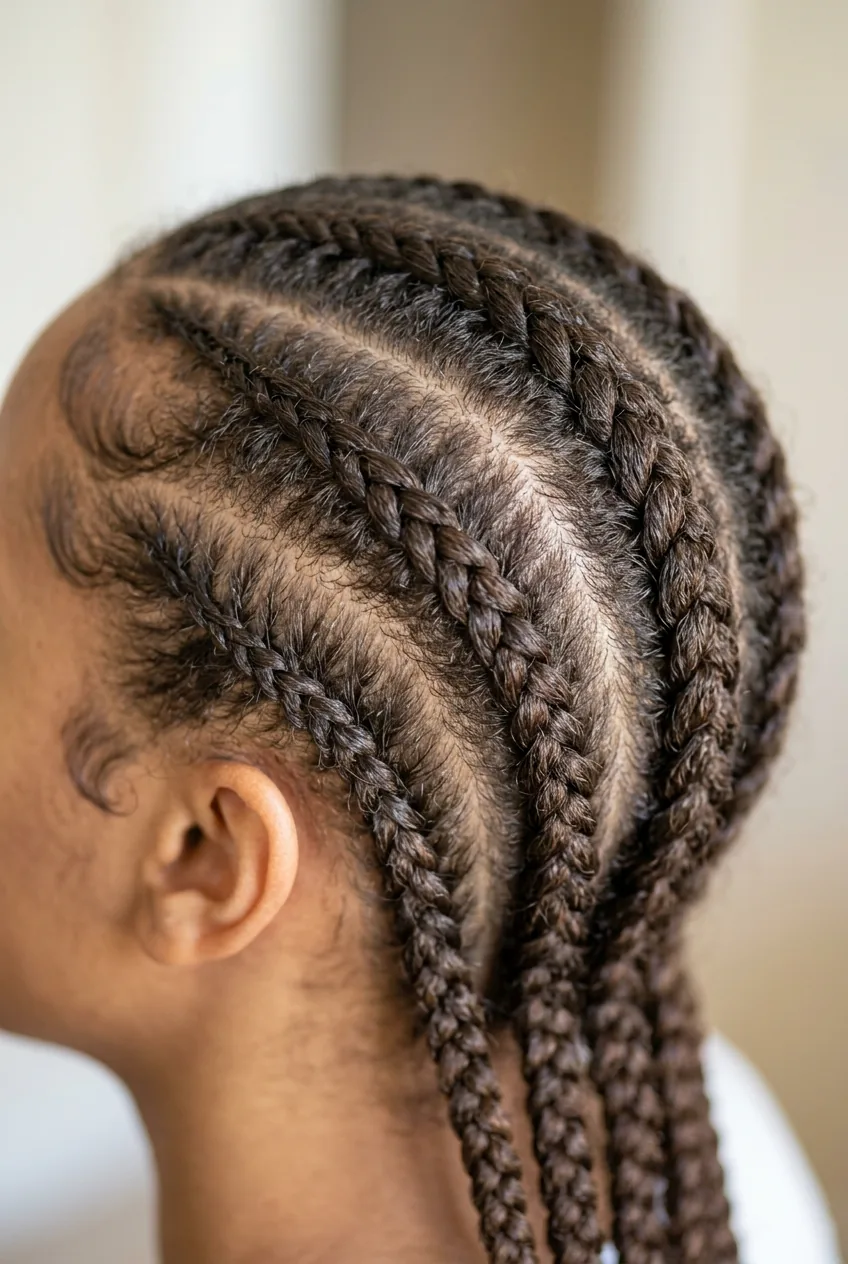
Fine natural hair needs cornrows that protect without pulling. I learned this the hard way after my first attempt at micro braids left me with breakage around my edges.
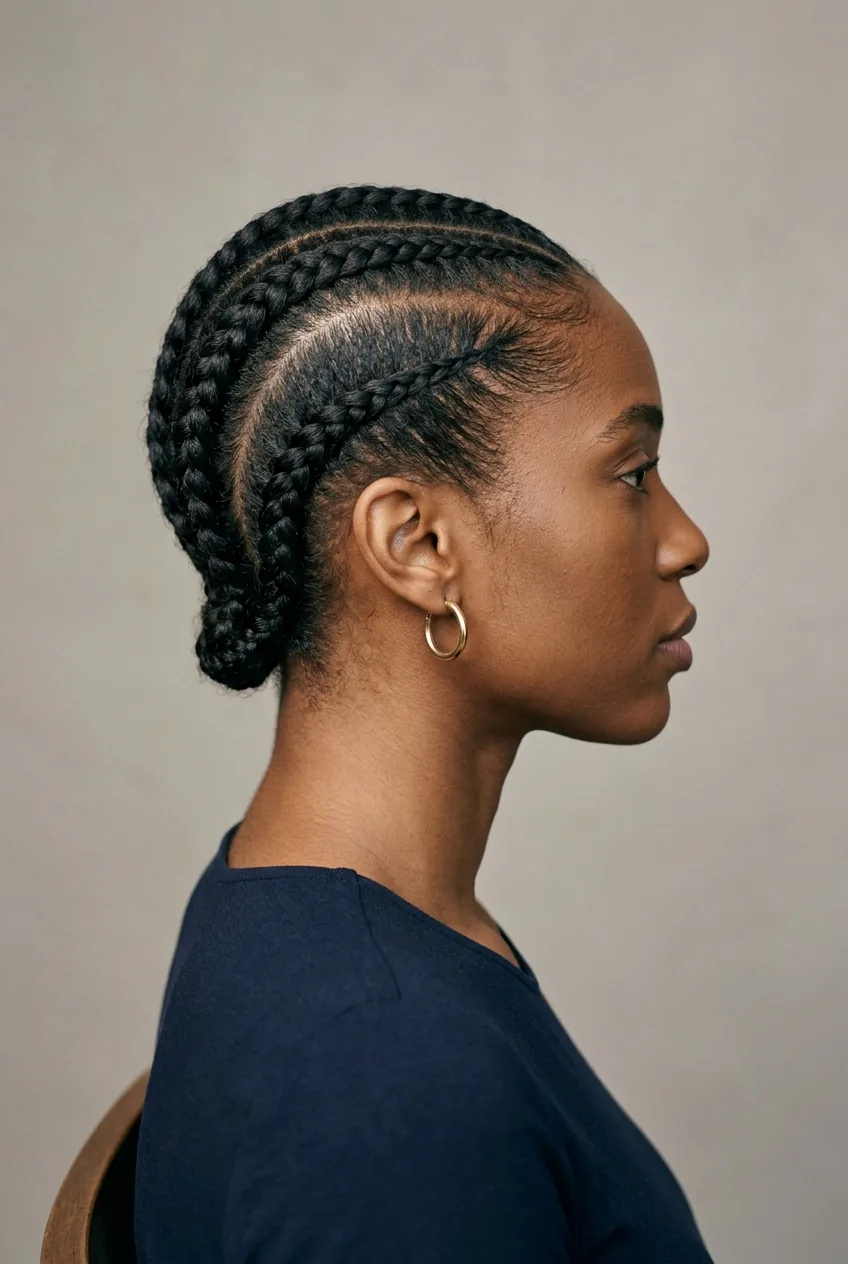
Feed-In Cornrows with Loose Tension
These are my go-to for clients with fine hair. The gradual addition of hair means less stress on your roots, and you can achieve that sleek look without the headache. I always tell my stylist to braid “like you’re holding a butterfly” — firm enough to stay, gentle enough to breathe.
Two Large Side Cornrows
Sometimes simple wins. Two thick cornrows swept to one side give you that editorial look while being incredibly gentle on fragile strands. Perfect for when you want protective styling without looking like you’re trying too hard.
For Thick & Dense Hair
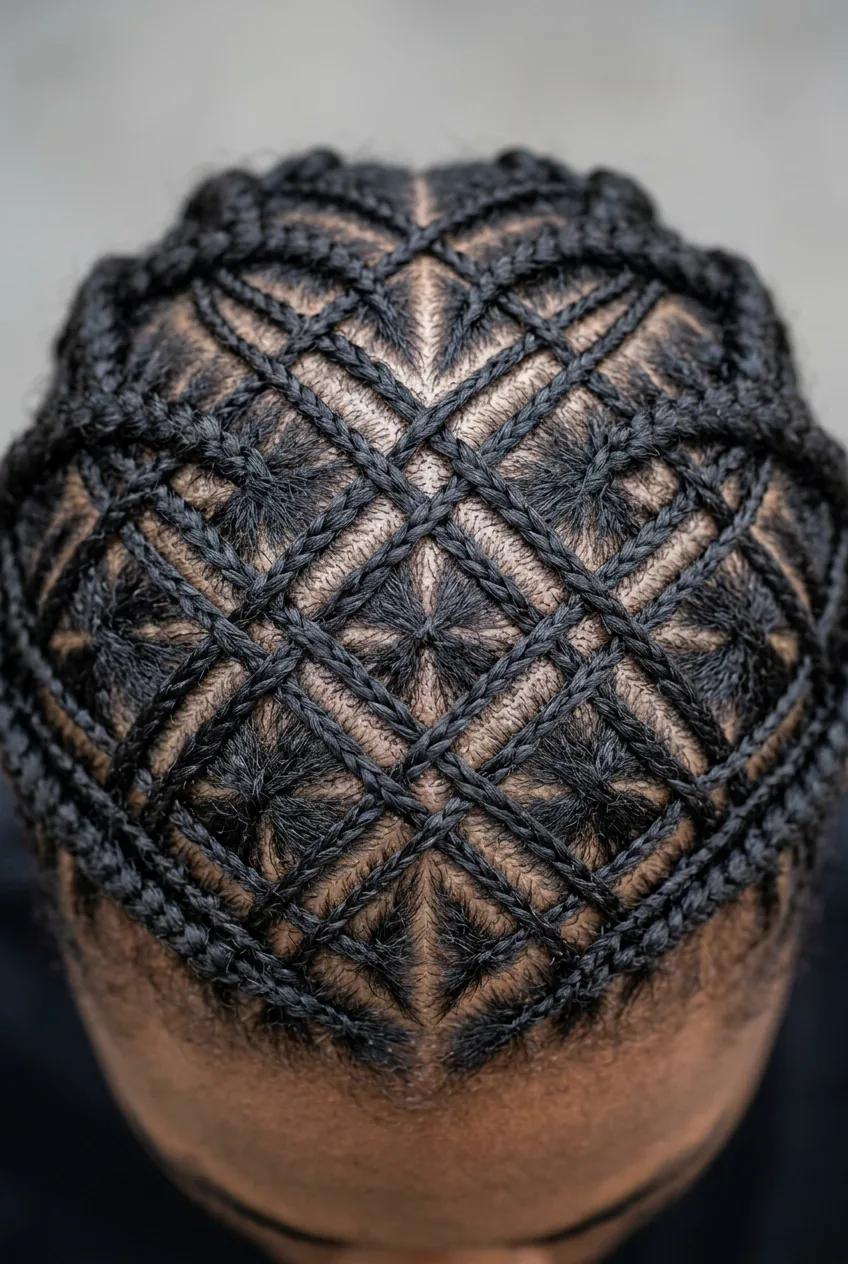
If you’ve got thick, dense natural hair, you know the struggle of styles that look bulky. These cornrow patterns work with your texture instead of against it.
Intricate Geometric Patterns
This is where thick hair really shines. You can handle complex zigzag patterns, diamond shapes, even spiral designs that would be impossible on finer textures. I once had a client who asked for a maze pattern — and it worked beautifully because she had the density to support it.
My personal favorite for thick hair? The “starburst” pattern where multiple small cornrows radiate from a center point. It looks incredibly intricate but actually helps distribute the weight of heavy hair evenly across your scalp.
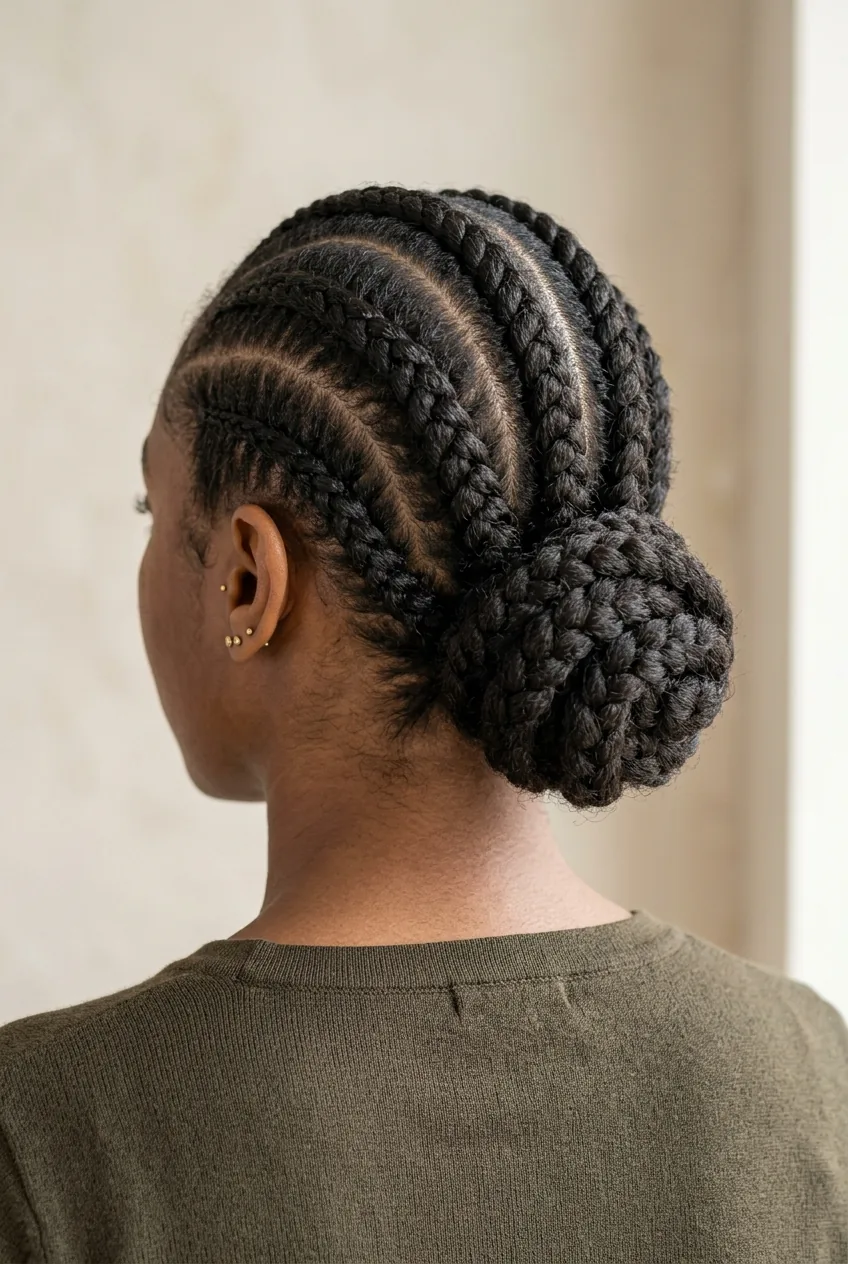
Multiple Small Cornrows Leading to a Bun
Six to eight small cornrows gathered into a low bun at the nape — this style manages bulk while looking polished enough for work meetings. The key is keeping the cornrows themselves relatively loose and letting the bun do the heavy lifting.
Chunky Straight-Back Rows
Don’t overthink it. Sometimes four or five substantial straight-back cornrows are exactly what thick hair needs. They’re quick to install, last for weeks, and give you that classic protective style look. Add some edge control around the perimeter for a polished finish.
For Medium Density Hair
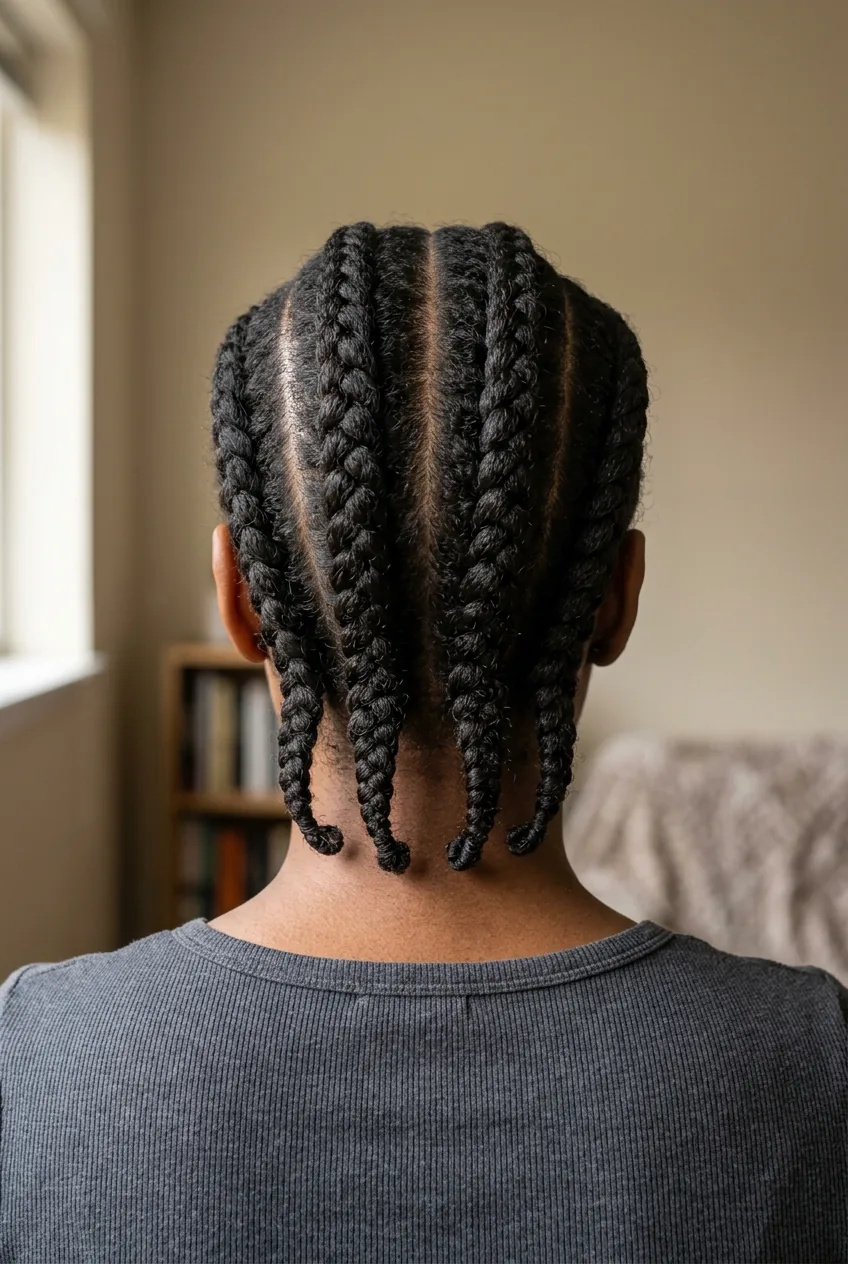
Medium density hair is the sweet spot for cornrow versatility. You’re not limited by fragility or overwhelmed by bulk.
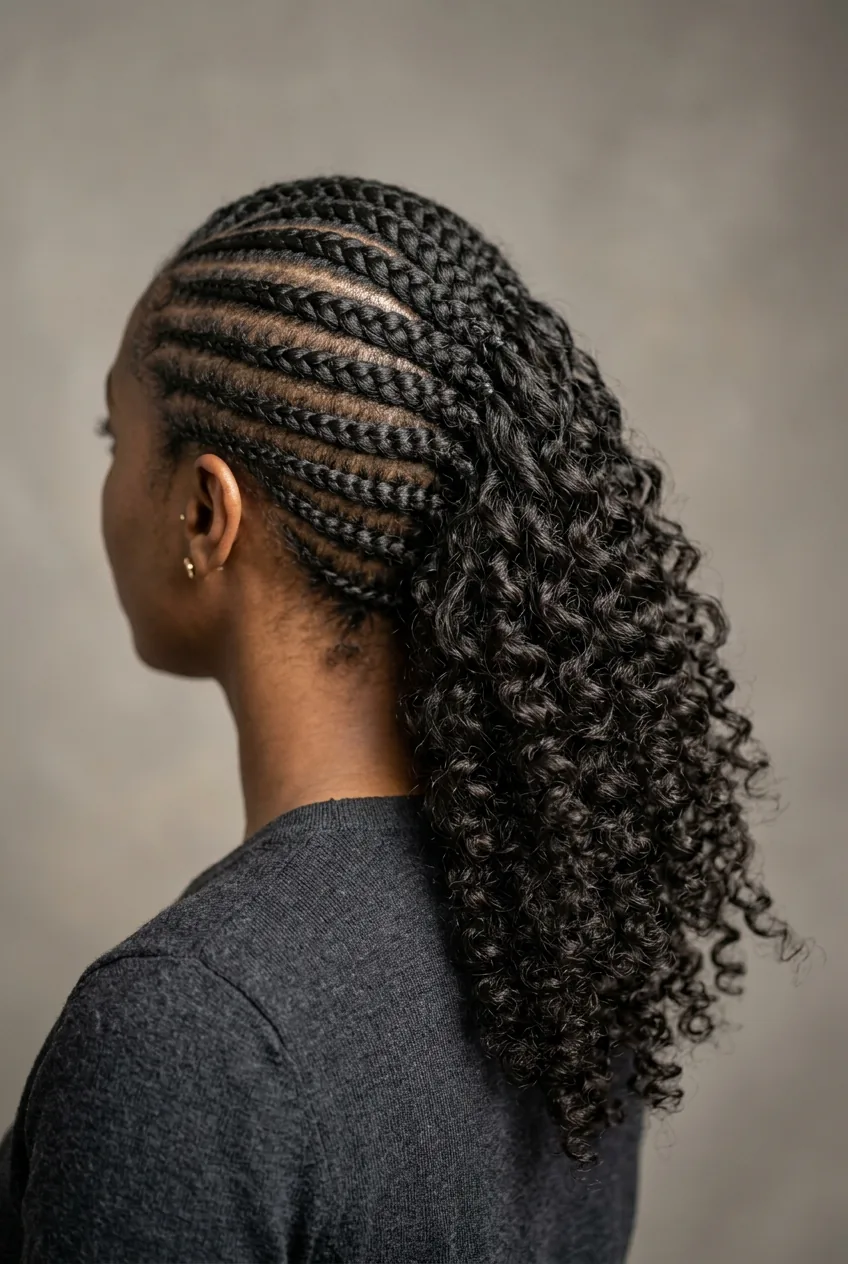
Side-Swept Cornrows with Curly Ends
All the cornrows sweep dramatically to one side, with the ends left loose and defined. It’s protective for the majority of your hair while keeping some movement and bounce. I love how this bridges the gap between fully braided and loose natural styles.
Cornrow Updo with Face-Framing Pieces
Multiple cornrows that gather into an updo at the crown, but leave a few pieces loose around your face. It gives you the best of both worlds — protection where you need it most (the length) and softness where it matters (around your face).
For Short Hair
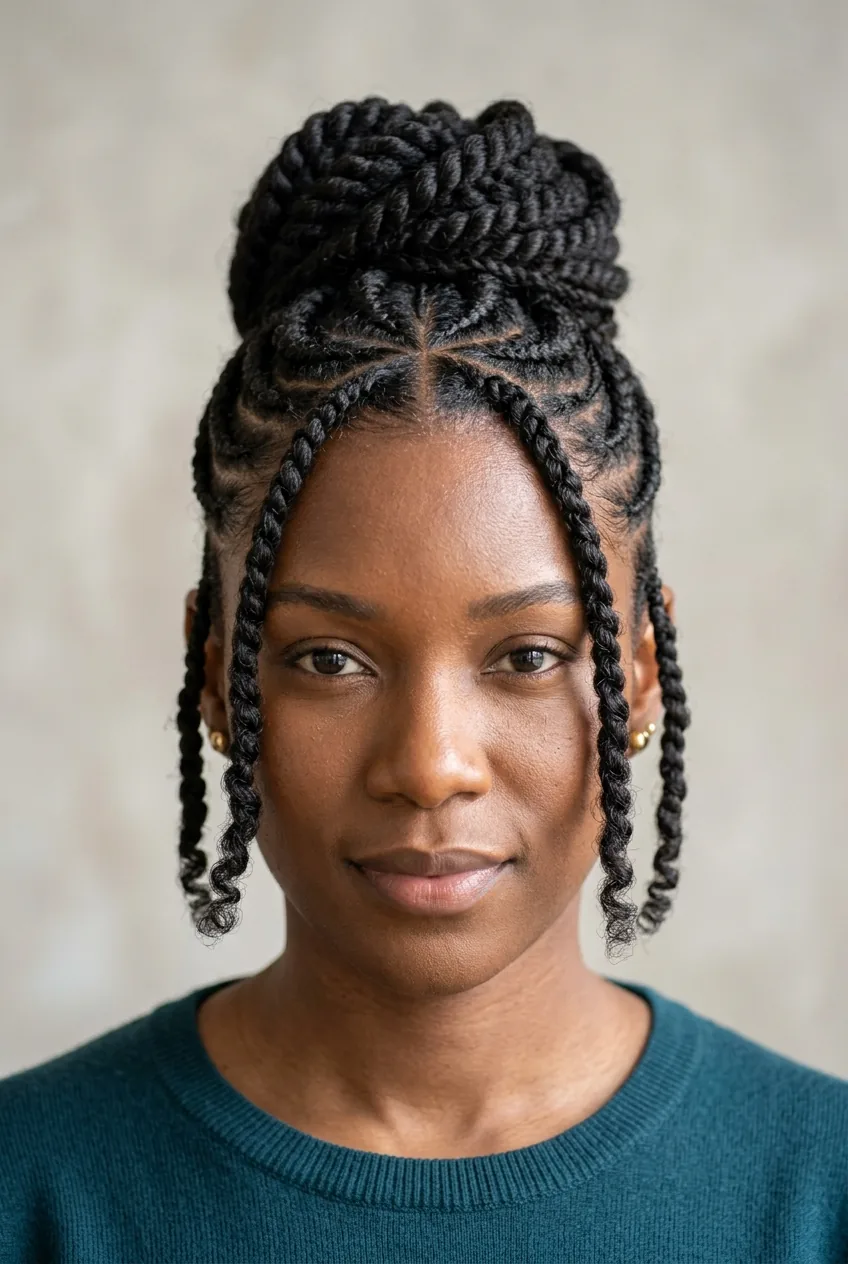
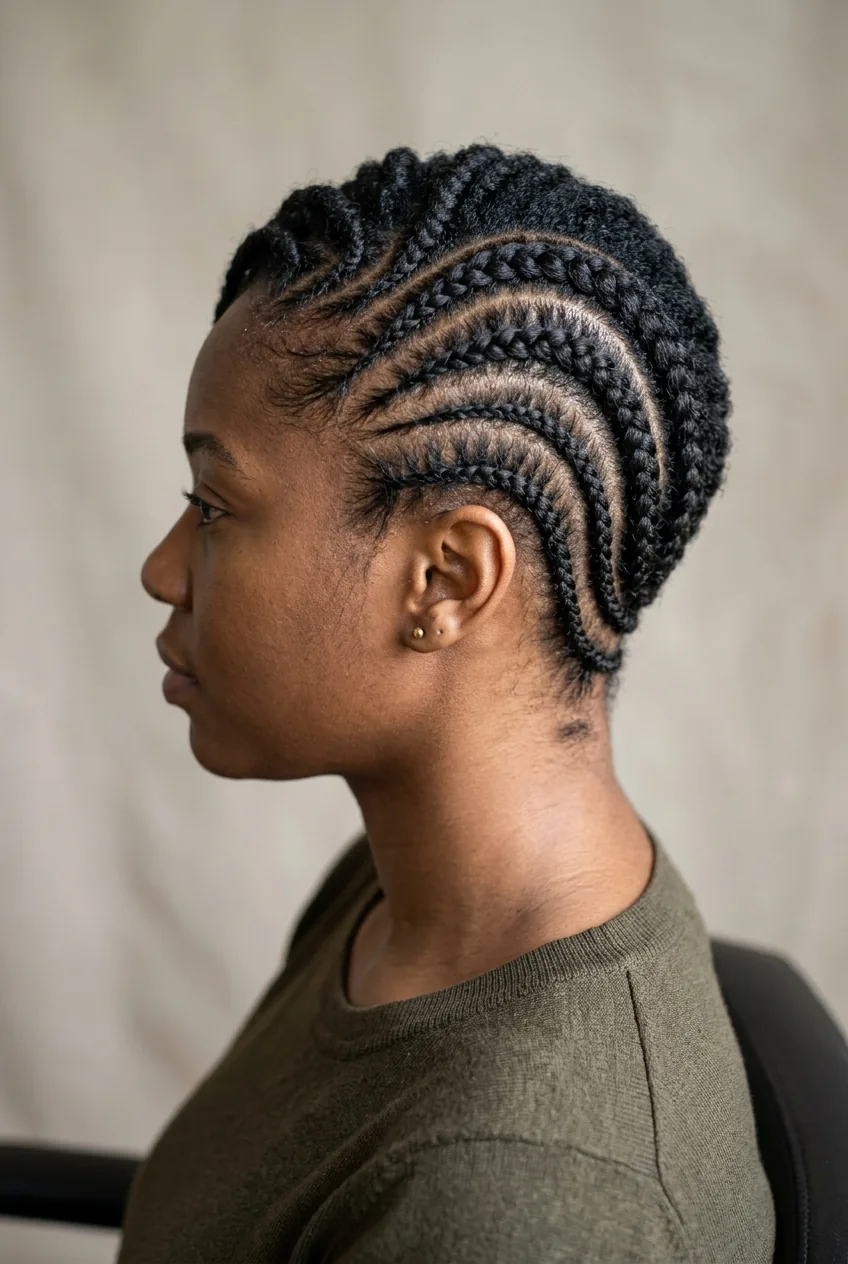
Short natural hair and cornrows? Absolutely possible. These styles prove you don’t need length to rock protective braiding.
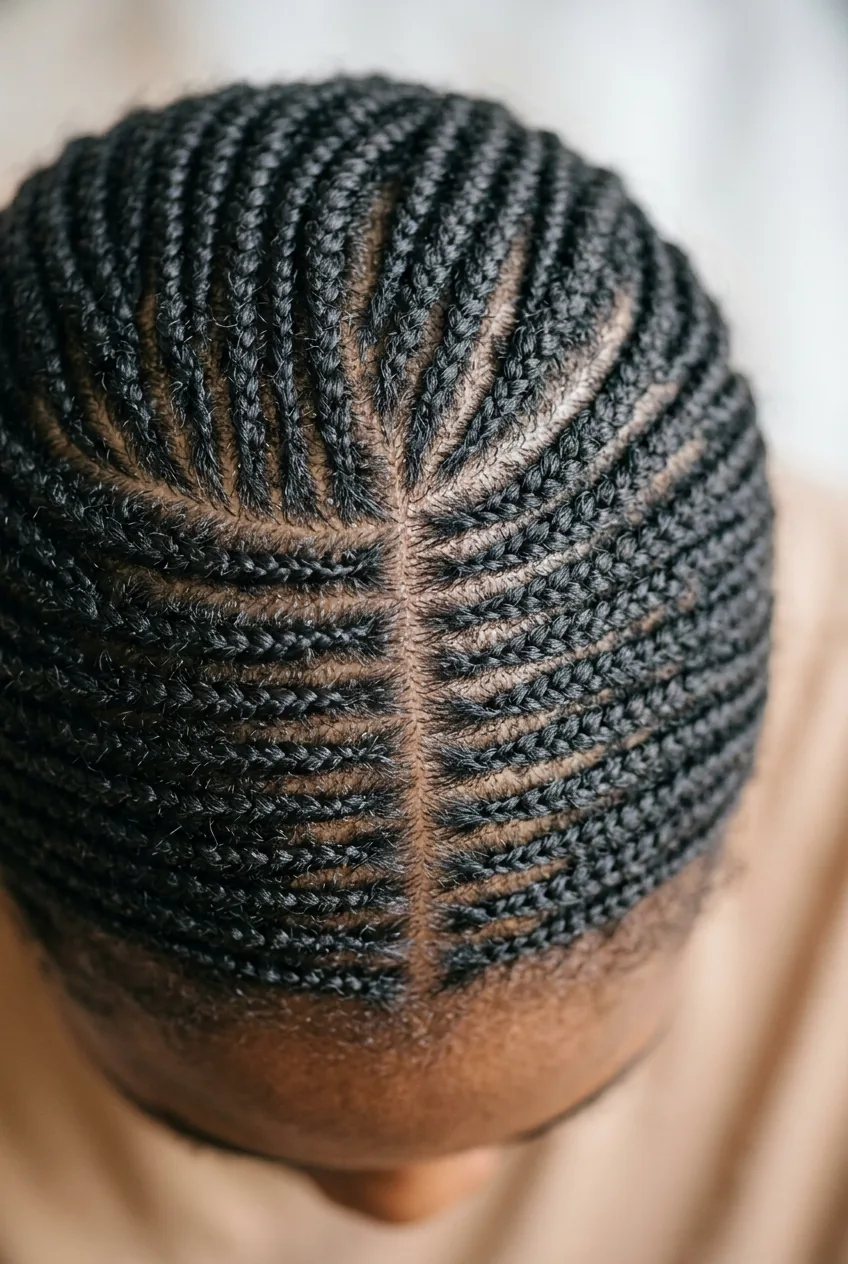
Micro Cornrows All Over
When your hair is short, going small creates incredible texture and visual interest. Think of it as natural hair’s answer to a buzz cut — edgy, modern, and surprisingly versatile for styling with hair accessories.
Asymmetrical Cornrow Design
Short hair is perfect for bold, asymmetrical patterns. Maybe cornrows on one side and a twist-out on the other. Or a curved pattern that follows your natural hairline. Short hair gives you permission to be experimental in ways longer hair sometimes doesn’t.
For Long Hair
Long natural hair in cornrows is pure poetry when done right. The key is managing weight and preventing tension headaches.
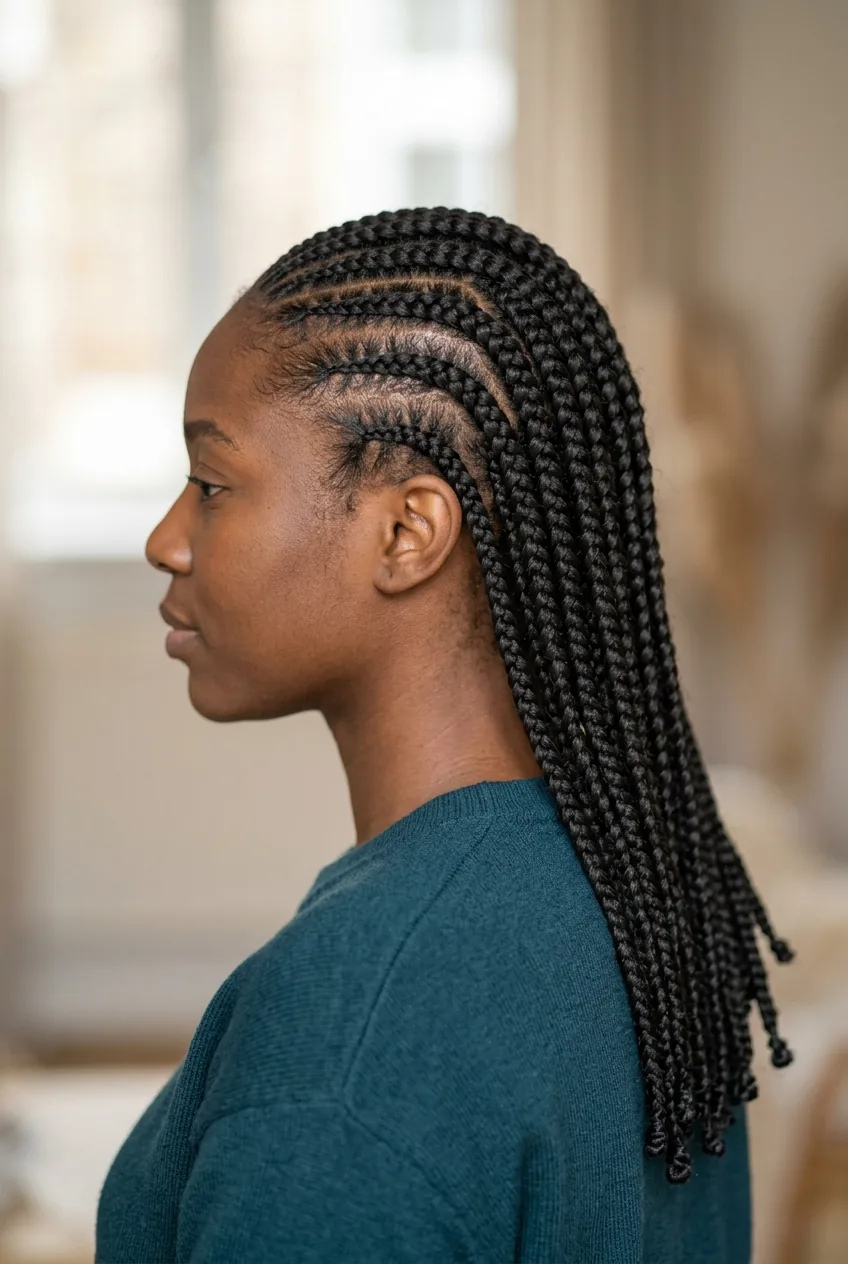
Loose Box-Braid Style Cornrows
Essentially cornrows that transition into loose box braids at the nape. This gives you the sleek cornrow look at your scalp while distributing the weight of long hair through individual braids. Game-changer for anyone who’s ever gotten a headache from heavy braids.
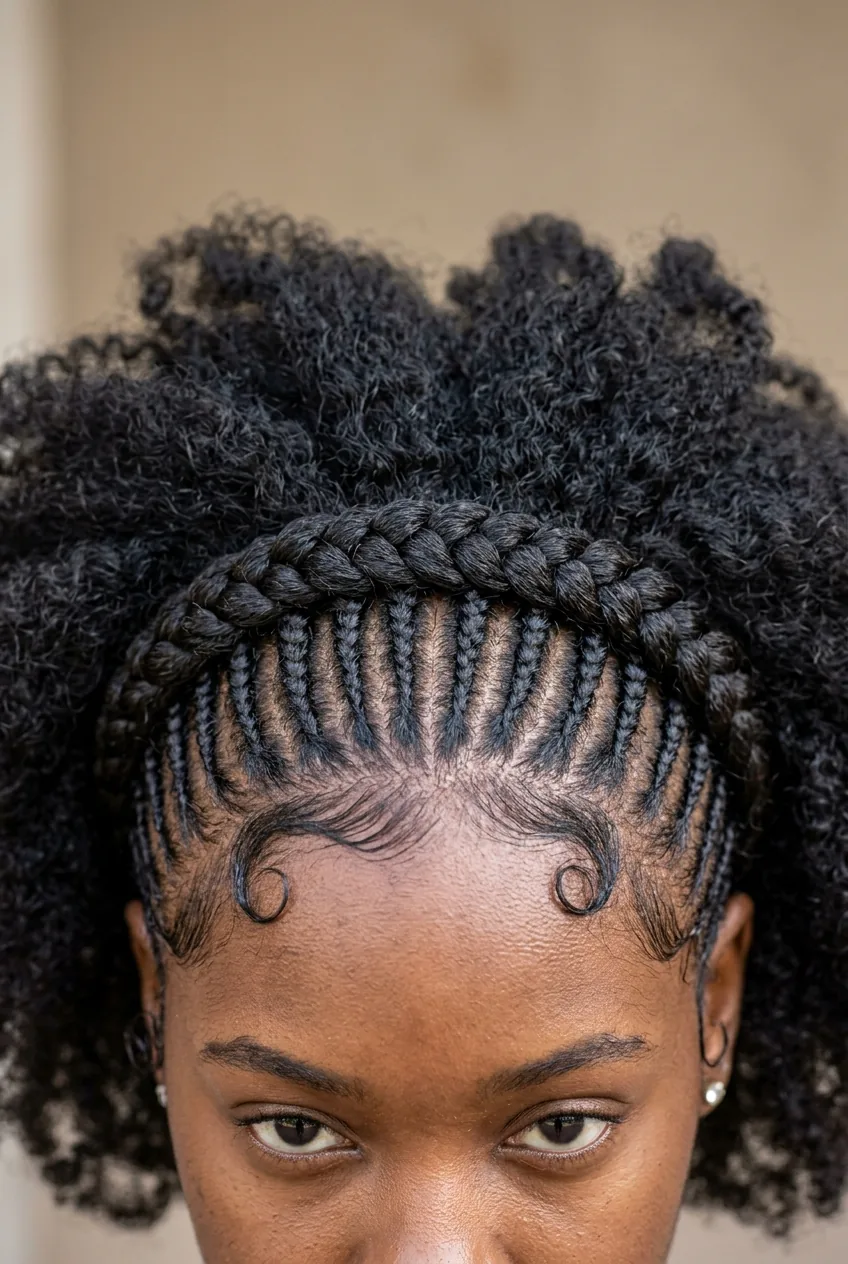
Cornrow Crown with Loose Hair
A crown of cornrows around your hairline, with the rest of your hair left loose and natural. It’s protective for your edges (which break most easily) while showcasing your natural length and texture. Plus, you can still do wash-and-gos with most of your hair.
For the Low-Maintenance Lover
Some of us just want to braid it and forget it. These styles are for my low-maintenance sisters who still want to look put-together.
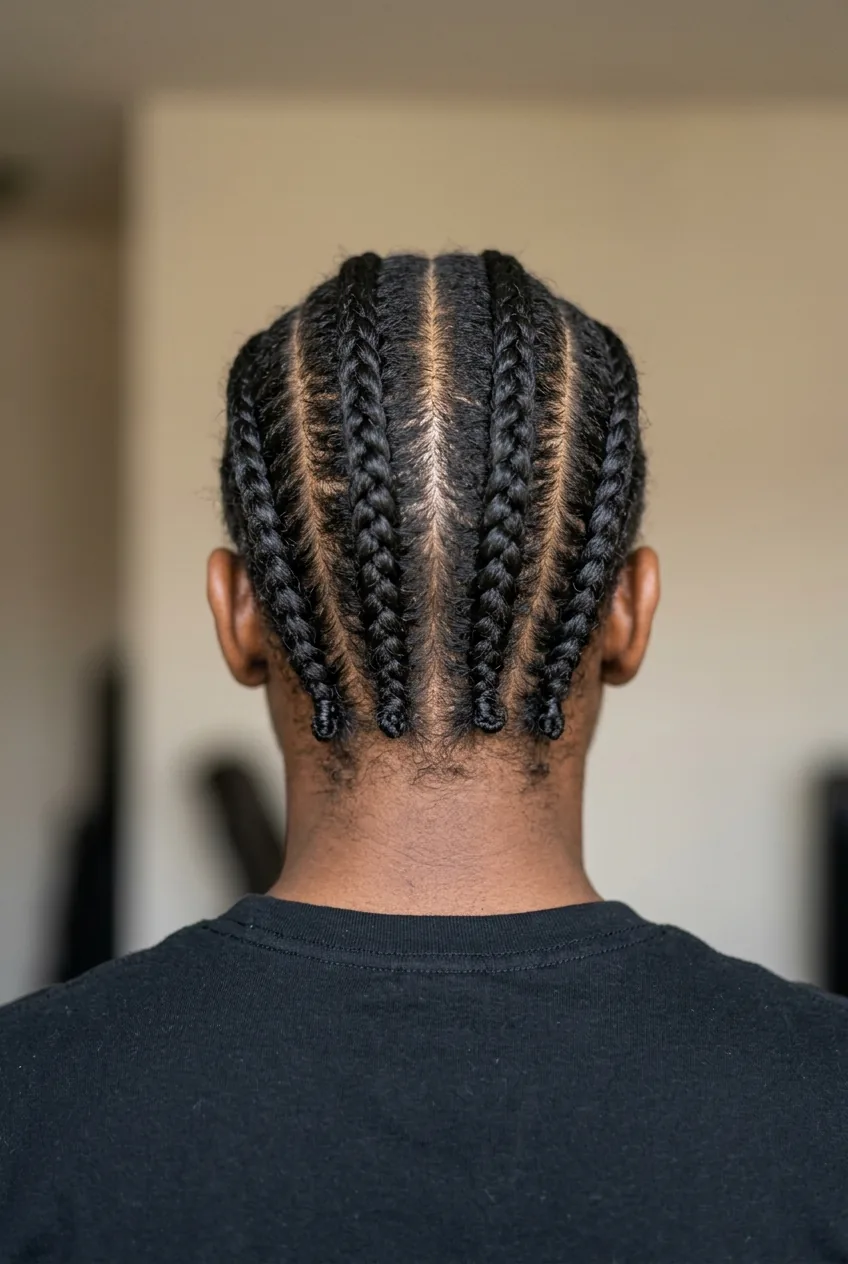
Simple Straight-Back Rows
Five or six straight cornrows from front to back. That’s it. No curves, no patterns, no complexity. Just clean, classic protective styling that you can literally ignore for two weeks. Sometimes the most boring option is the most beautiful one.
Two Dutch-Braid Style Cornrows
Essentially two large cornrows that sit on top of your head like Dutch braids. They’re substantial enough to last, simple enough to maintain, and versatile enough to dress up or down. I wear these for travel because they photograph well and require zero touch-ups.
The beautiful thing about cornrow hairstyles natural hair is how they adapt to your lifestyle. Whether you’re protecting 4C coils or adding texture to 3A curls, there’s a cornrow pattern that works. And unlike some protective styles, cornrows actually get better-looking as they age a little — that slightly lived-in look is everything.
What People Usually Ask
How long do cornrows last on natural hair?
Typically 2-4 weeks, depending on your hair texture and how well you maintain them. I find that looser cornrows last longer because there’s less tension pulling them apart. Fine hair might need a refresh after two weeks, while coarser textures can easily go a month.
Can cornrows damage natural hair?
Only if they’re too tight or left in too long. The biggest mistake I see is people thinking protective styles need to hurt to be effective. Good cornrows should feel secure but never painful — if your scalp is sore the next day, they’re too tight.
Should I wash my hair with cornrows in?
Absolutely! Focus on your scalp with a diluted shampoo, then follow up with a light oil. I use a spray bottle to get the shampoo mixture right to my roots, then rinse thoroughly. Your scalp still needs to be clean and healthy, braids or no braids.
What’s the best hair length for cornrows?
Honestly, any length works with the right technique. I’ve done gorgeous cornrows on everything from TWAs to waist-length hair. The key is adjusting your expectations — short hair won’t look like long hair in cornrows, and that’s perfectly fine. Each length has its own beauty.
The best cornrow style is the one that works with your hair, not against it. Take your time finding a stylist who understands natural hair textures, and don’t be afraid to speak up if something feels too tight. Your hair will thank you for it.