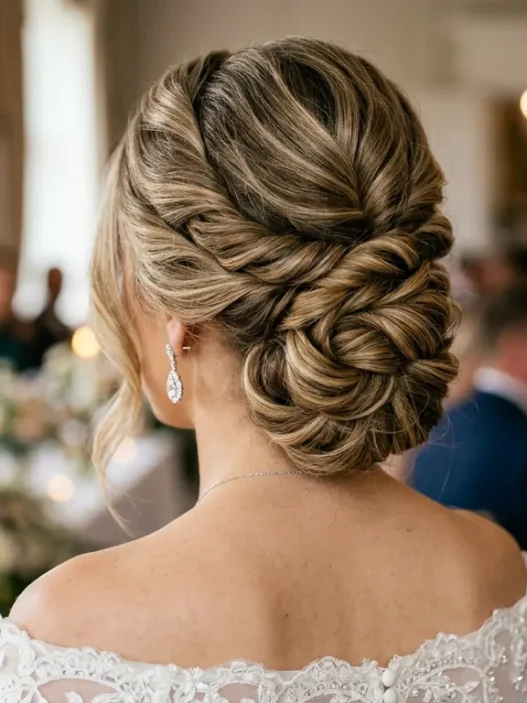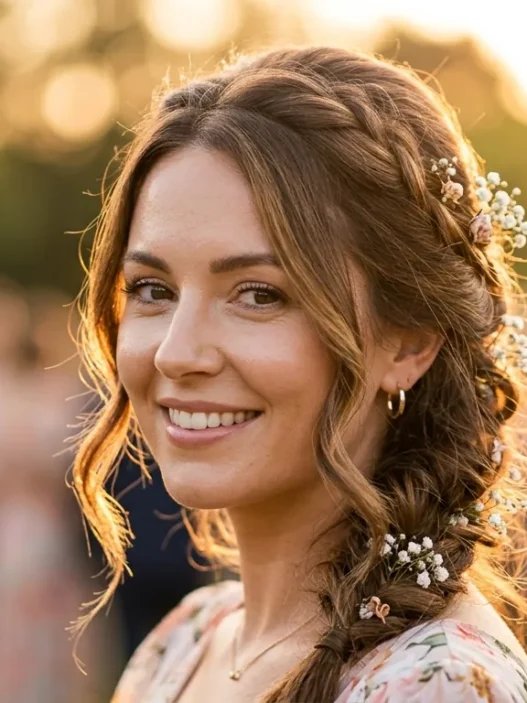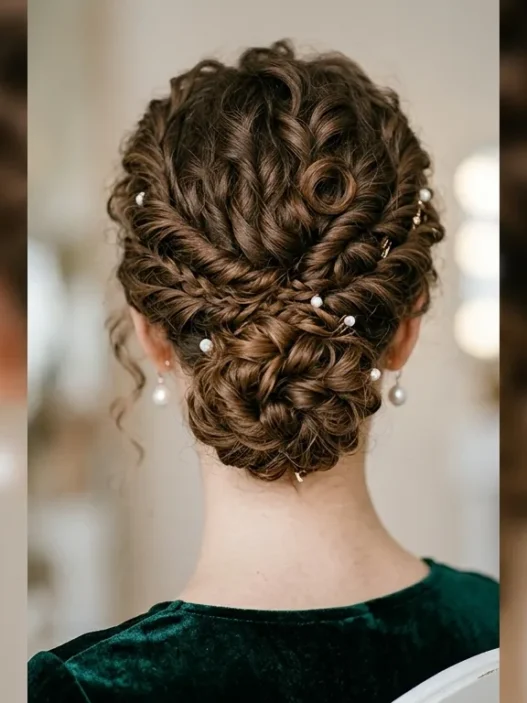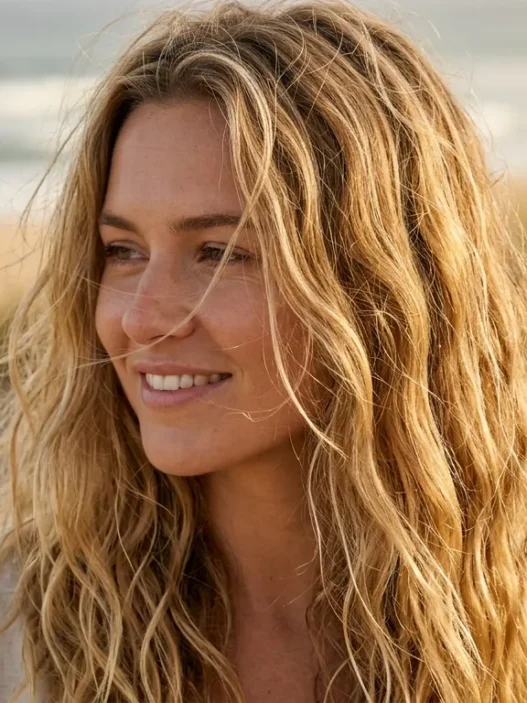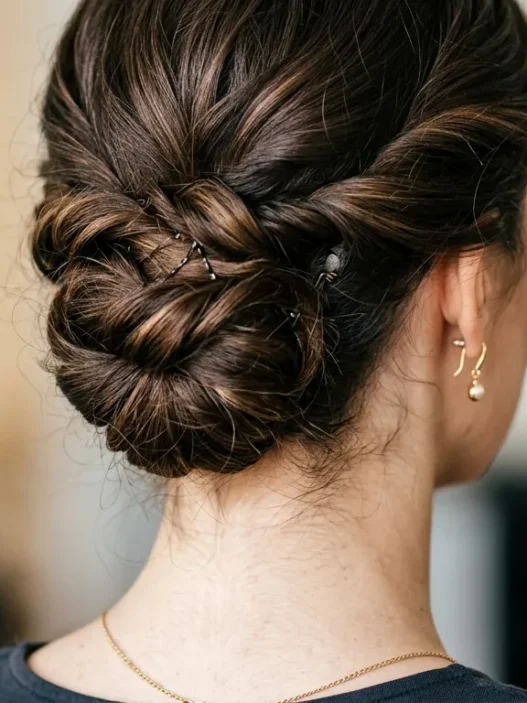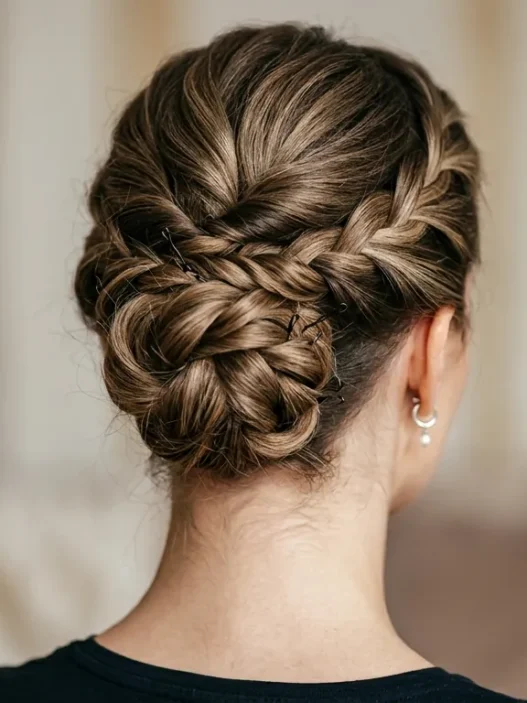







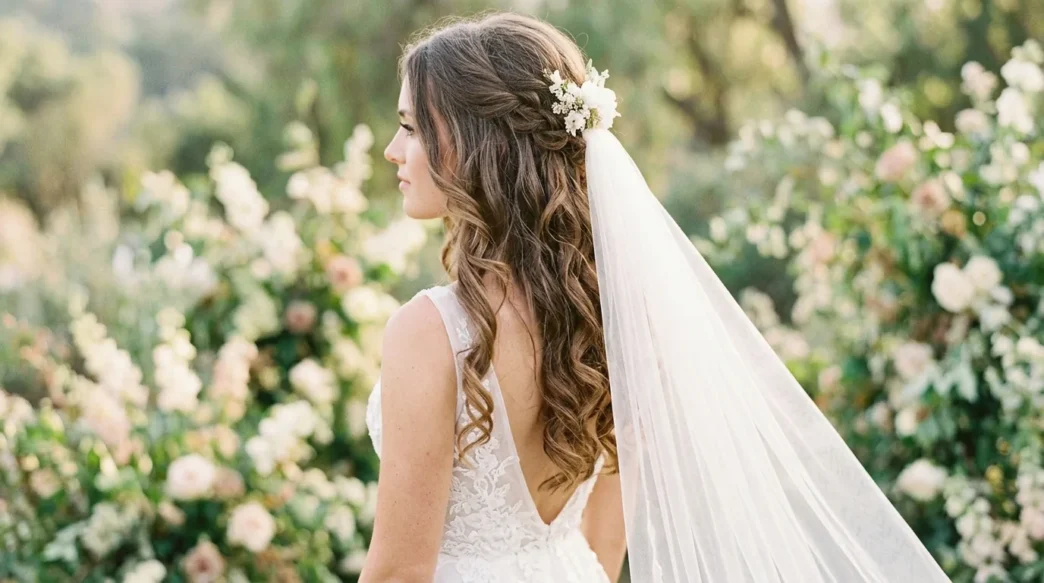
I’ll never forget the bride who walked into my salon six months ago, Pinterest board in hand, pointing to the same half up half down hairstyle I’d seen thirty times that week. “I want this,” she said, “but I’m worried it’s too basic.” And honestly? She wasn’t wrong to worry. But not for the reasons she thought.
After styling over 200 brides in my career, I’ve learned that half up half down isn’t just a style — it’s become the safe harbor in a sea of bridal anxiety. But here’s what most people don’t realize: there’s a massive difference between doing this look right and just… doing it.
Everything I’m Covering About Half Up Half Down Bridal Styles
Why This Style Became the Bridal Default
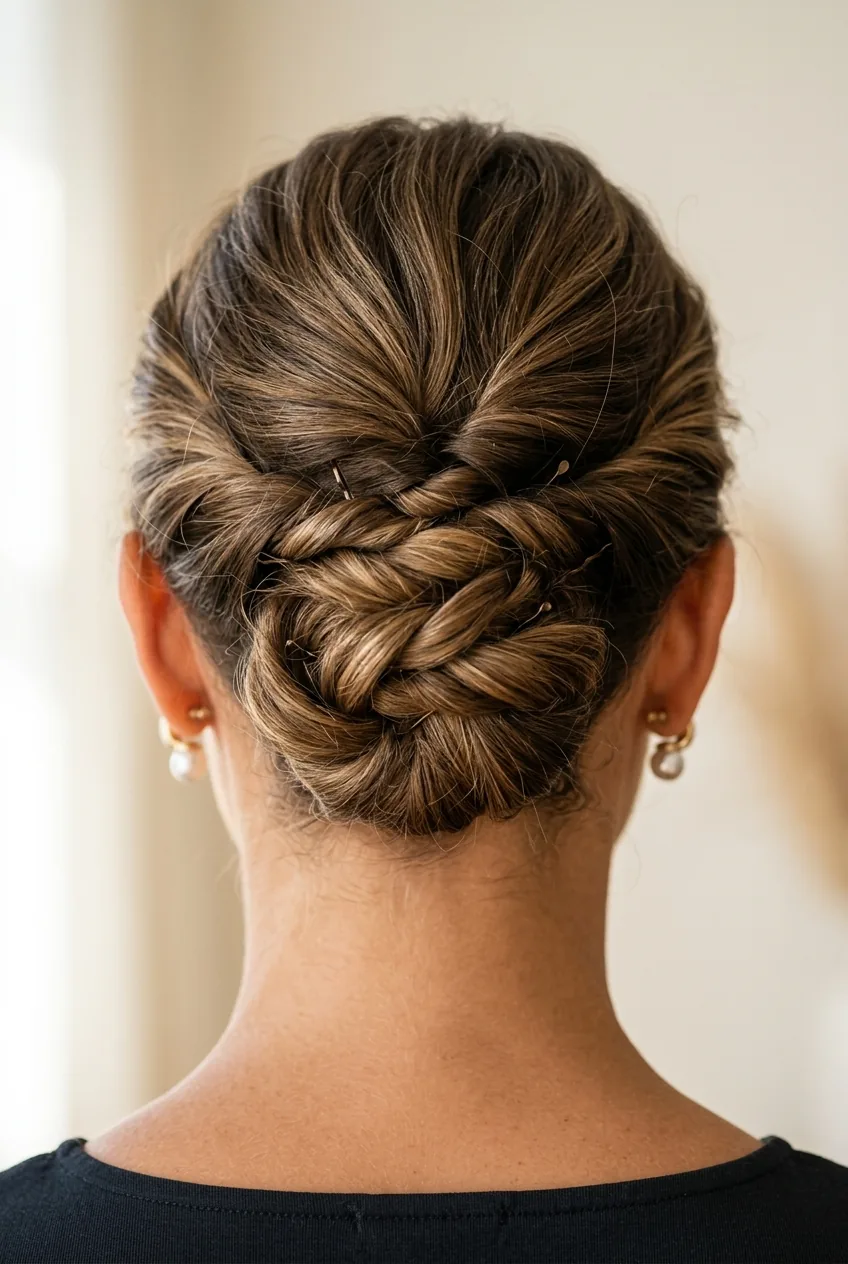
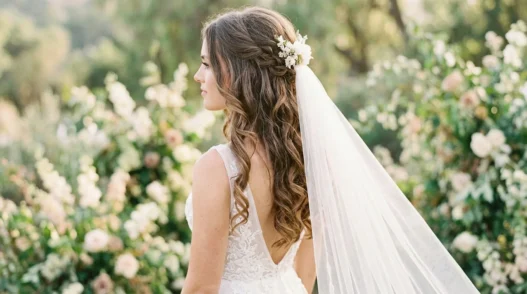
Let’s be real about why half up half down exploded in the bridal world. It wasn’t some revolutionary styling breakthrough — it was Instagram. Around 2015, when wedding photography shifted toward that dreamy, romantic aesthetic, this hairstyle became the perfect backdrop for flower crowns and delicate veils.
But there’s actually genius in its popularity that goes beyond social media trends. I’ve noticed that brides who choose this style are usually dealing with one specific anxiety: the fear of looking too different from themselves on their wedding day. A full updo can feel like playing dress-up. Hair completely down can feel too casual. This style hits that sweet spot of “elevated but still me.”
The practical reasons are just as compelling. Think about it — you’re wearing a dress that cost more than some people’s cars, you’re hugging approximately 150 people, and you’re dancing until midnight. Perfecting the bridal half up half down look means creating something that photographs beautifully from every angle while staying put through an entire day of celebration.
What really sealed the deal for this style’s dominance was its versatility with accessories. Veils, flower crowns, decorative pins, headbands — they all work seamlessly. Compare that to a sleek low bun where adding a flower crown can look like an afterthought, or completely loose hair where a veil just disappears into the background.
I’ve also observed something interesting in my chair: brides who initially resist this style often come back to it after trying alternatives. There’s something psychologically comforting about having the best of both worlds. You get the romance of flowing hair in your photos, but you also get the elegance and practicality of having some hair secured away from your face.
The Science Behind What Makes It Work
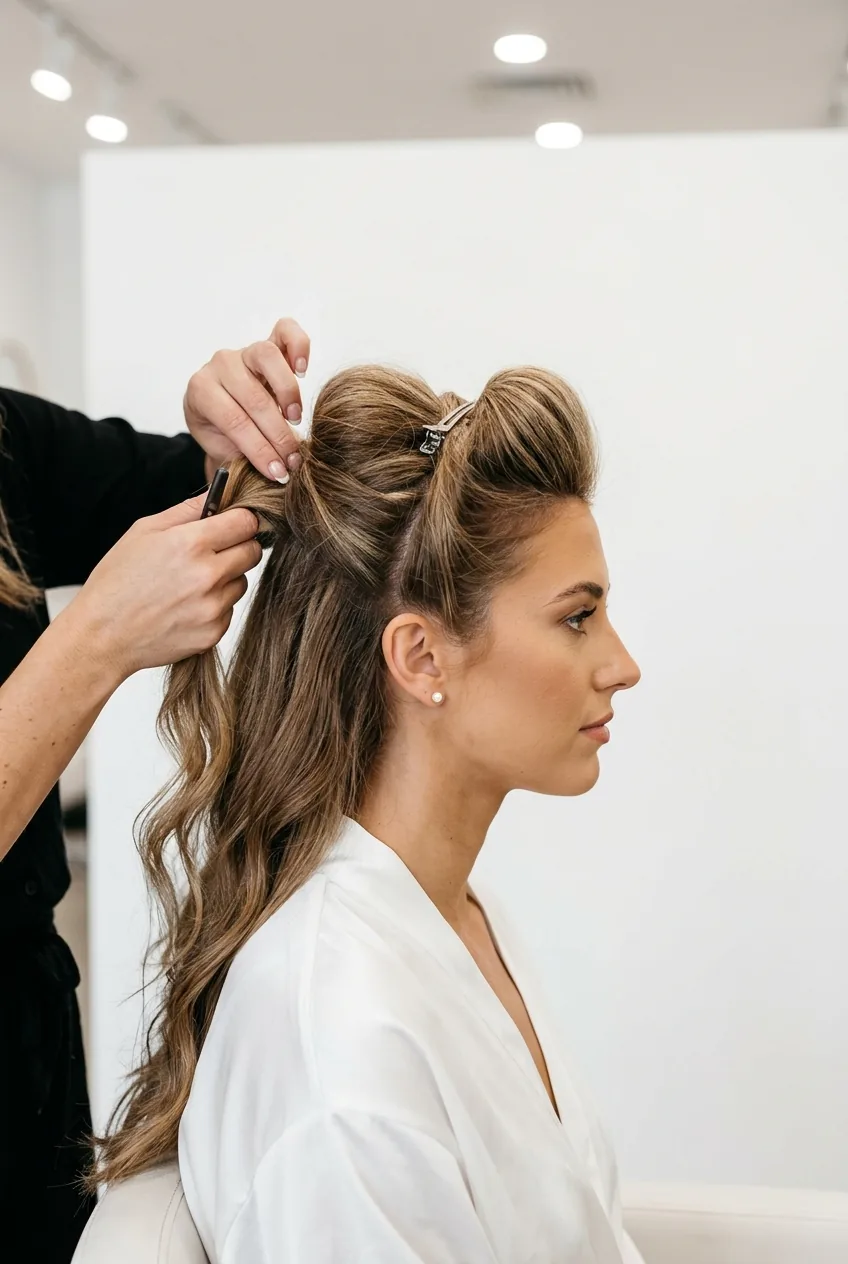
This is where most stylists get it wrong, and where I’m about to sound like a total hair nerd. The magic of a great half up half down isn’t in the styling — it’s in understanding the physics of hair weight distribution and the psychology of facial framing.
When you lift half the hair up, you’re redistributing weight in a way that creates natural volume at the crown. This isn’t accidental. The remaining hair falls with more movement because it’s no longer weighted down by the upper sections. It’s why this style works on fine hair better than most people realize — you’re literally creating the illusion of more hair by changing how it sits.
The facial framing aspect is pure geometry. By pulling back only the top section, you’re creating what I call the “golden triangle” — a softening effect that starts at the temples, follows the jawline, and creates the most flattering face shape possible. It’s why this style works across different face shapes when done correctly.
Here’s something most people don’t know: the height at which you secure the half-up section completely changes the effect. Too high, and you look like you’re wearing a topknot with loose ends. Too low, and it reads as limp and unintentional. The sweet spot is approximately 2.5 inches above the ear — I measure it every single time.
Temperature also plays a huge role that nobody talks about. Managing humidity becomes crucial because the secured section and loose sections react differently to moisture. The pinned portion stays put while the loose hair can go flat or frizzy. This is why I always use different products on each section.
The texture contrast is equally important. The secured section should have grip and hold, while the loose section needs movement and softness. Most stylists use the same products throughout, which creates a flat, uniform look instead of the dynamic contrast that makes this style stunning.
What The Beauty Industry Gets Wrong
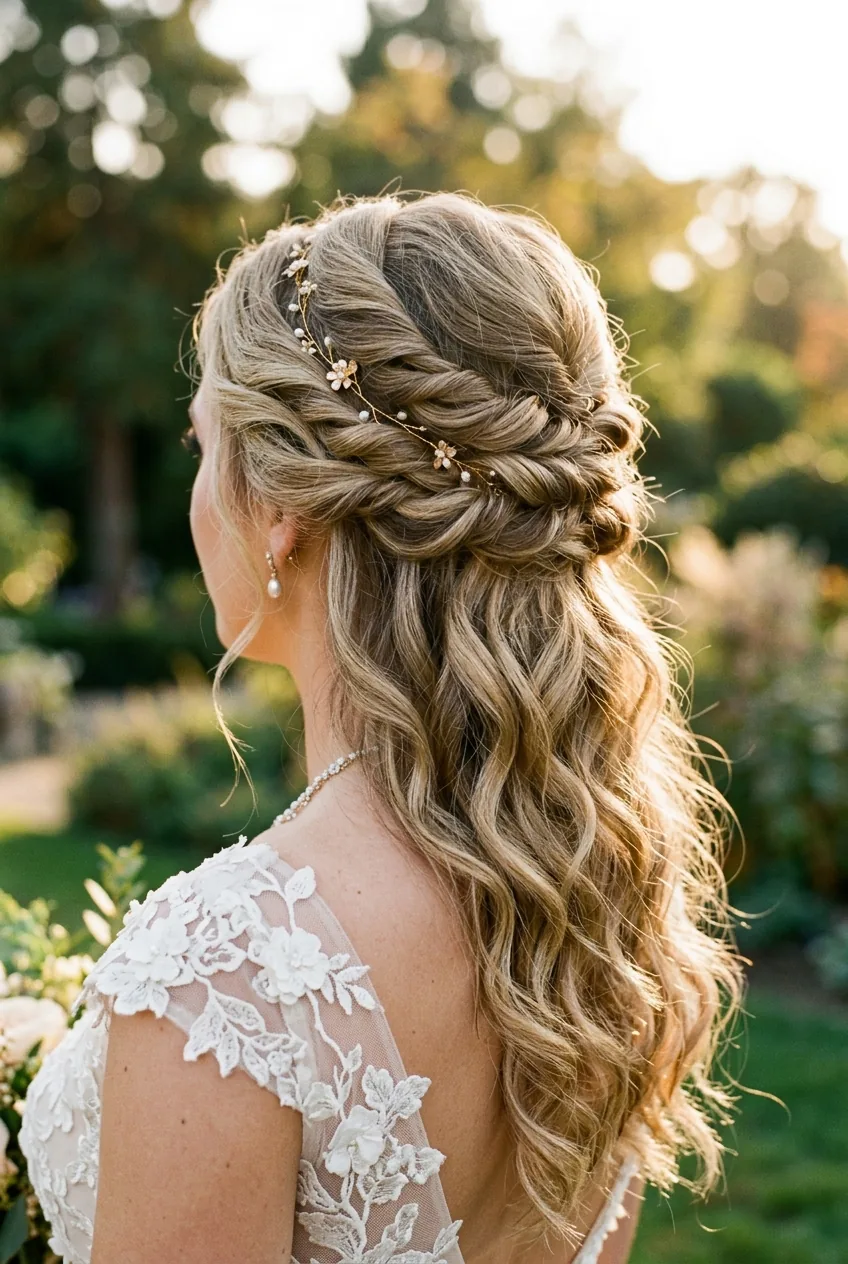
Oh boy, where do I even start with this? The biggest lie the beauty industry tells about bride hairstyles half up half down is that it’s a “beginner-friendly” style. I’ve seen more bridal hair disasters from this assumption than any other cause.
The Pinterest tutorials make it look effortless — just tease, twist, pin, done! But they never show you the prep work, the sectioning technique, or the fact that different hair textures require completely different approaches. I’ve had brides arrive on their wedding morning expecting a five-minute style because that’s what the YouTube video promised.
Another massive misconception: that this style works the same on everyone. The beauty industry loves to present one-size-fits-all solutions, but the reality is that successful half-up hairstyles require customization based on hair density, face shape, and even neck length. What looks romantic on someone with thick, wavy hair can look sparse and sad on fine, straight hair.
The product recommendations are usually wrong too. Most tutorials suggest using the same texturizing spray throughout, but I’ve found that you need different products for different sections. The top needs hold and grip, the bottom needs movement and shine. Using the same product creates that uniform, flat look that screams “I followed a tutorial.”
Here’s my most controversial opinion: the industry’s obsession with “effortless” bridal hair is doing brides a disservice. Real talk — your wedding day isn’t the time for effortless. It’s the time for intentional, considered, and expertly executed. The “I woke up like this” aesthetic requires more skill and better products than most people realize.
And don’t get me started on the timing advice. “This style takes 30 minutes” — sure, if you want it to fall apart during your first dance. A properly executed half up half down that will last 12+ hours takes at least an hour when you factor in proper sectioning, multiple securing points, and strategic product application.
See What I Mean About Proper Technique
The Nuance Nobody Mentions About Face Shapes
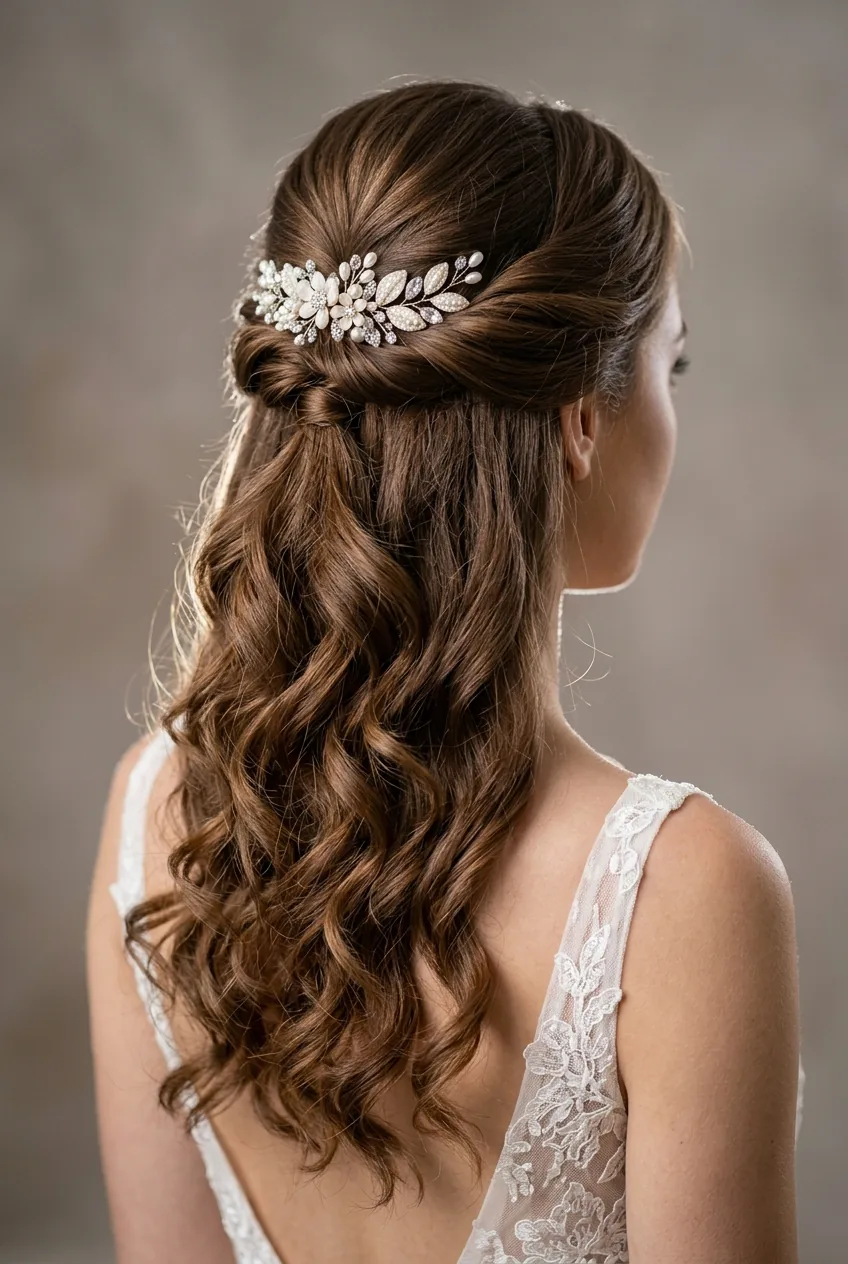
Every face shape article tells you the same basic rules, but they miss the subtle variations that make or break this style. After years of doing this, I’ve learned that it’s not just about your face shape — it’s about your face shape in combination with your hair texture, neck length, and even your dress neckline.
Take round faces, for example. Everyone says “add height,” but the real secret is where you place that height. Too much volume at the very crown makes your face look wider. The magic happens when you create height slightly behind the hairline, around the mid-crown area. It elongates without overwhelming.
For square faces, the conventional wisdom is to soften the jawline with loose pieces. But I’ve found that the angle of those pieces matters more than their presence. Pieces that fall straight down actually emphasize the strong jawline. Pieces with a slight curve or wave create the softening effect you’re after.
Heart-shaped faces present an interesting challenge because the goal is balancing a wider forehead with a narrower chin. Most stylists focus on adding width at the jawline, but I’ve discovered that the key is actually in the crown volume. Less height, more width at the temples creates better proportion.
Oval faces are supposed to be “easy,” but that’s where stylists often get lazy. Just because you can wear this style doesn’t mean you should wear it the same way as everyone else. Oval face styling opens up opportunities for more dramatic variations — higher twists, asymmetrical sections, more intricate detailing.
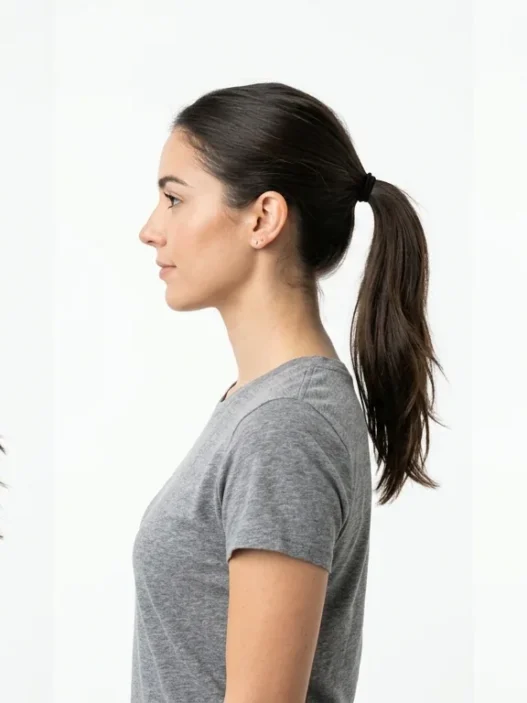
Here’s what nobody talks about: your neck length changes everything. A long neck can handle more dramatic upward movement and bulkier secured sections. A shorter neck needs cleaner lines and lower placement points. I’ve seen gorgeous hair ruined because nobody considered the proportions from the side profile.
My Honest Take on Popular Variations
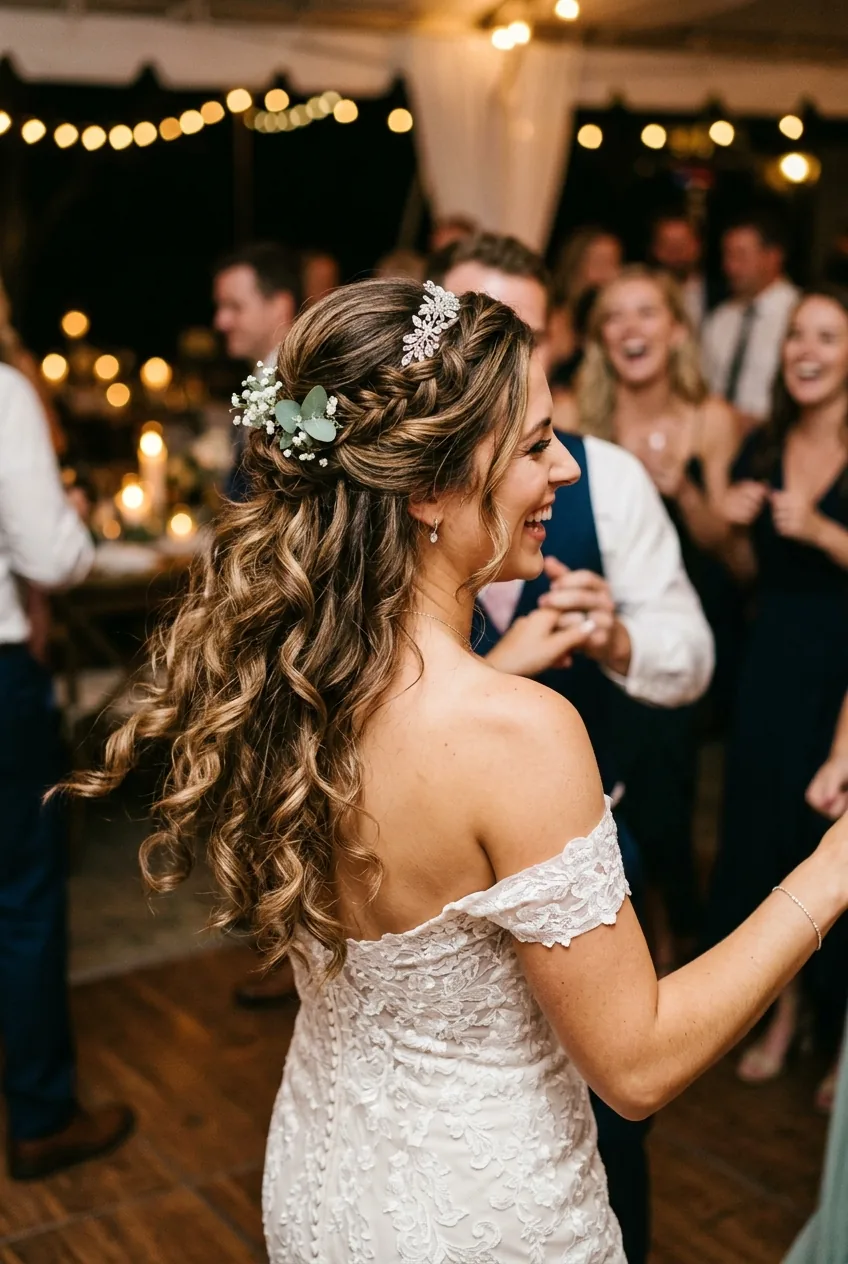
Let’s talk about the variations everyone’s asking for, and which ones actually work versus which ones are just Instagram bait. After doing hundreds of these styles, I have strong opinions about what’s worth your time and what’s setting you up for disappointment.
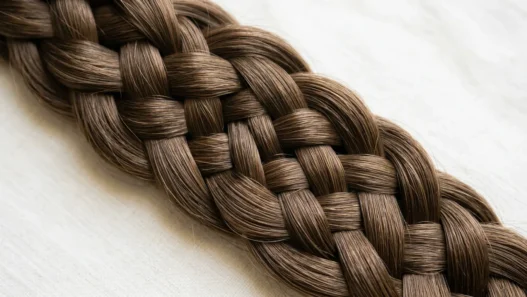
The braided crown variation is stunning in photos but problematic in practice. Unless you have thick, textured hair, the braid often looks sparse and the loose hair below can appear disconnected. I only recommend this for brides with naturally wavy or curly hair who want a bohemian vibe and understand that touch-ups will be needed.
Twisted sides are my go-to variation for most brides. They’re more secure than loose pieces, more flattering than straight-back sections, and they photograph beautifully. The key is making the twists loose and textured rather than tight and smooth — nobody wants to look like they’re headed to a business meeting.
The low half-up with a decorative clip is having a moment, and I’m here for it. It’s more modern than the traditional higher placement, works better with statement earrings, and creates a sophisticated line that pairs beautifully with sleeker dress styles. Just make sure your clip is substantial enough to support the hair weight.
Waterfall braids sound romantic but they’re a logistical nightmare. The continuous weaving creates multiple failure points, and once one section loosens, the whole thing starts to unravel. Save this for engagement photos, not your wedding day. You can explore more curly updos that offer similar romantic appeal with better staying power.
The messy, undone version is harder to execute than it looks. True “effortless” styling requires incredible precision — every piece has to be strategically placed to look casually perfect. Most attempts end up looking actually messy rather than intentionally tousled. If you want this vibe, work with a stylist who specializes in textured, undone styles.
My personal favorite is what I call the “structured romantic” — clean sections with soft, curled ends. It gives you the best of both worlds: hair that stays put but doesn’t look stiff. The curls add movement and photograph beautifully, while the clean sectioning ensures everything stays in place through your entire celebration.
Questions I Get About This All The Time
Will this style work with my veil?
Absolutely, but placement is everything. Cathedral and chapel veils work best when the half-up section is positioned slightly lower to accommodate the comb. Birdcage veils actually look more dramatic with higher placement since they don’t compete for space.
How do I know if my hair is thick enough?
If you can make a ponytail that’s thicker than a quarter when secured, you have enough hair for this style. Fine hair actually works beautifully — it just needs different techniques and products to create the illusion of fullness.
Can I sleep in this style for a morning wedding?
Never attempt to sleep in your finished bridal hairstyle. Instead, do the prep work the night before — curl your hair and sleep in a silk scarf or bonnet, then do the actual styling in the morning. Your hair will have better texture and the style will last longer.
What if it falls out during the reception?
A properly executed half up half down with multiple securing points shouldn’t fall out completely, but pieces may loosen. Designate someone in your bridal party to carry bobby pins and a small brush for quick touch-ups between dinner and dancing.
At the end of the day, bride hairstyles half up half down became popular for good reasons — they’re flattering, versatile, and photograph beautifully. But like any classic style, the magic is in the execution. Don’t let the apparent simplicity fool you into thinking it doesn’t deserve the same care and expertise as any other bridal beauty decision.