














I cut mine on a rainy Tuesday in March because I was so tired of the in-between. My bob had grown out to that flippy, nothing length and my long hair felt too heavy to even think about. I wanted something that still felt feminine but did not swallow my neck.
My stylist turned my chair around, tapped my collarbone and said, this is your spot. She was right. That first blowout made me feel like myself again, only lighter.
Where the Trend Actually Comes From
I love this length because it is not new. It is just finally getting credit. When I look back at old red carpet photos from the late 90s and early 2000s, almost every cool-girl cut sat right on the collarbone with soft, face-framing layers. Think news anchor meets rock star girlfriend.
The modern version really took off when the blunt lob started to feel too stiff. Around 2019 to 2021, I watched stylists in New York and London quietly soften that one-length bob. They kept the collarbone-skimming perimeter but carved out movement around the cheekbone and jawline. Suddenly the cut moved when you talked.
There are two schools of thought here and I have sat in both chairs. The French school keeps the base almost one length and hides just two or three long layers underneath for swing. The American lived-in school builds more visible layering through the front, with a shorter face frame that starts at the lip or chin.
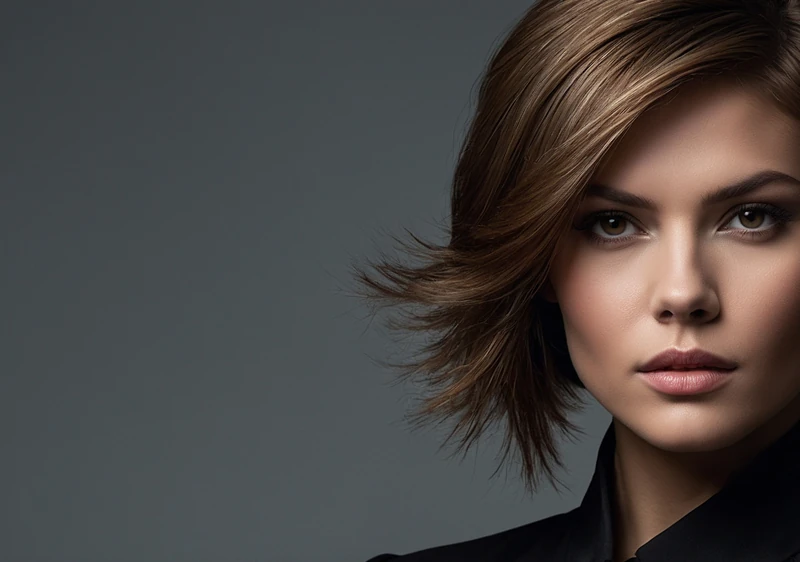
I personally prefer a hybrid. I ask for a clean, slightly beveled perimeter that kisses the collarbone, then long, blended layers through the mid-lengths and a true face frame. Look at how she is wearing hers in this photo, that angle opening up around her cheek is exactly what I mean about jawline framing. It is not choppy. It is curved.
If you are researching the broader family, shoulder-length hairstyles are where this cut lives. The difference is small but real. Shoulder length often sits on top of the shoulder and flips. Collarbone length sits just below it, so it clears your shirt and sweater and actually hangs.
A lot of what gets labeled a collarbone lob right now is really this same cut with a center part and a polished blowout. I do not mind the name. But when I tried a super-blunt version with no layers, my thick hair just sat there like a shelf. The layers are what make collarbone length work in 2026, especially with our love of air-dried texture and soft bends.
My hot take after living in this cut for a year: a blunt collarbone cut without layers only looks good for about 20 minutes after a salon blowout.
What Changes Between Your First Appointment and Your Fifth
My first appointment was mostly about removal. I had old, grown-out long layers that were thin at the bottom and heavy at the top. My stylist took off about three inches, reset the perimeter to my collarbone, and left my face frame fairly conservative. She told me we would get braver next time. She was right.
By appointment two, we knew how my hair actually behaved at this length. My left side kicks forward because of my cowlick. My right side falls flatter. She adjusted the face-framing pieces so they were not technically even, but they looked even on me. That is the kind of detail you cannot get from a Pinterest screenshot.
Here is what I wish someone had told me to ask for at that first visit:
- A beveled, not blunt, perimeter so the ends narrow slightly and do not flip out all day
- Two face-framing lengths, one at lip to chin and one at jaw to collarbone, connected softly
- Long interior layers that start no higher than three inches below your part, to keep density at the ends
- Dry detailing around the front after styling, because wet-cut layers always spring up
- A plan for your part, since a side part needs a shorter frame than a center part
Appointment three is when I learned about weight. I have medium-thick hair that puffs if you thin it too much. My stylist switched from thinning shears to slide-cutting and point-cutting, and the difference was huge. You can read about keeping movement without losing thickness in these layered medium hairstyles for thick hair and you will see the same idea. Take weight out vertically, not horizontally.
By appointment four and five, we were just refining. We let the back grow a half inch longer so it did not ride up on my jackets. We kept the front pieces fresh. Honestly, this is when collarbone length hair with layers gets easy. You stop styling it so hard because the shape is finally working with you.
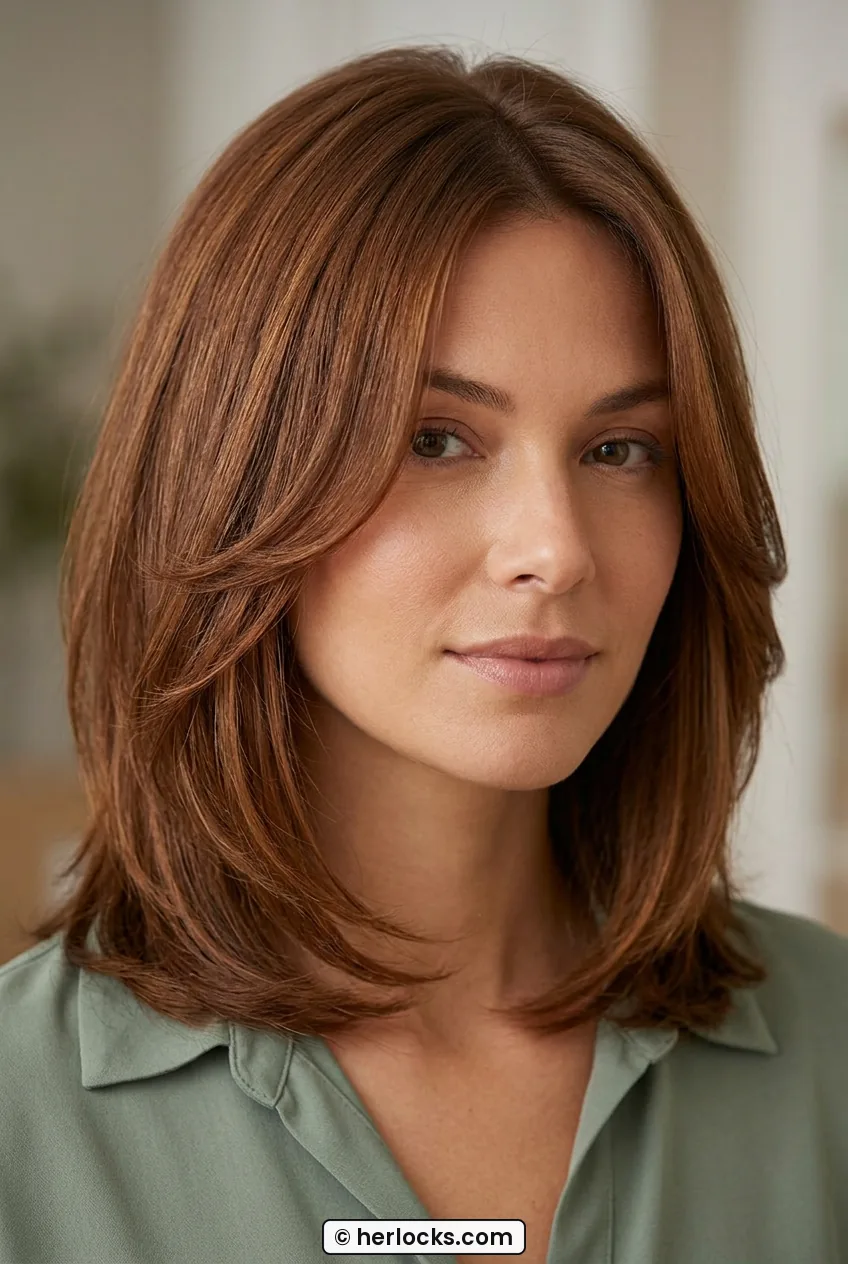
This is the length I am talking about in the photo below. See how it hits just below her chin in front and grazes the collarbone in back? That slight forward angle keeps it modern and stops the front from looking stringy. I ask for that every single time now.

I also changed how I talk to stylists. Instead of saying I want layers, I say I want movement without visible steps, and I point to where I want the shortest face piece to hit when dry. Learning a little about face framing consultations before you book your trim really helped me explain the cheekbone area without over-directing.
See the Face Frame Cut Live
The Pricing Reality Nobody Posts
So how much does it actually cost to keep this up? In my city, a precision cut with a senior stylist runs 85 to 140 dollars. A lived-in layering session with a blowout and dry detailing is often 120 to 180 dollars. My fifth appointment cost 145 dollars plus tip, and that included a gloss.
Do you need a gloss or color to make it look good? No, but I will be honest, it helps a lot. Solid, one-tone dark hair can make collarbone layers look heavier than they are. A demi gloss or a few face-framing highlights open it up. I go for a clear gloss every other cut and it makes the ends look twice as healthy.
How often do you really need a trim? Every 10 to 12 weeks if your hair is fine to medium. Every 8 to 10 weeks if it is thick or curly and loses shape fast. I can stretch mine to 12 weeks because my layers are long and blended, but my face frame needs a 15-minute dusting around week six or it starts poking my eyes.
Is it a high-maintenance cut in disguise? Kind of. The wash-and-go is easy, but the grow-out is sneaky. Without trims, the face frame drops into the base and you lose that opening around the cheek. The cut still looks fine, just less intentional. That is why I budget for two full cuts and two mini trims a year.
I keep my at-home costs pretty low. A good leave-in, a light oil for the ends, and a large round brush are my whole kit. I learned more about keeping air-dried ends smooth from reading about medium layered styling routines than from any expensive serum, because technique mattered more than product.
One more pricing truth. Do not price-shop just the first cut. The first cut is the cheapest part. Ask what a face-frame tidy costs between appointments and whether they charge for a neckline clean-up. My salon does a 25-dollar bang and face-frame trim, and that little service is what keeps me loyal.
How This Look Ages in 12 Months
Month one to three is the honeymoon. Everything flips just right. Your layers are fresh, your ends are blunt enough to look thick, and strangers ask who cuts your hair. I lived with a center part and a big, soft bend through the mid-lengths. Ten minutes with a flat iron and I was done.
Month four to six is where reality hits. My face frame grew from chin to jaw to almost collarbone. The back started brushing my shoulders and flipping outward on sweaters. This is the stage where a lot of women either chop it back into a bob or give up and grow it long. I almost chopped.
What saved me was a tiny in-between appointment. No length off the back, just re-cutting those two front pieces and softening the interior. It took 20 minutes. Suddenly the whole shape came back. If you wear a lot of textured, lived-in styles, those layered fall haircuts for volume show the same trick. Shape lives in the front, not in the overall length.
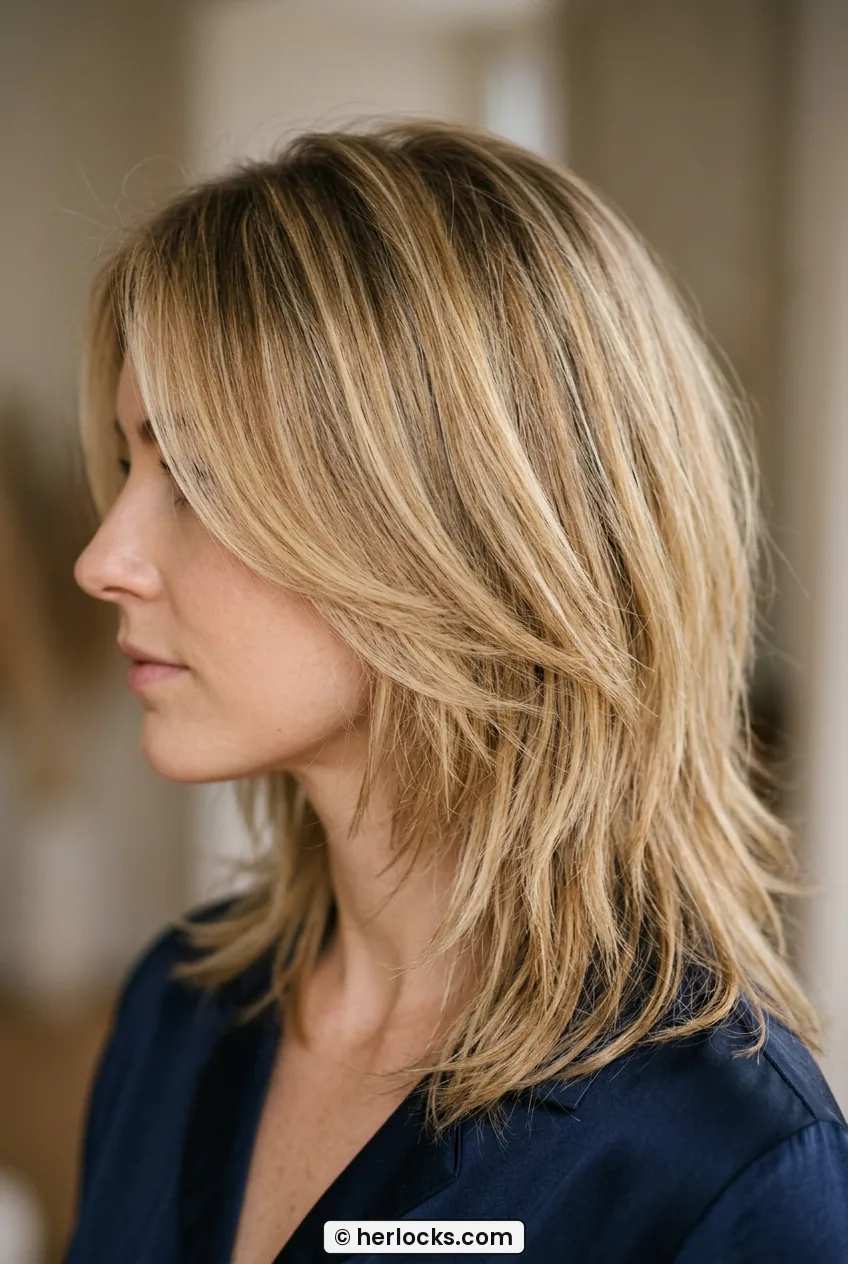
Month seven to nine was my favorite phase, weirdly. The cut had grown into a soft, long lob with grown-out layering. It pulled into a low pony without those annoying front bits falling out. It still had enough layering to look styled when I curled just the top section. She has a similar density to mine in this photo, and honestly, the way her layers fall forward over her shoulder is exactly how mine looked at month eight.

Month ten to twelve, I had a choice. Grow it to true shoulder length or reset. I reset. Why? My ends were getting see-through from old highlights and the face frame had fully merged. A reset cut took off an inch and a half and put the collarbone shape right back. My hair looked thicker instantly without any color.
The lesson I took from a full year is simple. This is a 12-week shape with a 12-month lifespan if you maintain the front. Let the back grow a little wild, but never let the face frame disappear. That front opening is the whole haircut.
Who Wears It Best and What to Avoid
Versus a one-length collarbone cut: layers win for most people. One length looks sleek and expensive on fine, straight hair, but it can look heavy and triangle-shaped on thick hair and flat on wavy hair. Layers give lift at the crown and softness at the jaw. One length gives polish but needs daily heat.
Versus a shoulder-grazing shag: the shag wins for volume, layers win for versatility. I love a shaggy cut, but those short, choppy crown layers do not always tuck behind ears or pull back for work. My collarbone layering is quieter. It gives me 80 percent of the movement with none of the grow-out drama.
On curly hair, this length is magic if it is cut right. And that is a big if. Curls spring up, so your dry face frame will sit two inches higher than where it is cut wet. My curly-haired friend wears hers with long, widely spaced layers and a face frame that starts at her chin when wet. Dry, it sits perfectly at her cheekbone. If curls are your world, start with layered medium hairstyles cut curl by curl, and tell your stylist you wear it both curly and straight.
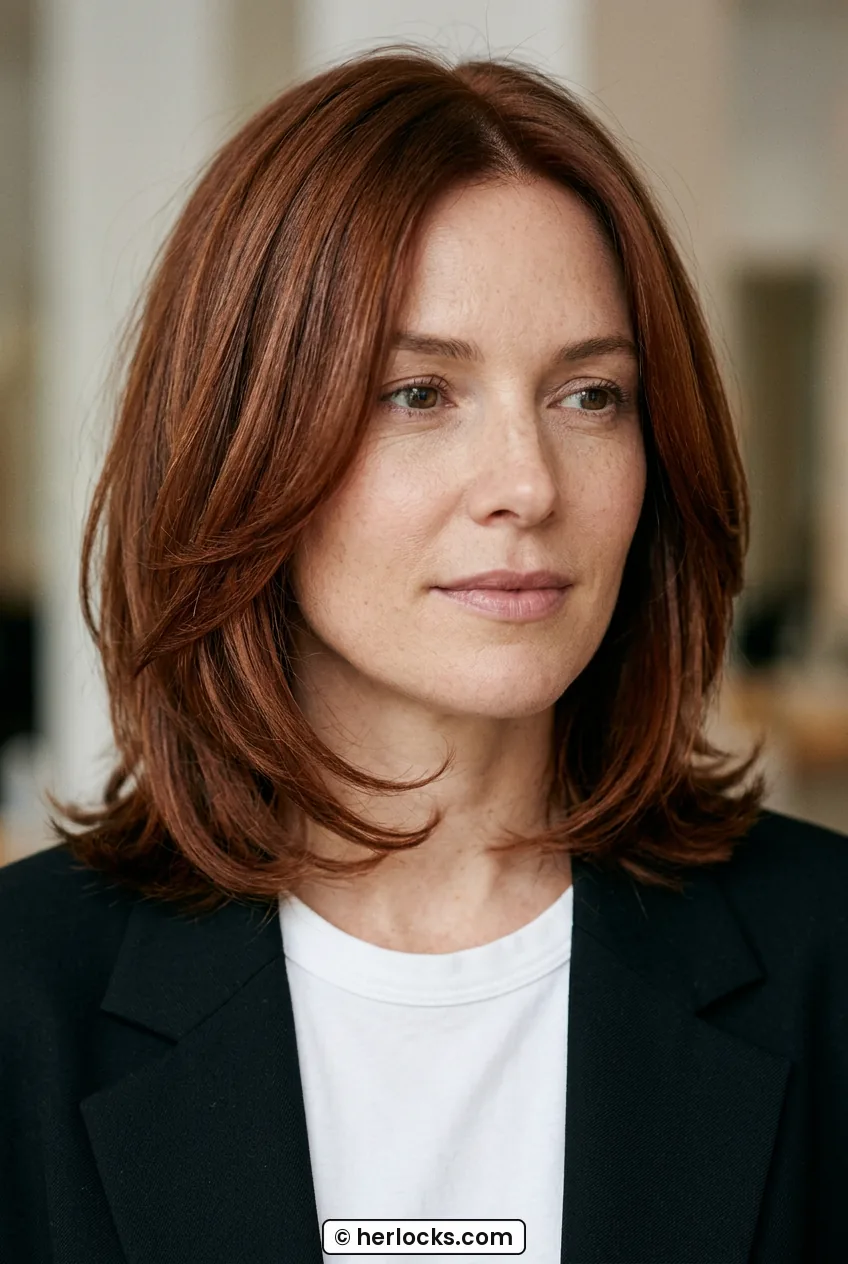
She is a great example in this next photo. See how her curls cluster around her jawline instead of widening out? That is because the layers are long and the perimeter is kept a little heavier. I think too many curl cuts over-layer this length and end up with a triangle. Weight at the collarbone balances curl volume on top.
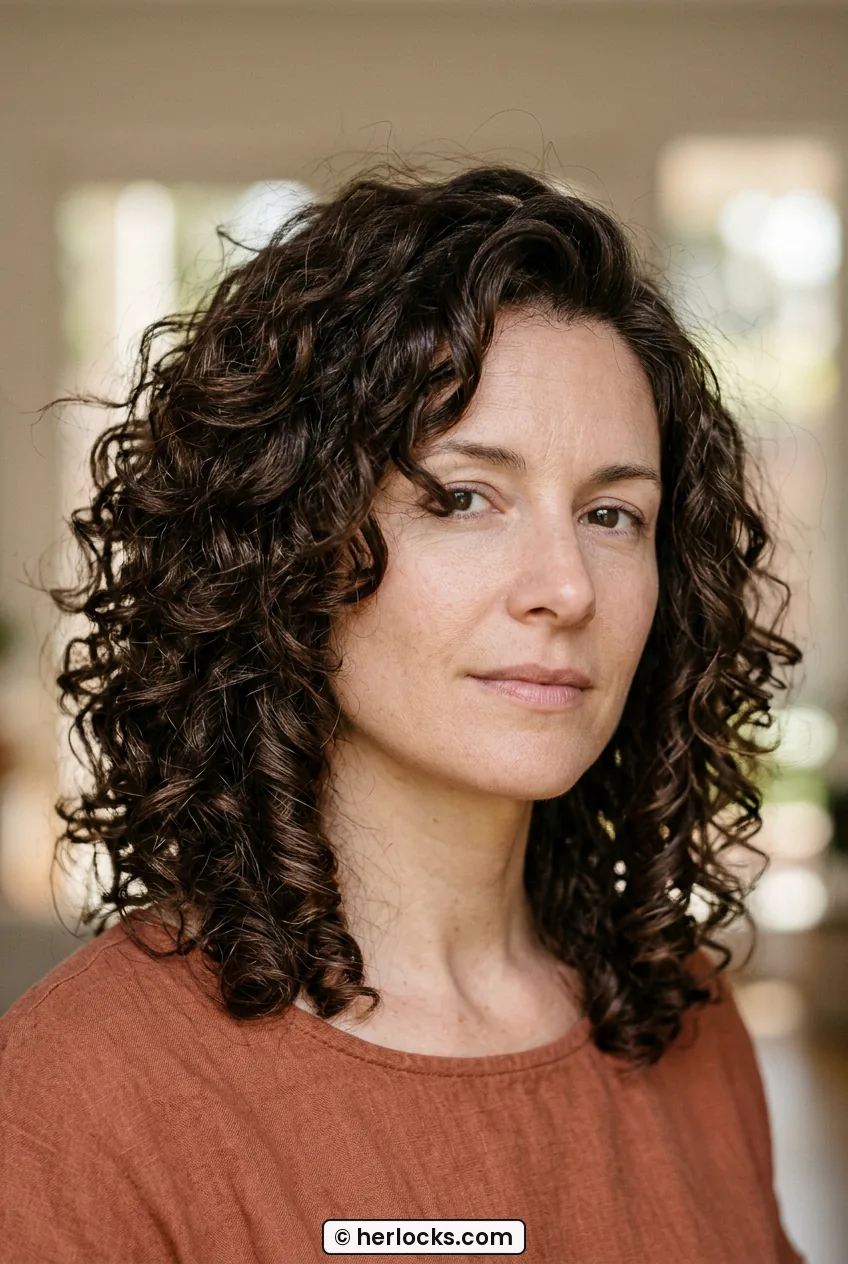
Who wears it best? In my experience, oval and heart shapes get an easy win because the face frame just enhances what is already there. Round faces look great too, as long as the shortest layer sits below the chin, not at the cheek. Square jaws soften beautifully when the front pieces curve inward instead of flipping out. For fine hair, keep the layers extra-long and the base blunt. For thick hair, ask for internal weight removal, not short layers.
What to avoid is pretty specific. Avoid layers that start at the nose if your hair is fine, they will look wispy by week four. Avoid a razor cut all over if your ends are bleached, it will fray. Avoid a hard side part with a very short face frame unless you love tucking one side daily. And please avoid over-thinning the ends to get movement. You will lose that thick collarbone line that makes the cut look expensive.
For wavy girls who live in air-dried texture, these wavy shoulder length cuts for spring are my go-to reference for warm weather styling. The same collarbone shape with a little salt spray and a scrunch looks completely different in humidity, in the best way.

Collarbone Layer Questions I Hear a Lot
Does collarbone length hair with layers work on fine hair?
Yes, if you keep the layering long and minimal. I tell my fine-haired friends to ask for just face framing plus one long interior layer. Anything shorter makes the ends look thin fast, and you lose that full line at the collarbone.
How do I style it without heat every day?
I wash at night, add leave-in, and twist the front two sections away from my face while damp. In the morning I shake it out and add a dab of oil just on the ends. The face frame falls into place on its own because the cut is doing the work.
Will it pull back for workouts?
Barely at first, easily later. At fresh collarbone length, I needed a claw clip and two bobby pins for the front bits. By month four, it went into a low pony with no drama. If you run daily, ask to keep the face frame at jaw length or longer.
Is this cut good for growing out a bob?
It is the best grow-out bridge I have found. You keep the cute jawline shape in front while the back catches up. I grew out my own bob this way and never had that awkward mullet stage because we trimmed the front more often than the back.
Okay, that is my full brain dump after a year in this length. I still love it. I still think it is the most forgiving middle ground between short and long, especially if you are on the fence. I am off to book my little six-week face-frame trim, want to join me?