






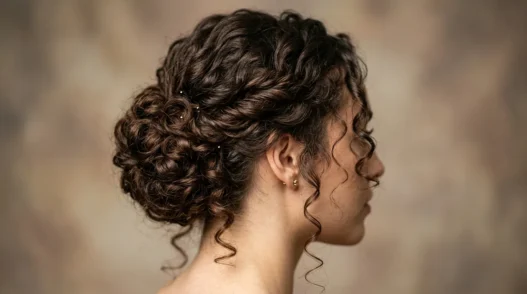
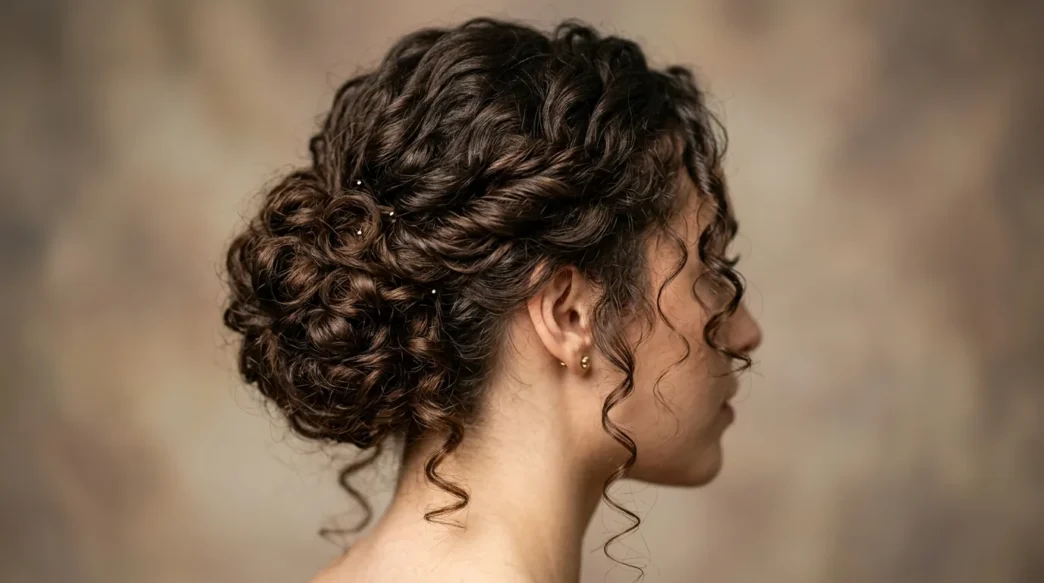
I used to think curly updos were a myth. You know — those Pinterest-perfect styles that somehow stay put while you’re dancing at weddings or surviving humid summer days. Every time I tried one, I’d end up with bobby pins scattered on the ground and half my hair escaping by noon. Then I met Sarah, a hairstylist who specialized in textured hair, and she taught me something that changed everything.
The Foundation: Why Most Curly Updos Fail
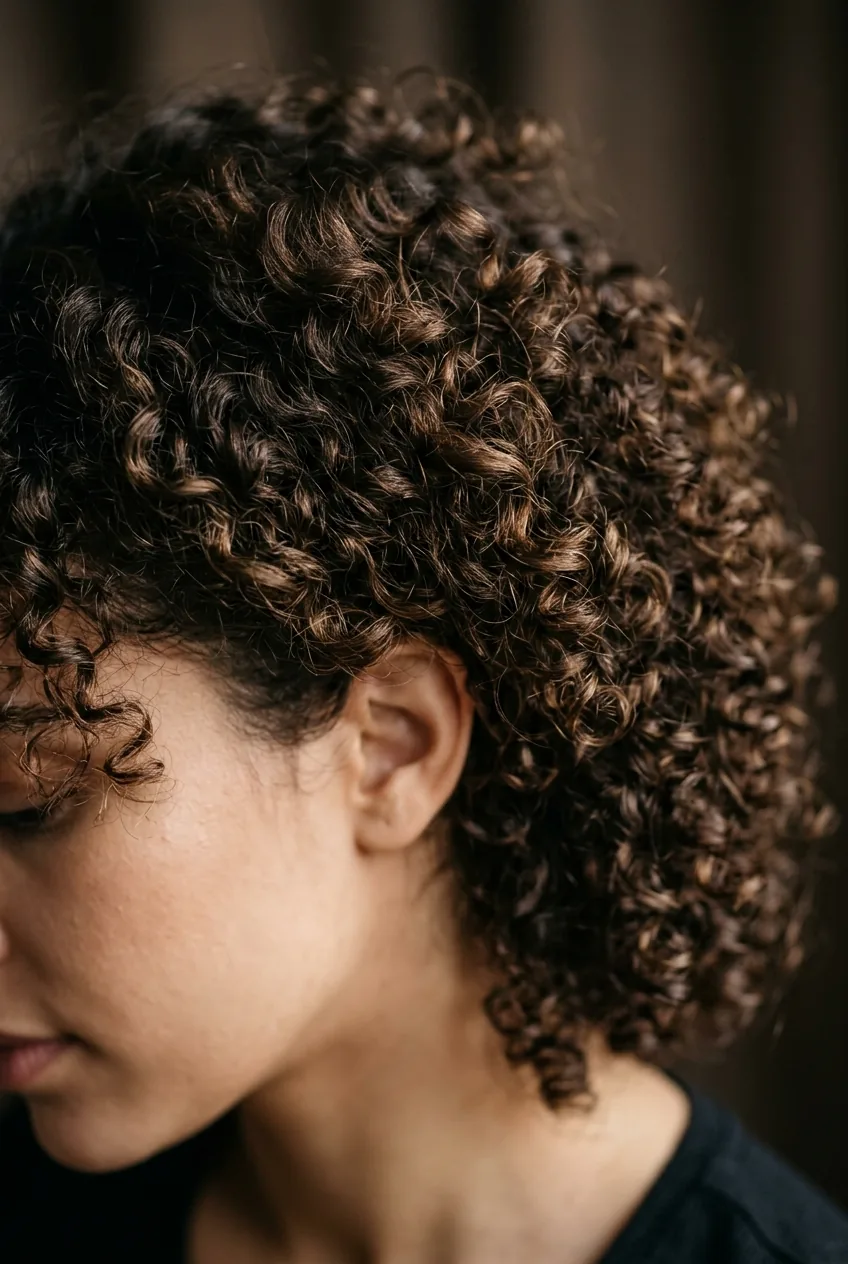
Here’s what I learned: most people approach curly updos completely backwards. They try to smooth everything down first, then wonder why their natural texture fights back. Your curls have memory, and they want to spring into their original pattern.
The biggest mistake? Starting with wet hair. I know it seems logical — wet hair is easier to manipulate, right? Wrong. When curls dry in an unnatural position, they create tension. That tension is what makes your updo fall apart.
Sarah showed me this principle with a simple test. She had me scrunch my wet curls into a high ponytail, then let it air dry. The result? A lopsided mess that looked nothing like my natural curl pattern. But when we started with completely dry, day-two curls? Magic.
My 7-Step Hold Method That Works
This method sounds counterintuitive, but trust me on this one:
- Step 1: Start with day-two or day-three curls (never freshly washed)
- Step 2: Mist lightly with water — just enough to reactivate products
- Step 3: Apply a small amount of gel to your palms and scrunch gently
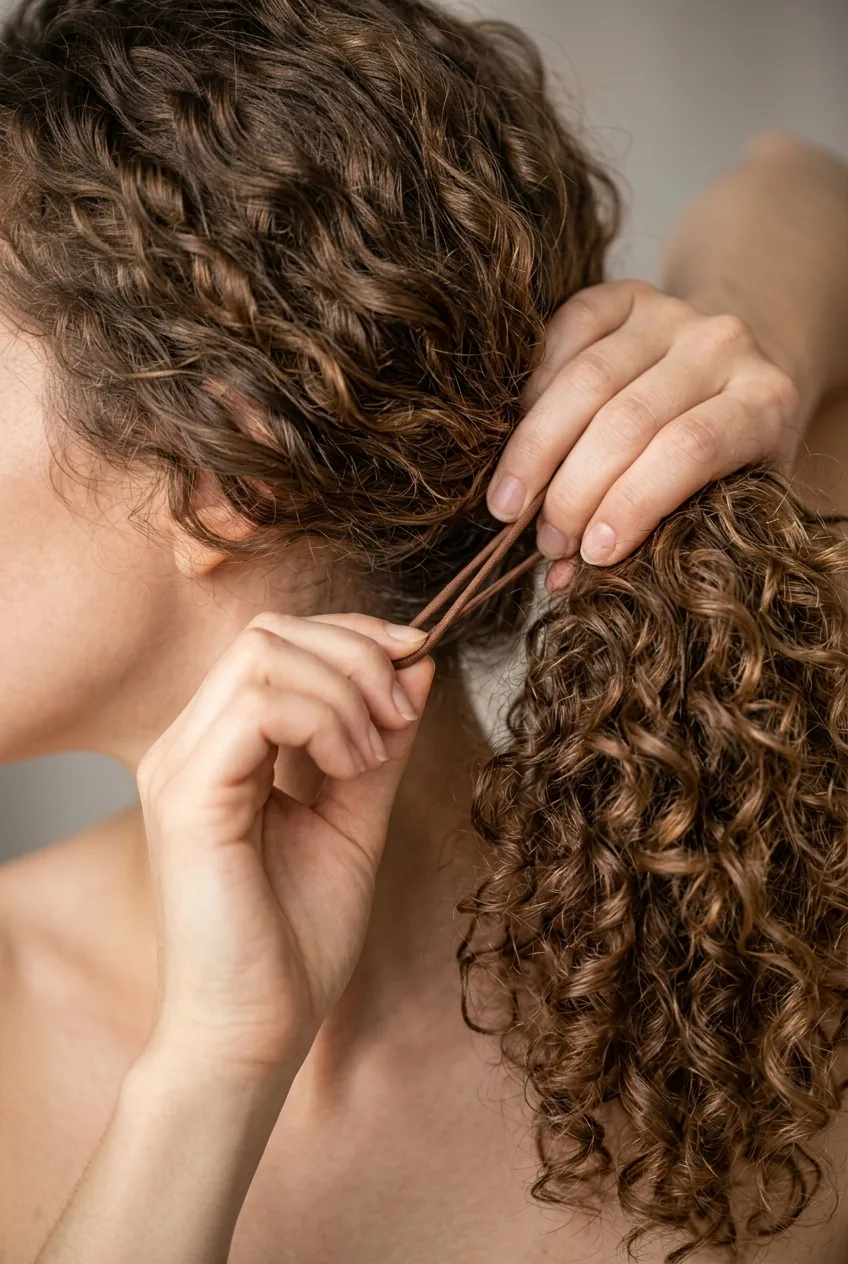
- Step 4: Create your base ponytail with a snag-free elastic, but don’t pull tight
- Step 5: Twist sections loosely around the base, following your natural curl direction
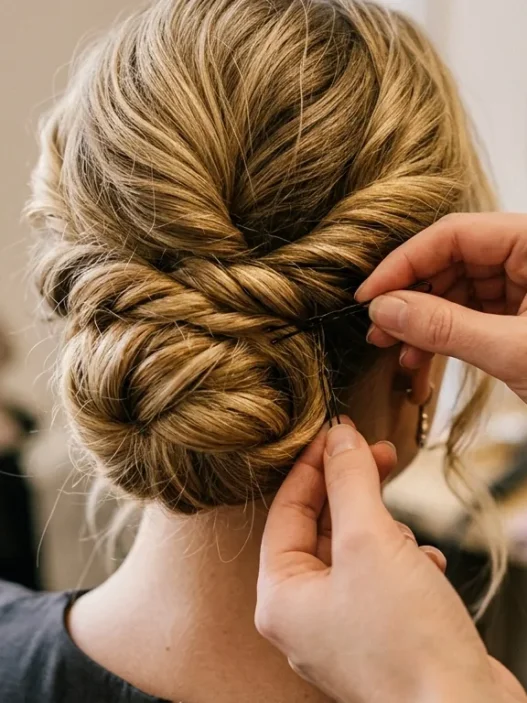
- Step 6: Pin each section with bobby pins going WITH the grain, not against it
- Step 7: Finish with a light mist of flexible hold spray
Step 4 is where most people mess up. They yank that elastic so tight it flattens the curls at the roots. You want just enough tension to gather the hair, not enough to crush your volume.
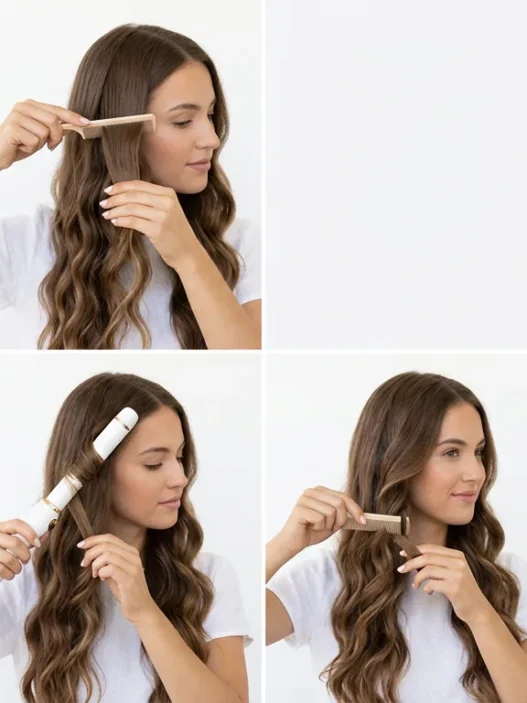
Watch the Technique in Action
The Three Curly Updo Styles I Actually Trust
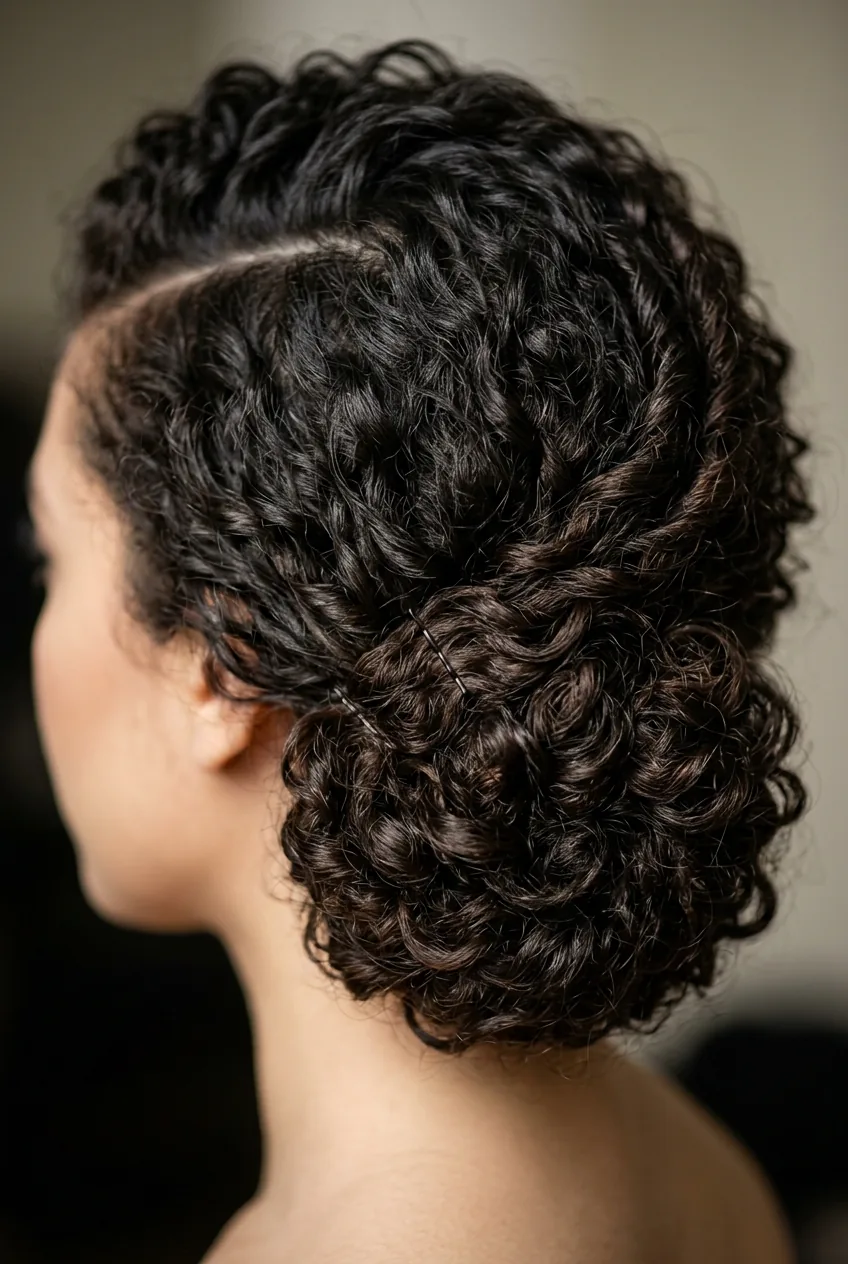
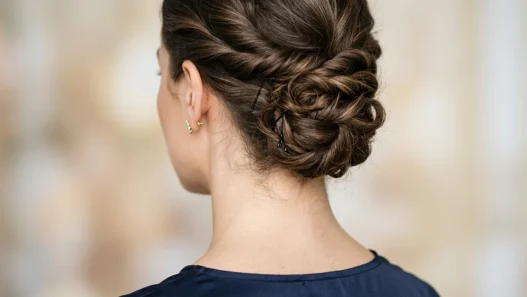
The Loose Chignon: This is my go-to for formal events. I love how it looks effortlessly elegant while still showing off curl texture. The key is leaving some pieces loose around your face — it softens the whole look and makes it feel more natural.
The Side-Swept Low Bun: Perfect for when you want something polished but not too formal. I part my hair dramatically to one side, then gather everything at the nape of my neck. The asymmetry adds visual interest, and the low placement means less gravity working against you.
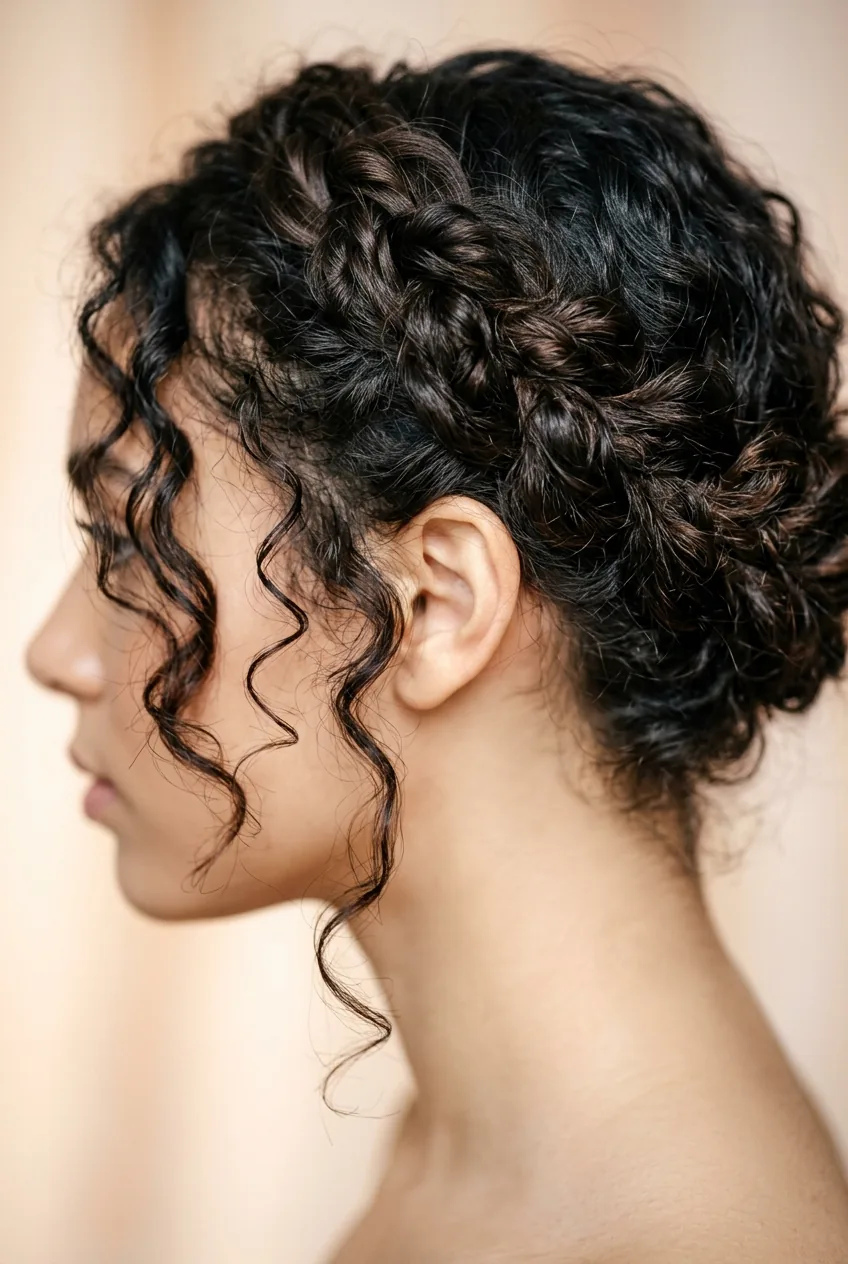
The Twisted Crown: This one’s more casual but absolutely gorgeous for everyday wear. You twist sections from each temple back toward the crown, then let the rest of your curls fall naturally. It’s like a half-up style but more secure. If you’re looking for other stylish updos for thin hair, this technique works beautifully for adding the illusion of thickness.
What I don’t recommend? Anything that requires you to brush your curls smooth. Those styles might work for straight hair, but they’re fighting against your natural texture.
Bobby Pin Placement: The Art They Don’t Teach
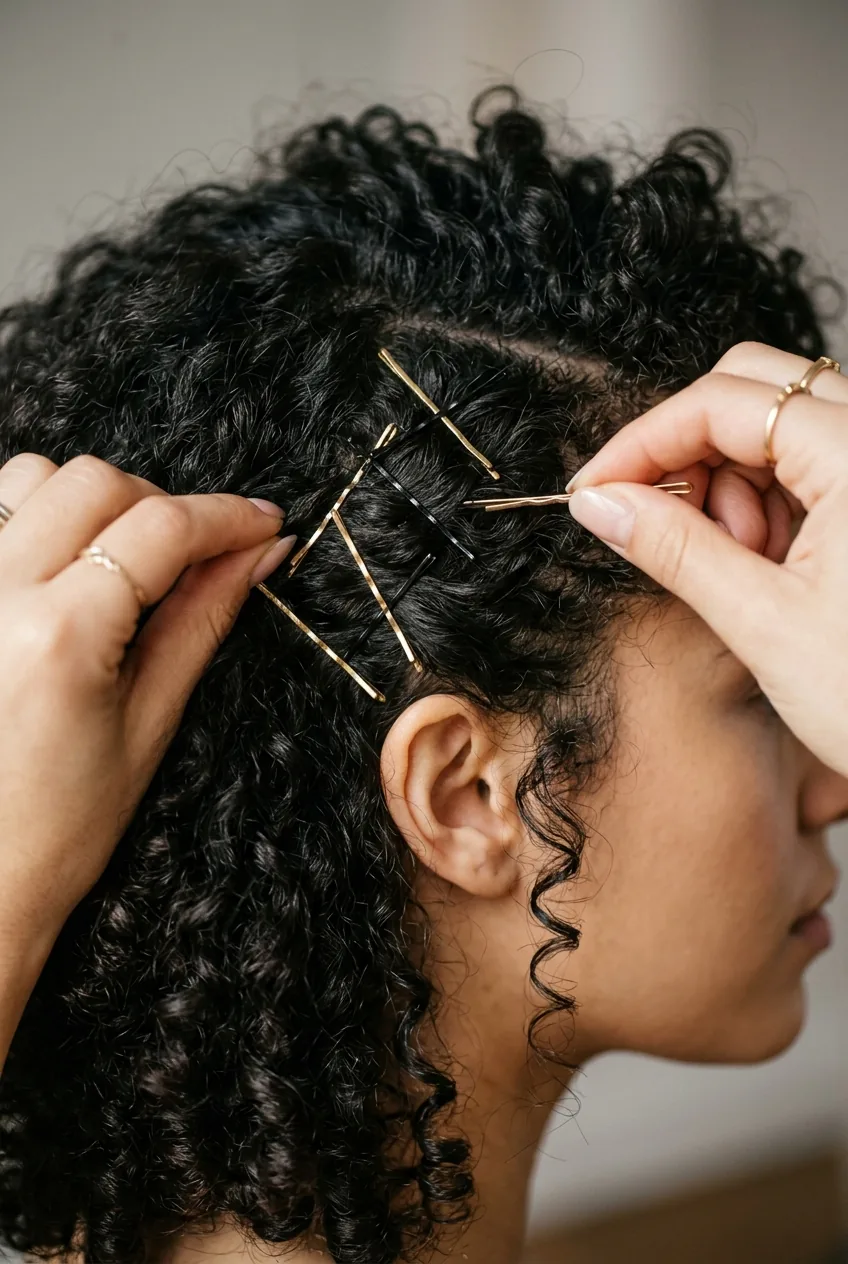
Nobody talks about this, but bobby pin placement is everything. Most people just stab them in randomly and hope for the best. Here’s what actually works:
Think of your bobby pins as creating a scaffold, not just random anchors. I start with horizontal pins at the base to create stability, then use vertical pins to secure the twisted sections. The flat side of the bobby pin should always face your scalp — it grips better that way.
And here’s something that changed my updo game completely: cross your bobby pins. When you pin a section, place the first bobby pin pointing up and to the right. Then take a second bobby pin and place it pointing down and to the left, creating an X shape. This creates way more hold than two pins side by side.
Color matters too. I keep both blonde and brunette bobby pins in my kit because they should disappear into your hair color. Nothing ruins an elegant updo like visible bobby pins.
Product Layering Without the Crunch
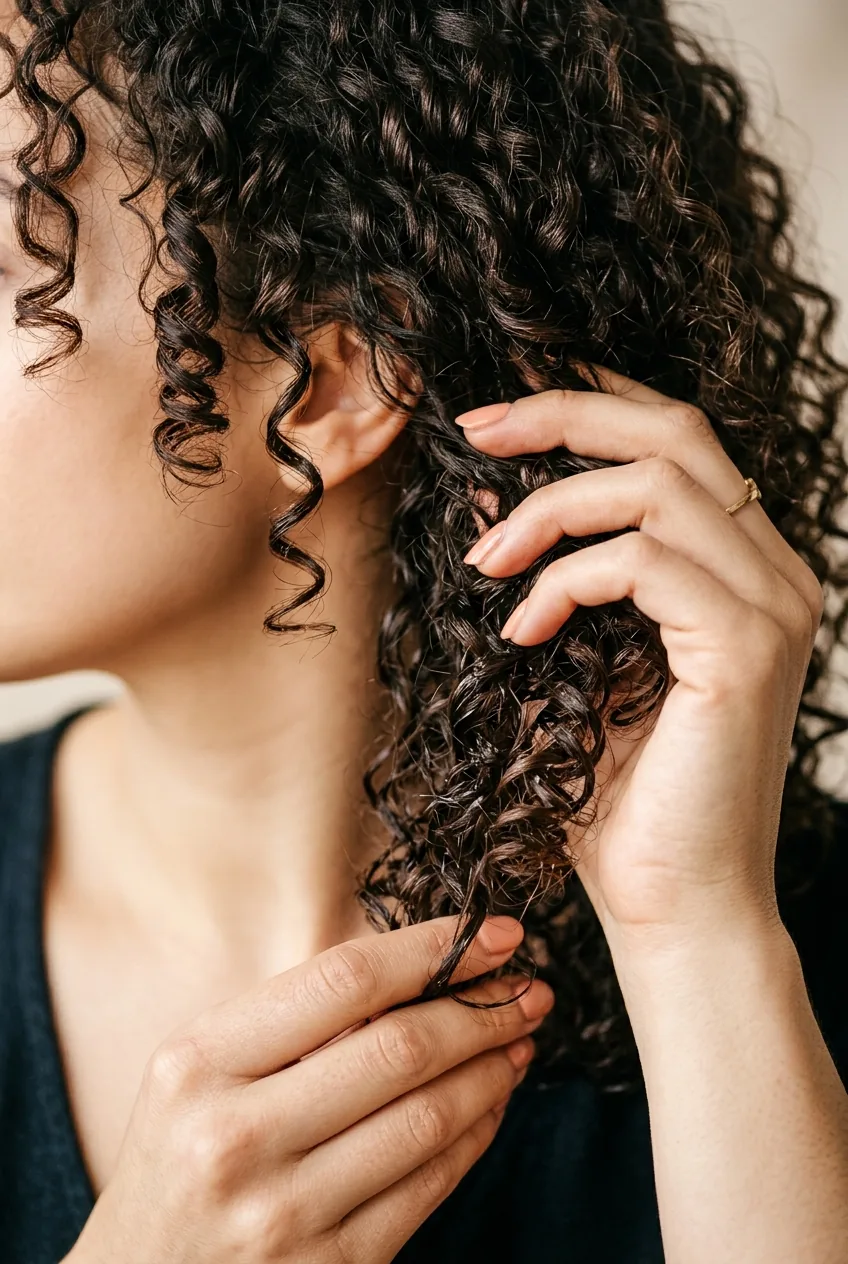
The product layering for curly updos is totally different from wash day. You need hold without weight, which means strategic application.
I start with a tiny amount of curl refresh spray misted on my hands, then scrunched gently into my curls. This reactivates whatever products are already in my hair from the previous wash day. Then comes the gel — but not everywhere. I only apply gel to the sections I’m actually going to manipulate and pin.
The biggest mistake I used to make? Applying heavy cream or oil before an updo. These products make your hair slippery, which means bobby pins won’t grip properly. Save the moisturizing products for wash day.
For hold that lasts all day without crunchiness, I finish with a flexible hold spray. Not a firm hold hairspray — that makes your curls feel like plastic. You want something that moves with your hair while keeping everything in place.
Troubleshooting When Things Go Wrong
Problem: Your updo looks lumpy and uneven
Solution: You’re probably fighting your natural curl pattern. Instead of trying to smooth everything into submission, work with your curl’s natural direction. Twist sections the way they want to curl, not the way you think they should go.
Problem: Bobby pins keep sliding out
Solution: This usually means your hair is too slippery from product, or you’re using the wrong technique. Try the X-pattern I mentioned earlier, and make sure you’re pushing the bobby pin against your scalp, not just into the hair mass.
Problem: Your updo falls flat at the roots
Solution: Don’t pull your base ponytail too tight. You want to gather the hair, not stretch it. A loose base maintains your natural volume. Also, check that you’re not weighing down your roots with too much product.
The truth about curly updos? They’re not supposed to look perfect. The slightly imperfect, textural quality is what makes them beautiful. When I see someone with poker-straight edges and not a hair out of place, I know they’ve been fighting against their natural texture instead of working with it.
And honestly? Some days your curls just won’t cooperate, and that’s okay. On those days, I do a loose low ponytail and call it good. Not every day needs to be an updo day. For inspiration on more formal occasions, these prom hairstyles for curly hair show how to work with your texture for special events.
Learning to do reliable curly updos took me months of practice, but now I can throw my hair up in five minutes and know it’ll stay put all day. The key is respecting your curl pattern instead of fighting it. Your hair wants to look good — you just need to work with it instead of against it.