








I fought against cutting my hair for three years. Three whole years of wrestling with shoulder-length waves that looked great for exactly ten minutes after styling, then turned into a frizzy mess by noon. But last month, I finally took the plunge and got a wavy lob — and honestly? I wish I’d done it sooner.

What You’ll Learn About the Perfect Wavy Lob
Why I Resisted the Lob for Years
Here’s my unpopular opinion: most lobs look boring. There, I said it.
I’d see them everywhere — Pinterest, Instagram, the woman ahead of me in the grocery store checkout line. They all looked so… safe. Predictable. Like the hair equivalent of beige walls and vanilla lattes. But my waves? They had personality. Even if that personality was “chaos demon who refuses to cooperate.”
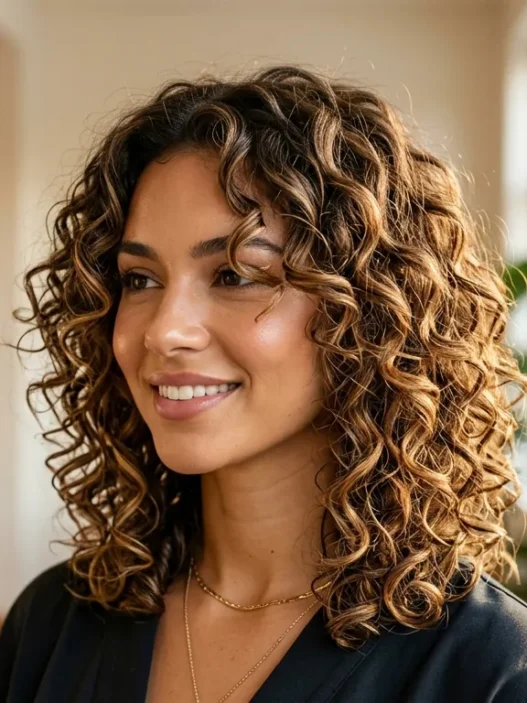
The turning point came when my stylist showed me photos of what she called “lived-in lobs.” These weren’t the blunt, Instagram-perfect cuts I’d been seeing. They had movement. Texture. They looked like real hair that real women could actually style without a team of professionals.
Finding Your Perfect Length

The magic happens right at your collarbone. Not above it, not below it — exactly at that sweet spot where your waves get enough weight to form properly but not so much that they drag down.
I learned this the hard way. My first attempt at a shorter cut left me with what I now call “the triangle phase” — too short to weigh down my waves, too long to be a proper bob. For two months, I looked like I was wearing a hair helmet.
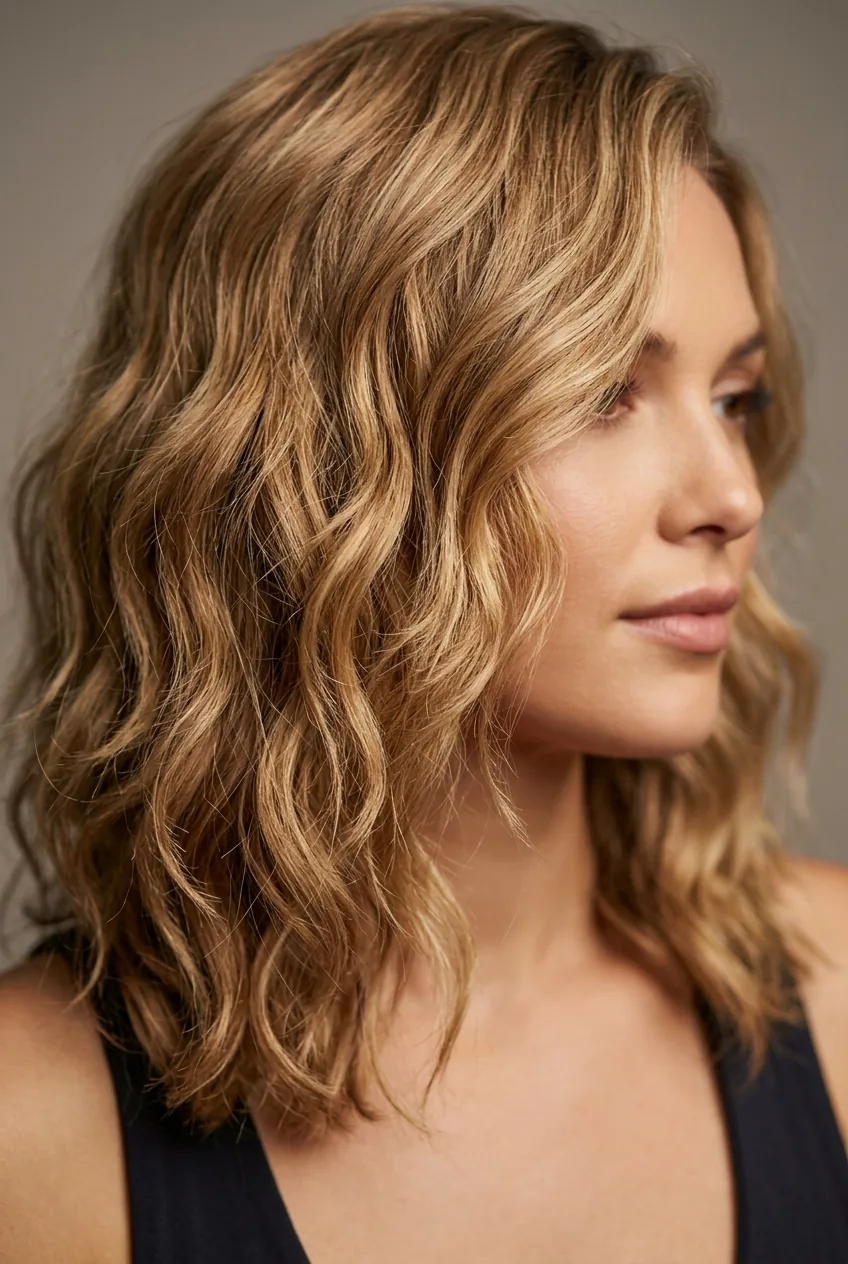
But here’s what changed my mind about length: seeing how she styled hers in that photo. The way it grazes her collarbones creates this perfect movement that frames her face without overwhelming it. That’s exactly the balance I was missing.
- Measure with your fingers — two finger widths above your collarbone
- Consider your neck length (shorter necks need slightly longer cuts)
- Factor in your wave pattern (loose waves can go shorter, tight waves need more length)
The Cut That Changes Everything

The difference between a good wavy lob and a great one comes down to the layers. And I mean subtle layers — not the chunky, obvious ones from the early 2000s that we’re all trying to forget.
My stylist uses what she calls “invisible layering.” You can’t see distinct layers when you look at the cut, but they’re doing all the work underneath. They remove bulk without creating gaps, add movement without sacrificing length, and give your waves somewhere to fall naturally.
The key is asking for “internal layers only.” This means the stylist cuts layers inside the hair, keeping the perimeter weight line intact. It sounds technical, but the result is what you see in Asian-inspired lob hairstyles — that effortless, bouncy texture that looks like you were born with perfect hair.
“The best cuts are the ones that look like you did nothing, but took everything to achieve.”
Styling Secrets That Actually Work
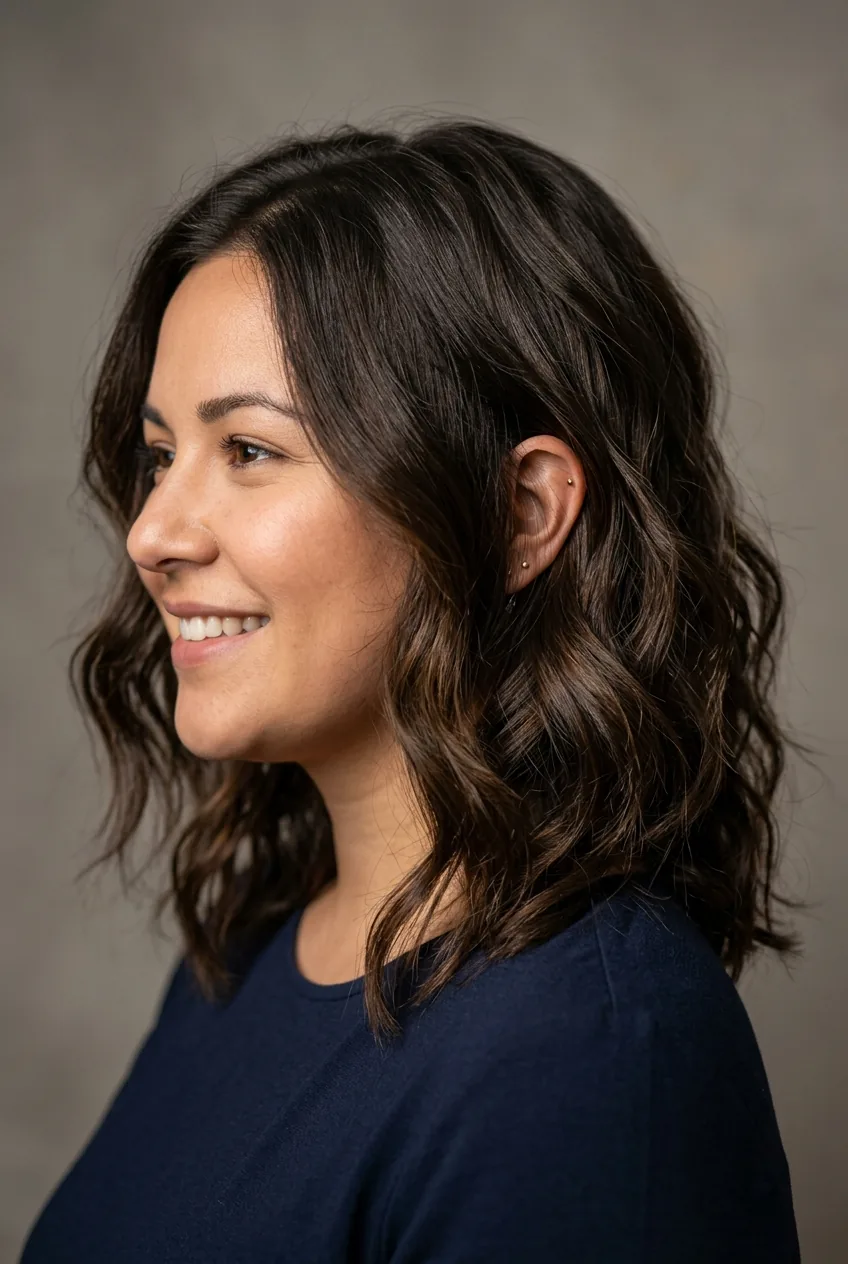
Can we talk about scrunching for a second? Everyone says to scrunch your waves, but nobody explains how to scrunch without creating frizz city.
Here’s my method: damp hair, not soaking. Apply your product (I’m obsessed with lightweight curl cream right now), then scrunch upward with a microfiber towel. Not a regular towel — that’s frizz waiting to happen.
The game-changer? Plopping. I know it sounds ridiculous, but wrapping your wet waves in a cotton t-shirt for 10 minutes while you do your makeup transforms everything. It sets the curl pattern without the weight of dripping water pulling your waves straight.
Air drying versus diffusing is where people get religious about their methods. I’m team diffuser, but only on low heat and low speed. The goal isn’t to dry your hair quickly — it’s to encourage your natural curl pattern while removing moisture gradually.
My 15-Minute Morning Routine
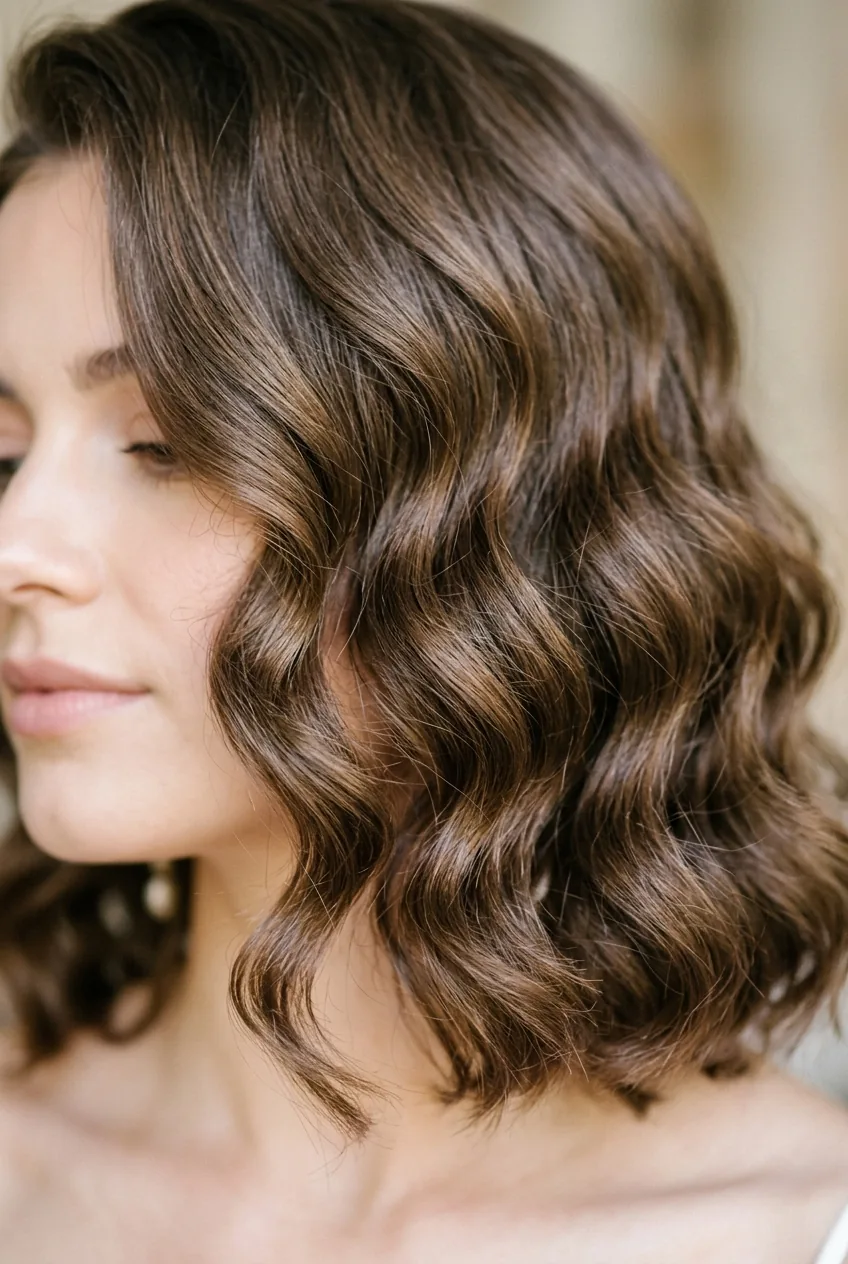
- Wet hands, scrunch out overnight frizz
- Apply a tiny amount of texturizing spray to mid-lengths
- Scrunch with microfiber towel
- Diffuse on cool for 5 minutes
- Done
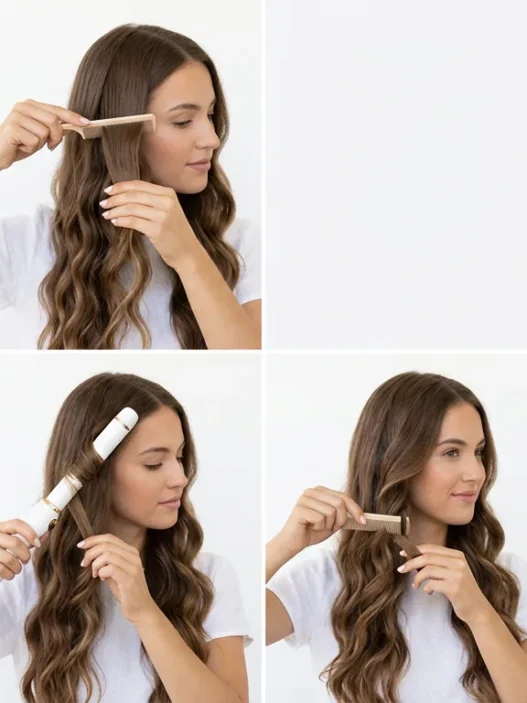
This Tutorial Changed My Styling Game
When Your Face Shape Matters Most
I’m going to be controversial here: face shape rules are mostly nonsense. But there are a few tweaks that make a real difference with wavy lobs.
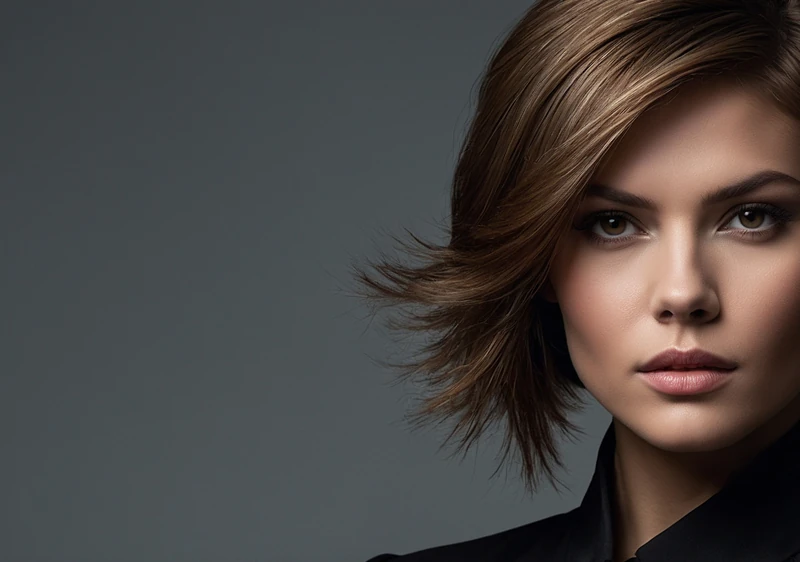
Round faces benefit from slightly longer pieces in front — not layers, just length variation. The waves create natural angles that add dimension. I see this working beautifully in sleek wavy styles where the front pieces graze the jawline just so.
Square faces? You want softness around the angles. This means asking for face-framing layers that start below the cheekbone, not above it. The waves will do the rest of the work, creating that soft, romantic feel that balances strong jawlines.
But here’s what nobody talks about: your lifestyle matters more than your face shape. If you’re someone who throws their hair in a ponytail every day, a wavy lob might not be your cut. These styles look best when they’re doing their thing freely.
The best part about this cut? It grows out beautifully. As your hair gets longer, the waves just become more relaxed. No awkward in-between stages, no desperate need for trims every six weeks. It’s the most low-maintenance cut I’ve ever had, which is saying something coming from someone who once went four months between salon visits.
Six months later, I’m still obsessing over my decision to go shorter. My morning routine went from 45 minutes of fighting with a curling iron to 15 minutes of enhancing what’s already there. Sometimes the best beauty decisions are the ones that make you feel more like yourself, not less.