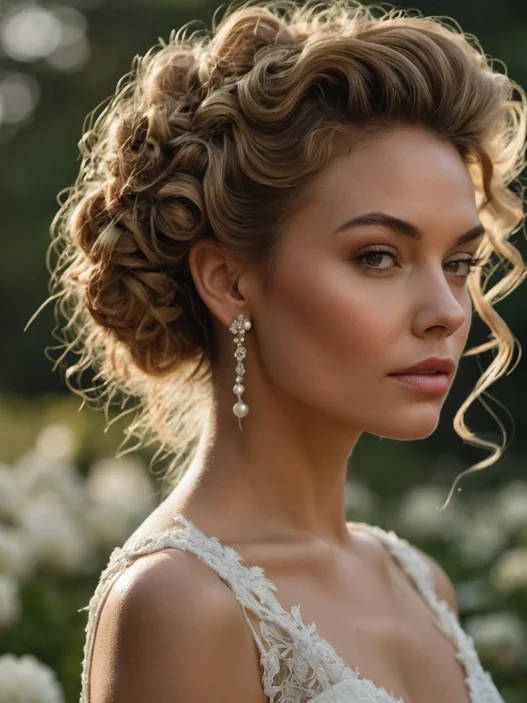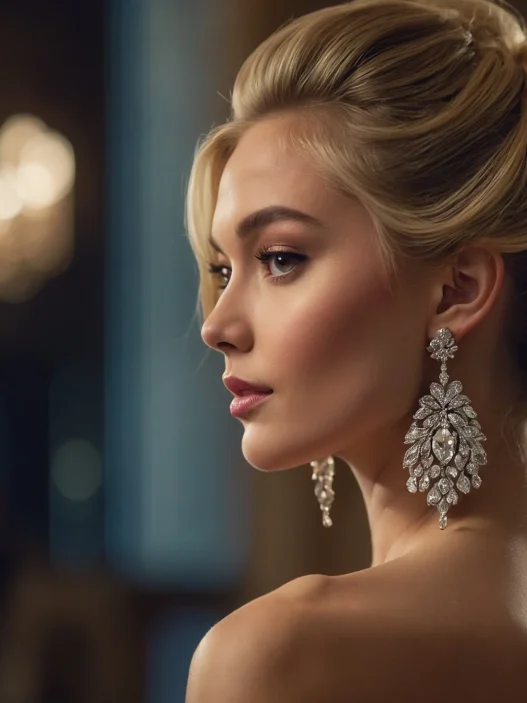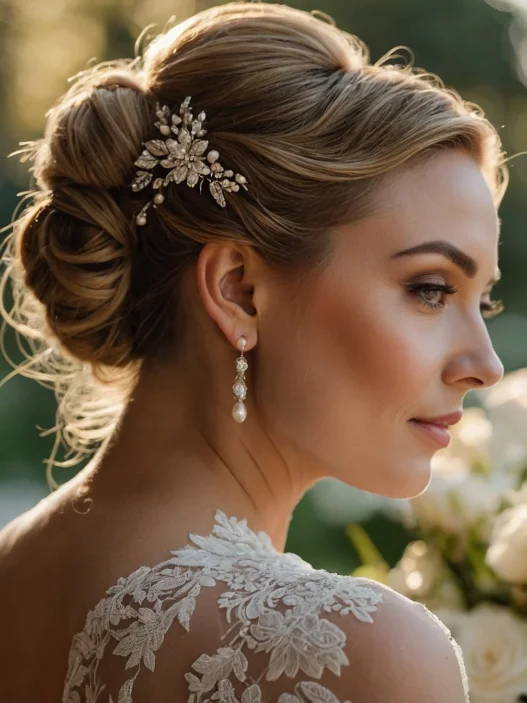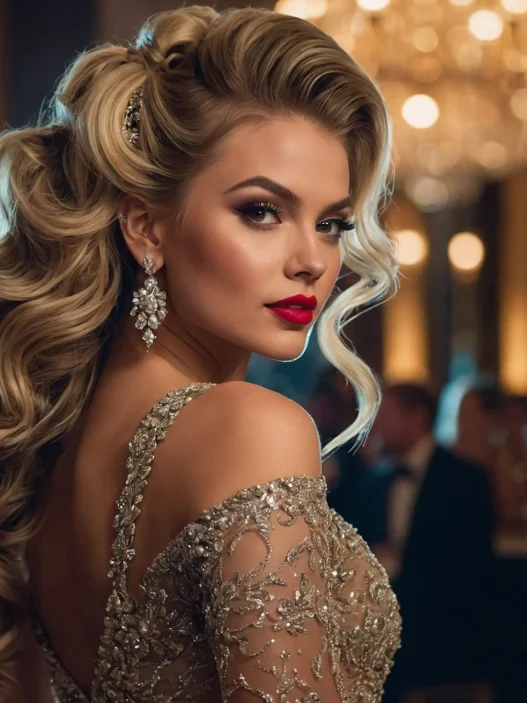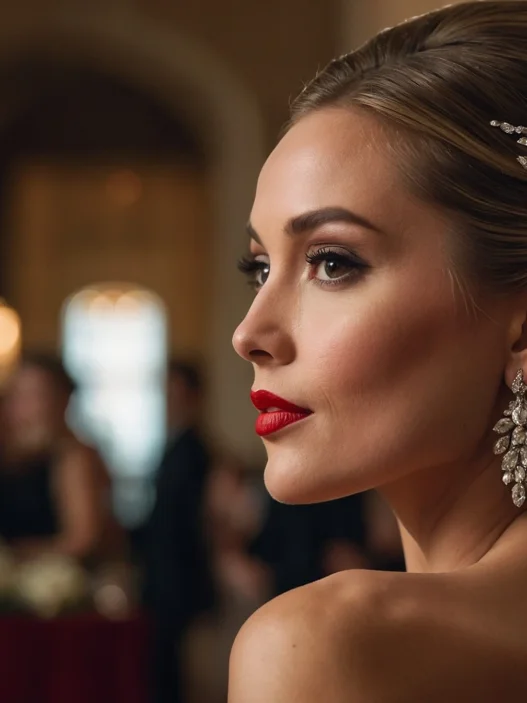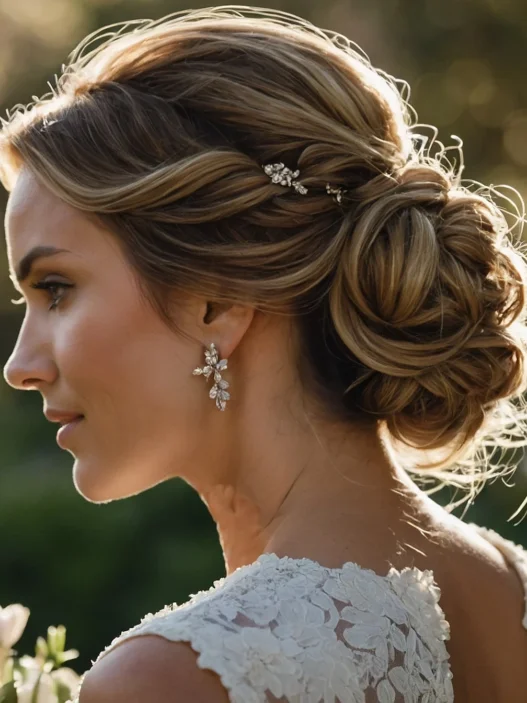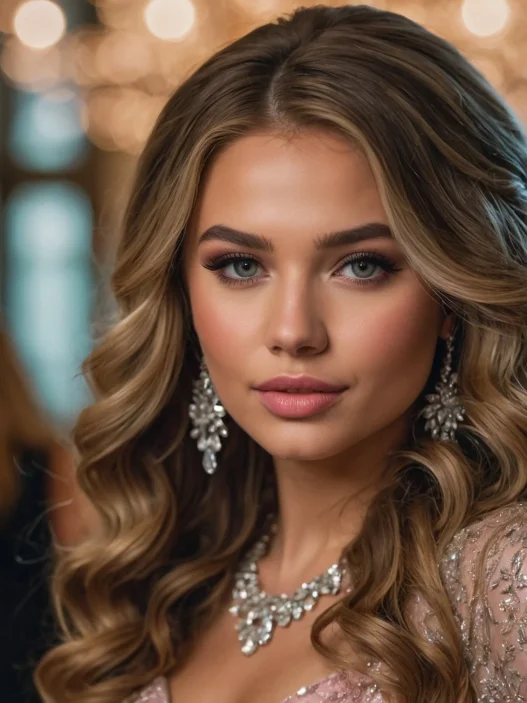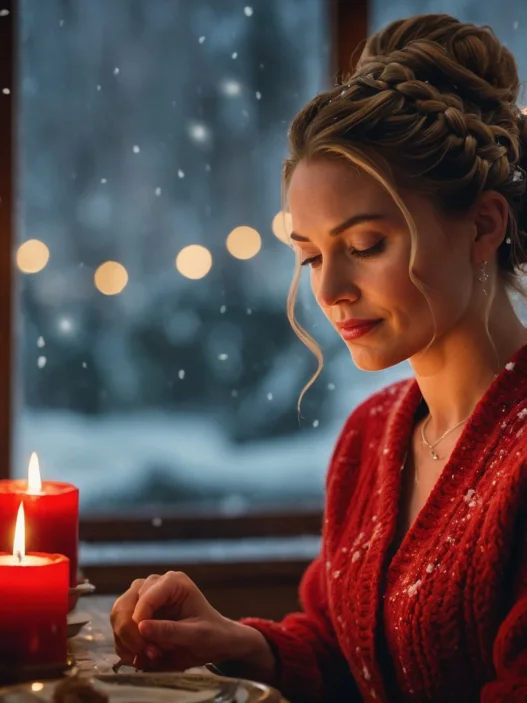







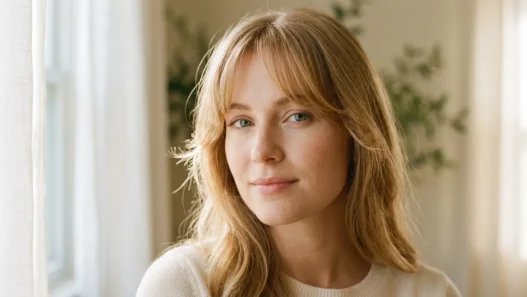
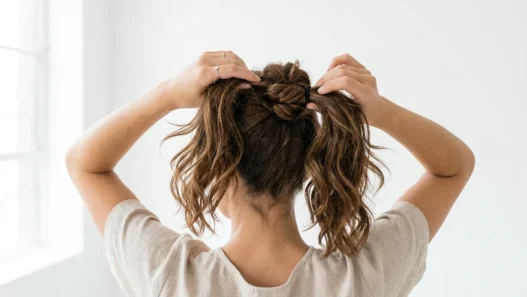
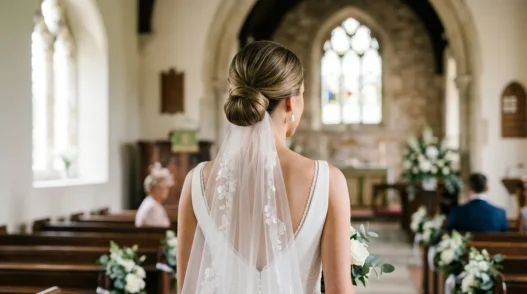
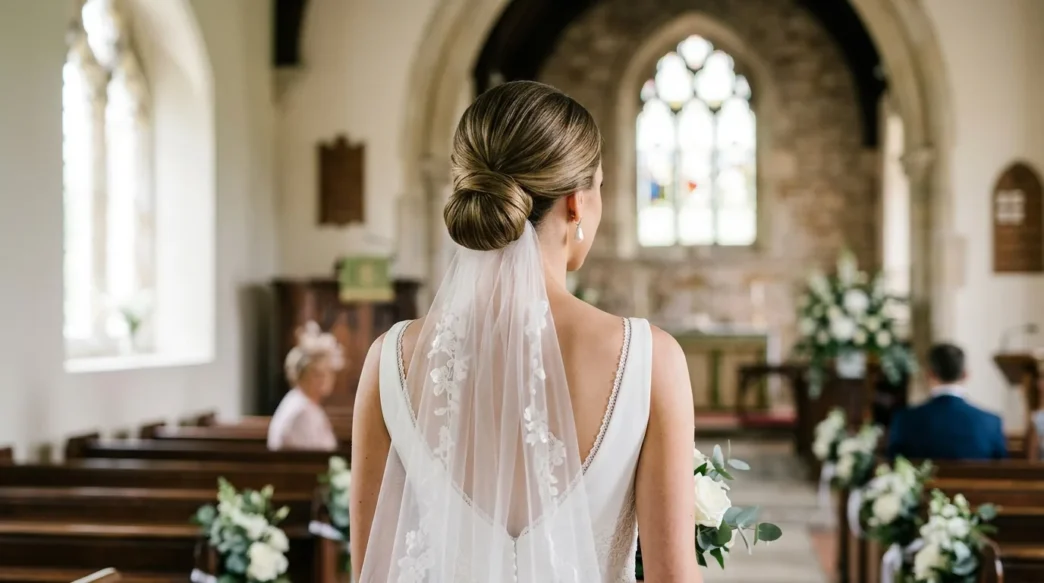
Last month, I had two brides with completely opposite visions. Sarah wanted the most intricate braided updo I could create — think five different braid patterns woven together with pearl pins. Emma? She just wanted her hair “pretty but not fussy.” Both looked absolutely stunning, but styling them taught me something important about the eternal debate between simple and elaborate wedding hair.
Round 1: Time and Effort
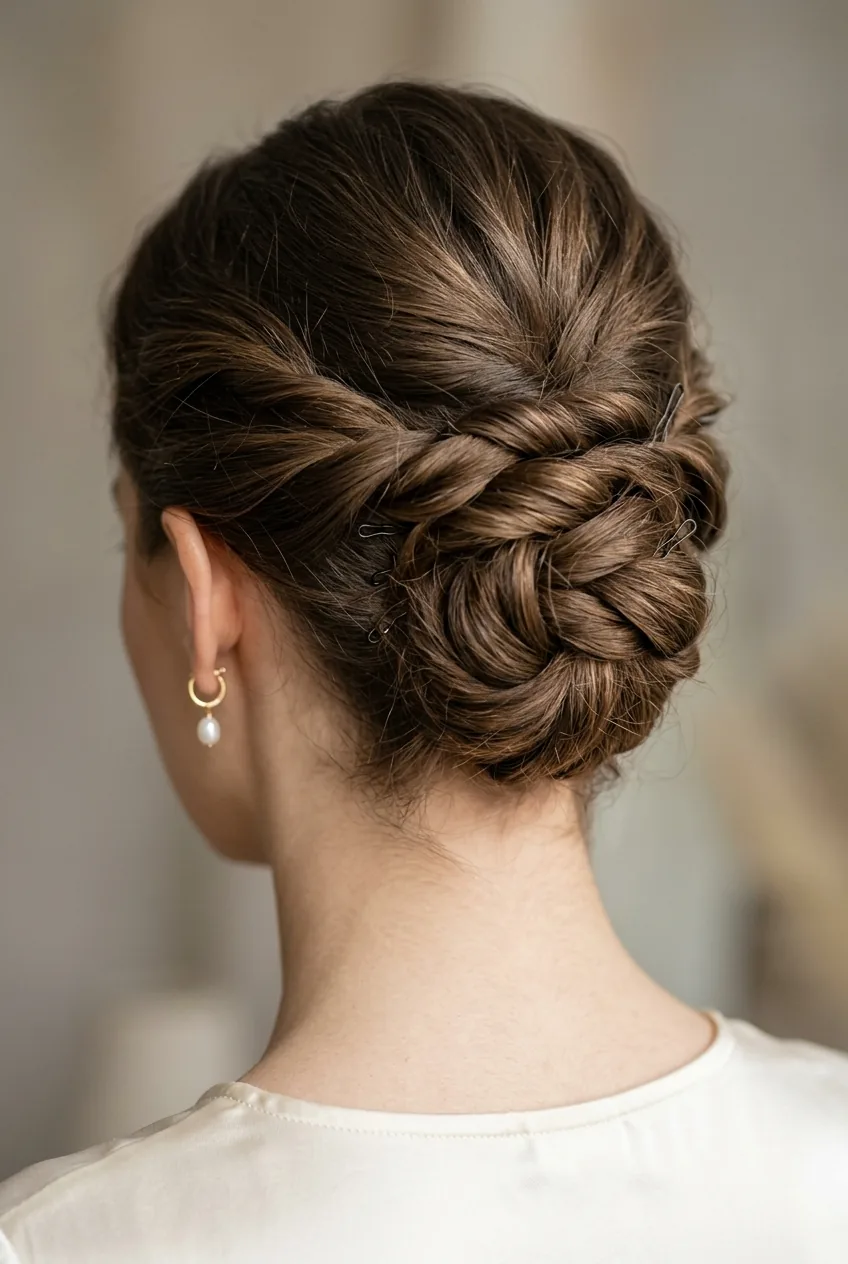
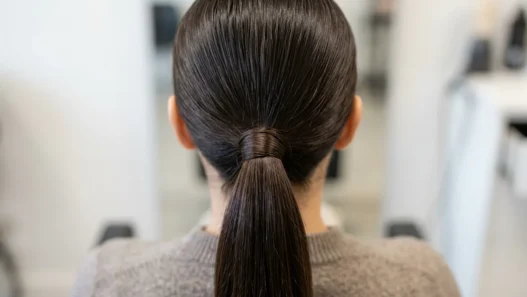
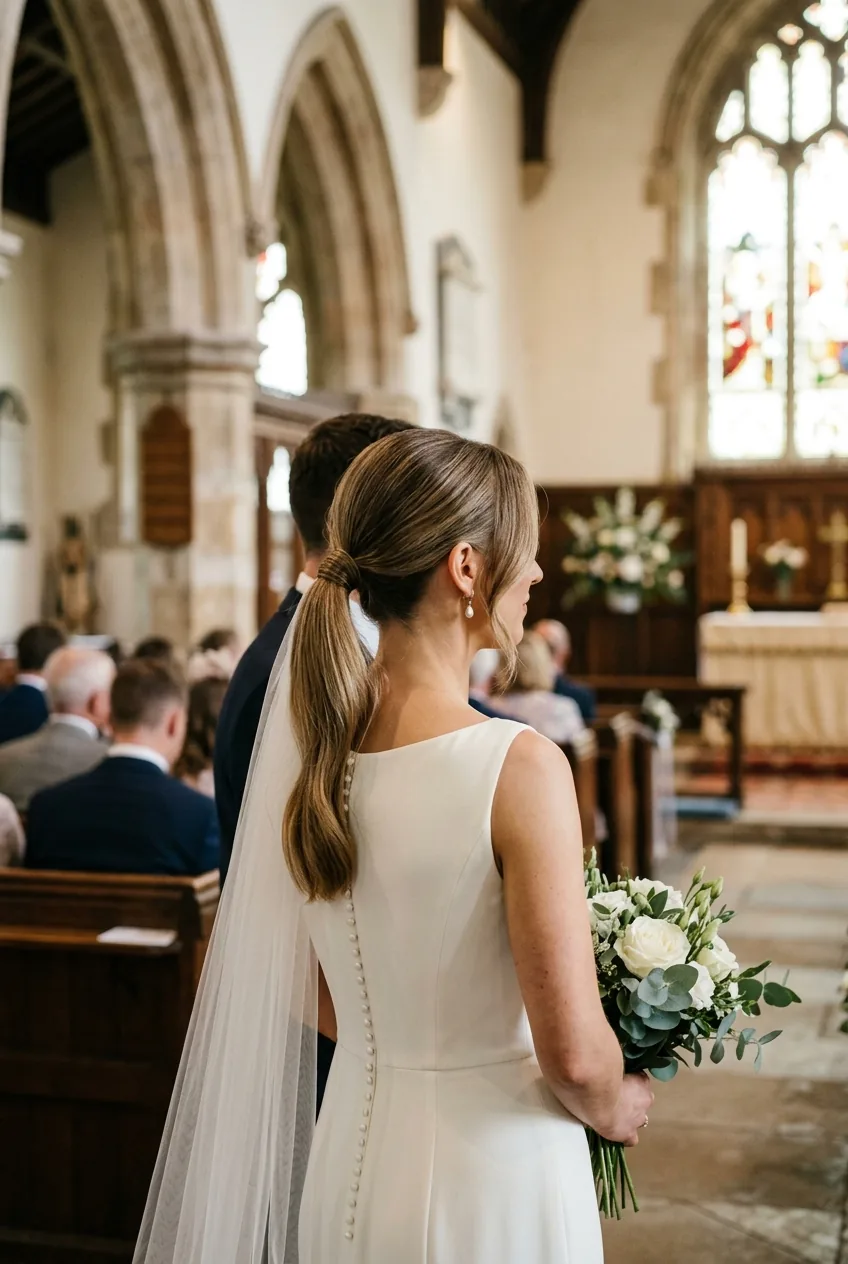
Simple wedding hairstyles are the clear winner here. I’m talking about styles like a low chignon, sleek ponytail with face-framing pieces, or soft waves pinned to one side. These take me 45 minutes to an hour, tops.
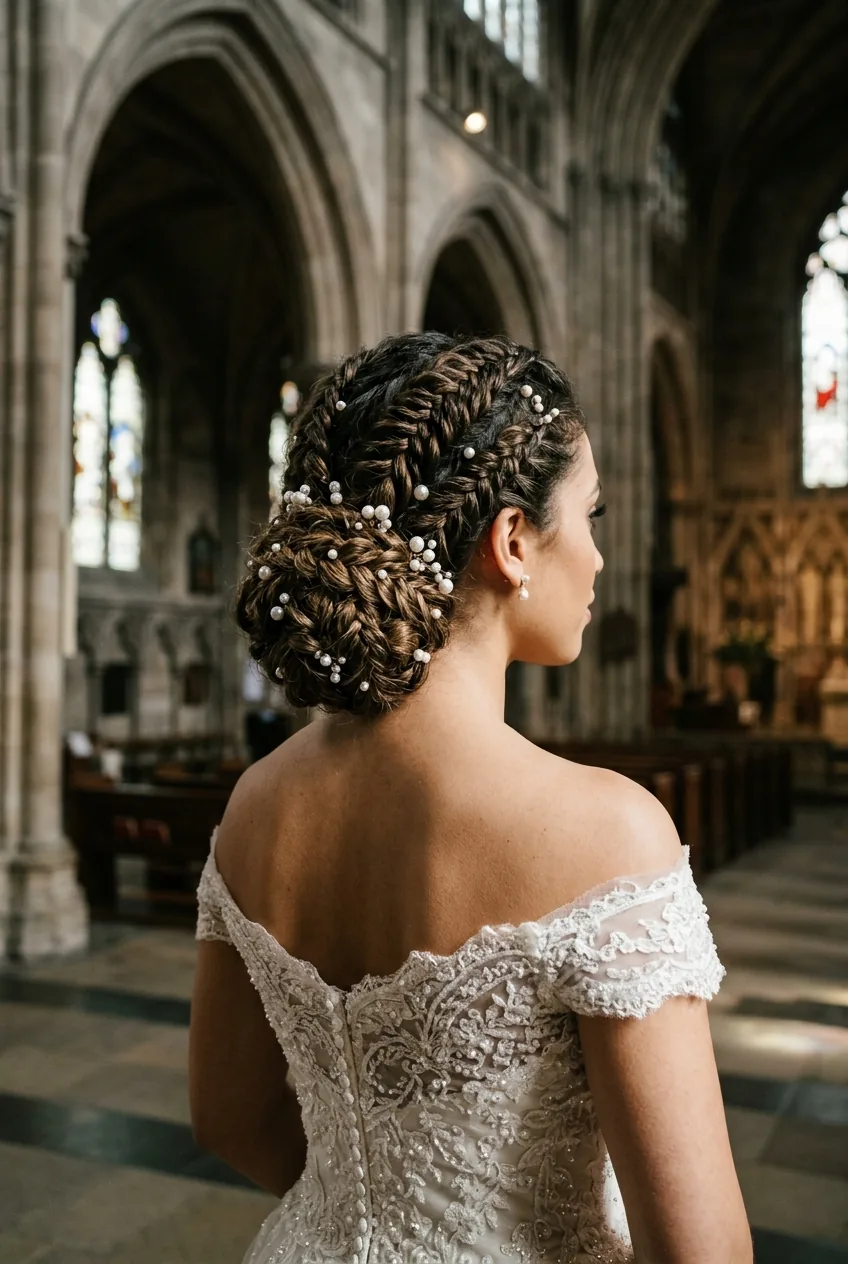
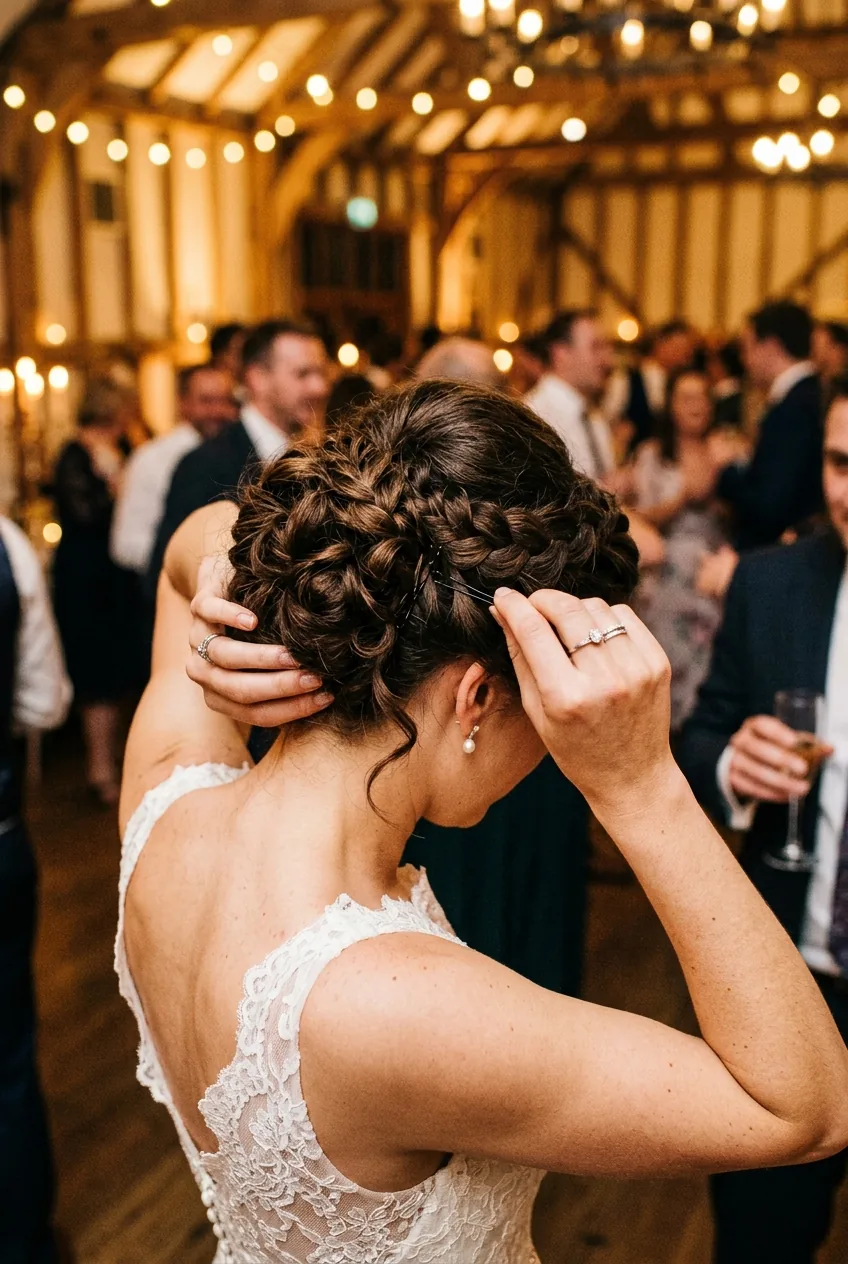
Elaborate updos? We’re looking at 2-3 hours minimum. That intricate style I did for Sarah involved sectioning her hair into twelve different parts, creating five types of braids, and strategically placing 47 individual pearl pins. Yes, I counted.
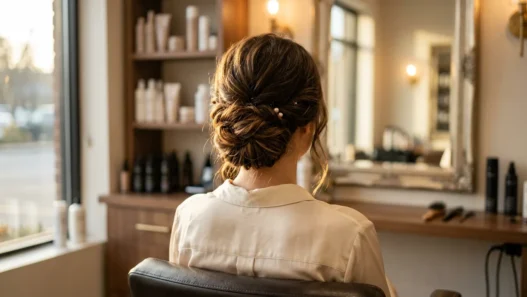
But here’s what surprised me — simple doesn’t mean rushed or sloppy. Emma’s understated twisted low bun required just as much precision in placement and texturing. The difference is I wasn’t fighting against time anxiety, and neither was she.
Winner: Simple wedding hairstyles
Round 2: Comfort Throughout the Day
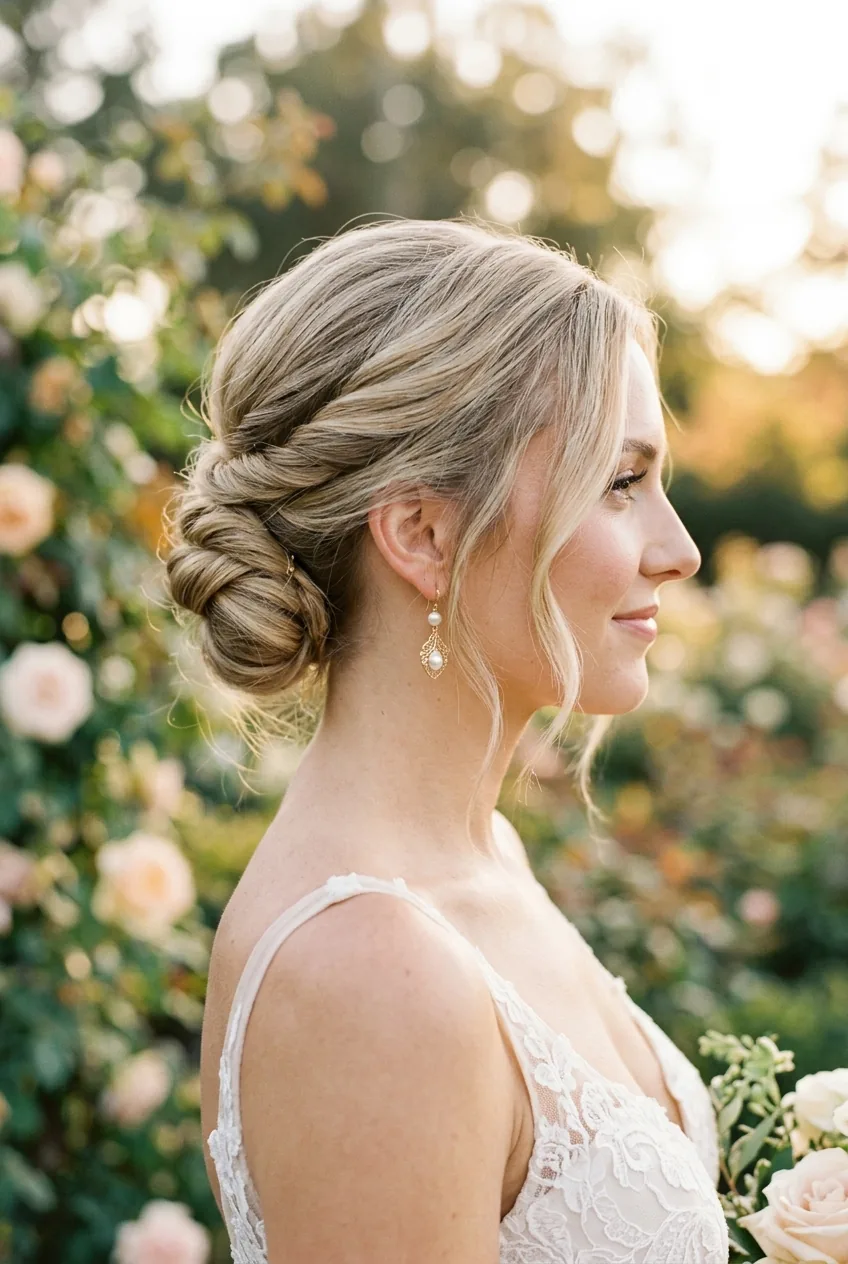
This one’s not even close. Simple styles win by a landslide, and I have the late-night texts from brides to prove it.
Emma danced until midnight without a single bobby pin coming loose. Her twisted bun sat at the nape of her neck — no pulling, no headache, no constantly checking if pieces were falling.
Sarah’s elaborate updo looked incredible, but by hour six, she was asking me to “make it stop pulling.” All those intricate braids created tension points across her scalp. The weight of the style, combined with the sheer number of pins needed to hold everything in place, left her with a genuine headache.
“I spent half my reception worried about my hair instead of enjoying my guests,” Sarah told me later.
Winner: Simple wedding hairstyles
See the Comfort Difference Yourself
Round 3: Photo Appeal
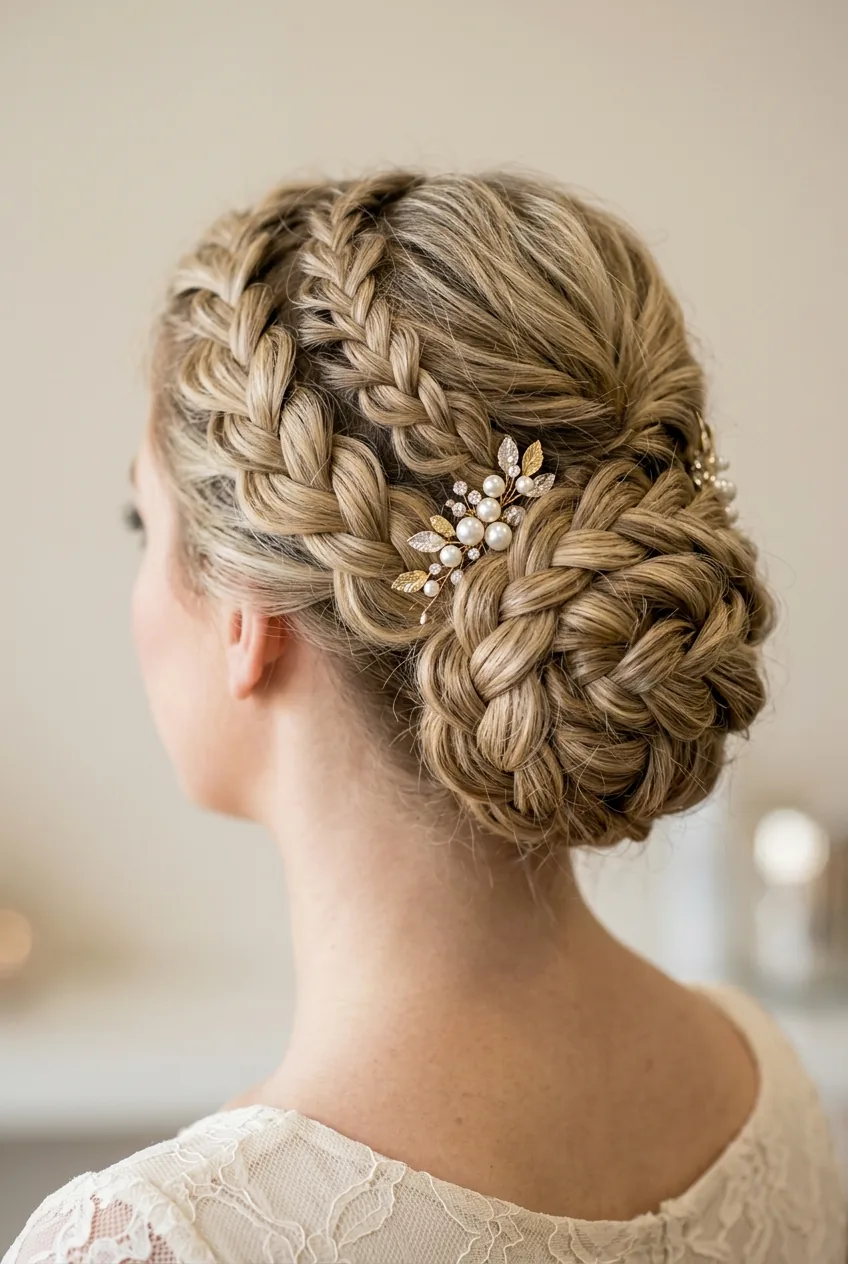
Okay, this is where elaborate updos start fighting back. In professional wedding photos, intricate styles absolutely photograph better. There’s just more to see, more texture, more visual interest from every angle.
Sarah’s complex braided updo looked stunning in her formal portraits. Every braid caught the light differently, creating this gorgeous dimensional effect that simple styles can’t match. Her photographer captured details that made the hair itself a work of art.
But — and this is important — Emma’s simple style photographed beautifully too. Her soft, romantic chignon complemented her dress perfectly without competing for attention. Sometimes the most elegant choice is the one that enhances rather than dominates.
For wedding hairstyles that need to last all day, I’ve learned that understated elegance often ages better in photos than trendy complexity.
Winner: Elaborate updos (but it’s closer than you’d think)
Round 4: Cost and Complexity
Simple styles are significantly more budget-friendly and logistically easier. Less time means lower styling fees. Fewer pins and products means lower material costs. And here’s something most brides don’t consider — trial runs for simple styles are much more predictable.
With elaborate updos, you’re paying for:
- Extended styling time (often 3x longer)
- More complex trial sessions
- Specialized pins, combs, and accessories
- Higher-hold products to support the structure
- Often a second stylist for very complex designs
But elaborate updos also require your hair to be in perfect condition. If you have fine hair, recent color damage, or shorter layers, some intricate styles simply won’t work. Simple styles are much more forgiving of hair texture and condition variations.
Winner: Simple wedding hairstyles
The Verdict
After styling hundreds of brides, I’m firmly in the simple wedding hairstyles camp. Here’s why:
Your wedding day is already overwhelming. Your hair shouldn’t add to that stress. The most beautiful bride is a comfortable, confident one — and elaborate updos often work against that.
Choose simple wedding hairstyles if:
- You want to focus on enjoying your day, not maintaining your look
- You prefer timeless elegance over trendy complexity
- You’re working with a tighter budget
- You have fine or damaged hair
- Your dress is already very detailed
Choose elaborate updos if:
- Photography is your top priority
- You have thick, healthy hair that holds styles well
- You genuinely love intricate hairstyles in daily life
- Your dress is simple and can handle competing details
My controversial opinion? Most brides think they want elaborate because they believe it equals “special.” But the most special thing about your wedding day should be marrying your person — not whether your hair has seven braids or two.
If you’re leaning toward something more intricate, consider winter wedding braided hairstyles that add texture without the complexity. Sometimes the perfect middle ground is exactly what you need.
Quick Answers for Brides
How long do simple wedding hairstyles actually last?
With proper prep and the right products, simple wedding hairstyles easily last 12+ hours. I’ve had brides text me the next morning saying their hair still looked perfect.
Can simple styles work with veils and accessories?
Absolutely! Simple base styles actually showcase veils and accessories better because there’s less competing visual noise. Proper placement is key for a polished look.
What if I change my mind on my wedding day?
Simple styles are much easier to modify on the fly. Adding a few extra curls or changing the pin placement takes minutes, not hours like with elaborate updos.
Do simple wedding hairstyles photograph well from all angles?
Yes, when done correctly. The key is creating subtle texture and dimension even in simple styles. A flat, one-dimensional look won’t photograph well regardless of complexity.
Trust me on this one — after watching Emma dance the night away while Sarah spent her reception adjusting bobby pins, I know which choice leads to happier brides. Sometimes simple really is better.