







I spent years fighting my waves instead of working with them. Every morning was a battle between straightening the mess or throwing it up in defeat. Then I discovered that wavy hair isn’t broken curly hair — it’s its own beautiful beast that needs a completely different approach. This routine changed everything.
Your Complete Wavy Hair Roadmap
What You’ll Actually Need
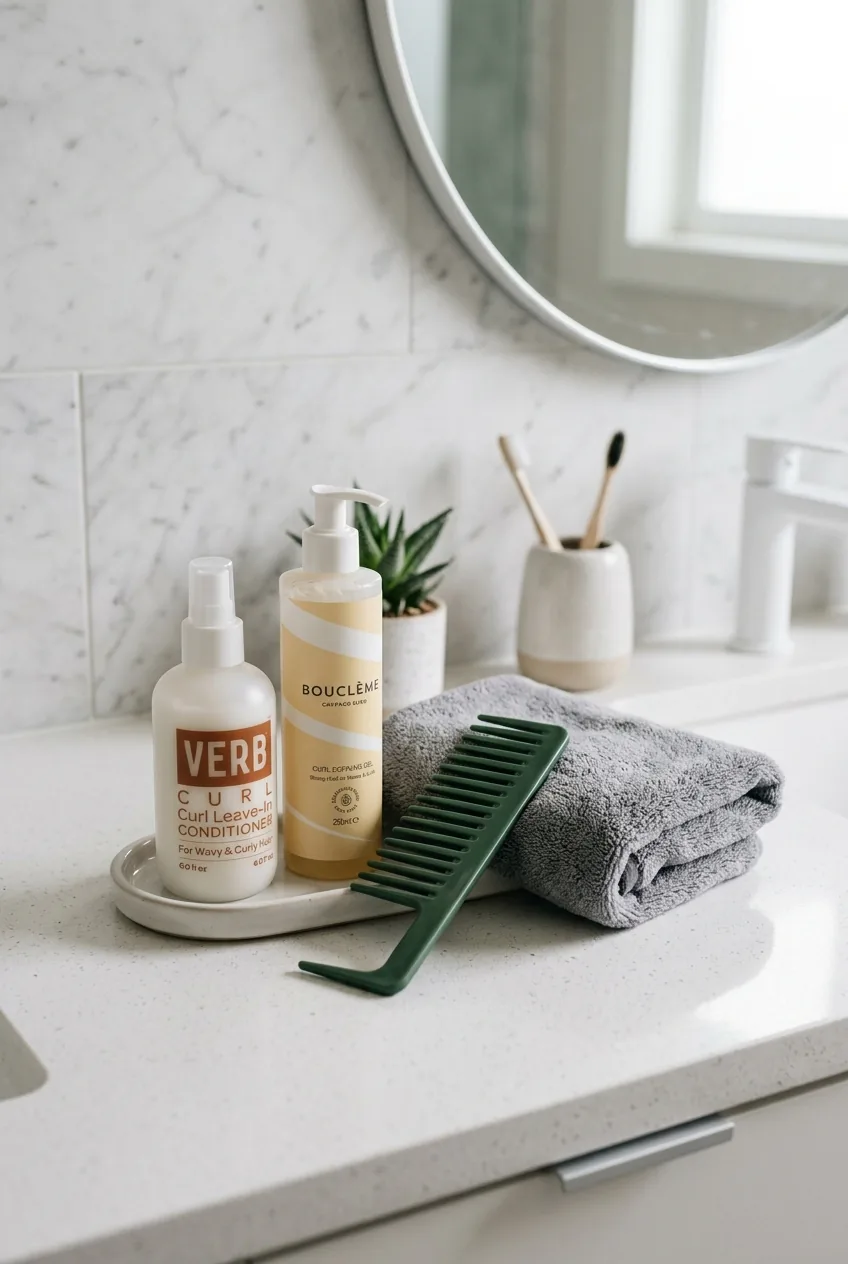
Before we dive in, let’s talk tools and timing. This isn’t about having a bathroom full of expensive products — it’s about having the right ones.
- Sulfate-free shampoo (I use this maybe twice a week max)
- Leave-in conditioner or cream — this is non-negotiable
- Curl-enhancing gel or mousse
- Microfiber towel or cotton t-shirt (game changer, seriously)
- Diffuser attachment for your blow dryer
- Wide-tooth comb for detangling
- Silk or satin pillowcase
Total time commitment? About 15-20 minutes on wash days, 5 minutes on refresh days. And honestly, once you get the hang of it, you’ll be doing most of this on autopilot.
The Foundation Phase
Everything starts in the shower. And I mean everything. How you handle your hair when it’s soaking wet determines whether you’ll have gorgeous waves or a frizzy disaster later.
First, the shampoo situation. I used to wash my hair every single day because I thought it was “dirty.” Turns out, I was stripping away all the natural oils my waves desperately needed. Now I shampoo maybe twice a week, and only on my scalp. Never length-wise.
When I do shampoo, I use my fingertips to massage my scalp gently. No aggressive scrubbing — that’s how you create frizz before you even leave the bathroom. The suds will naturally clean the length of your hair as you rinse.
Conditioner is where the magic starts. I apply it from mid-length to ends while my hair is dripping wet. Here’s the key part — I don’t just slap it on and rinse it out. I work it through with my fingers, detangling as I go. This is when your hair is most vulnerable, so be gentle.
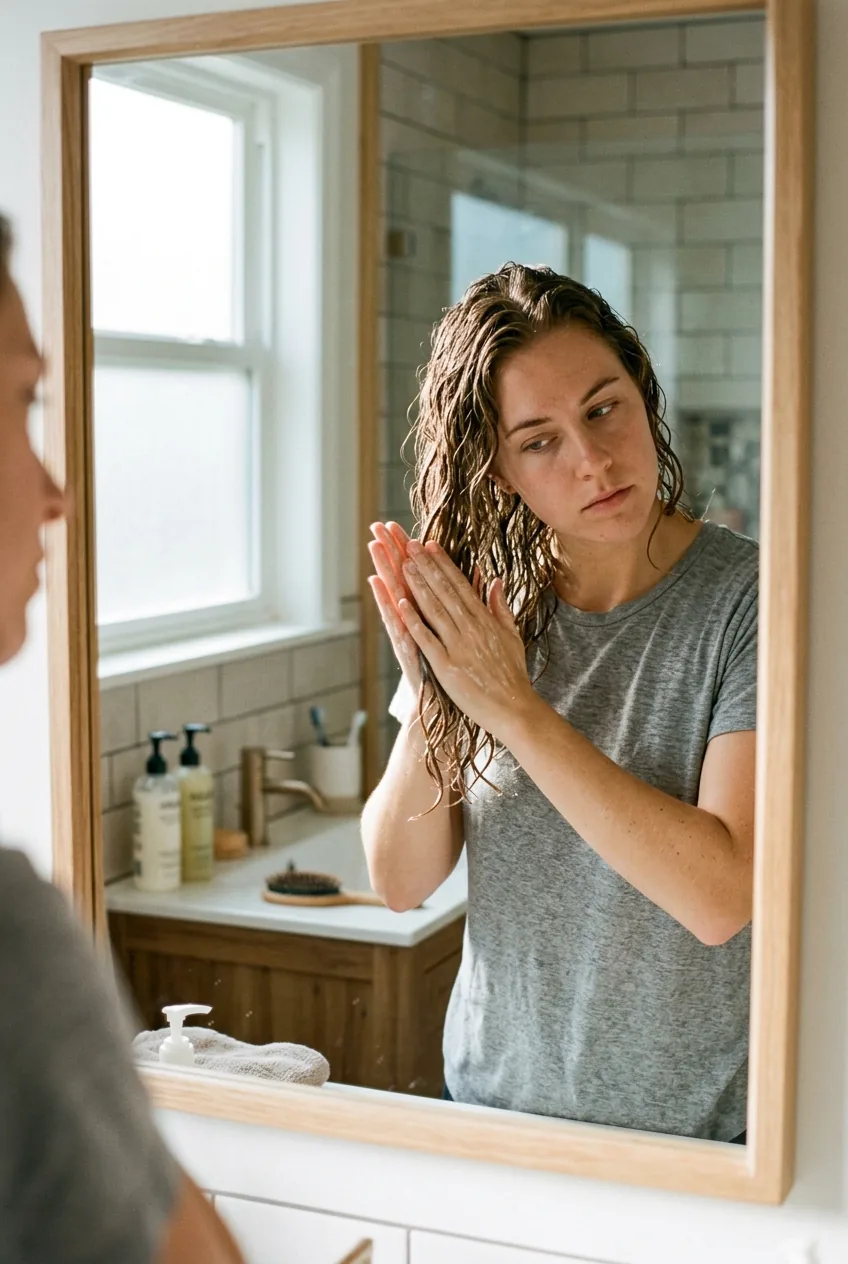
Before rinsing, I sometimes do what’s called “squish to condish.” I literally squish the conditioner into my hair, pushing the water and product up toward my scalp. It sounds weird, but it helps your waves start forming while they’re still protected by conditioner.
The rinse is crucial too. I rinse until the water runs clear, but I leave just a tiny bit of conditioner in there. Not enough to make it feel heavy, but enough to keep things smooth.
Building Definition
This is where most people mess up their waves — in that crucial window right after the shower. Your hair is perfectly saturated, your cuticles are open, and you have maybe 10 minutes to set the foundation for gorgeous waves.
First things first — do NOT rub your hair with a regular towel. I cannot stress this enough. That fluffy cotton towel is basically a frizz-creating machine. Instead, I use a microfiber towel or even better, an old cotton t-shirt.
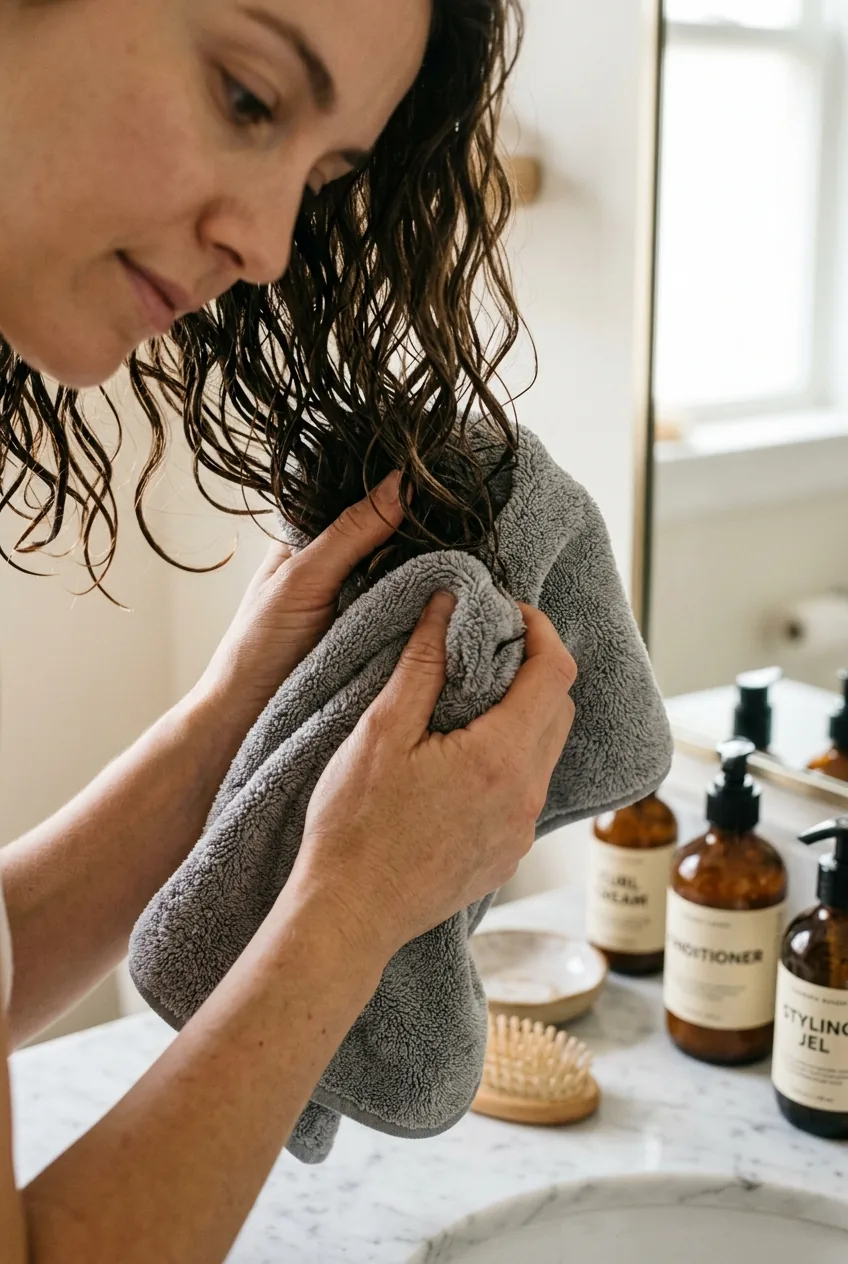
I gently press and squeeze the water out, following the direction my waves want to go. No twisting, no wringing, no aggressive anything. Think of it like you’re handling silk — because essentially, you are.
While my hair is still damp (not soaking, not dry — damp), I apply my leave-in conditioner. I rake it through with my fingers, then smooth it over each section. This is when I can really see my wave pattern starting to emerge.
Then comes the gel or mousse. I used to be scared of gel because I thought it would make my hair crunchy. But here’s the thing — you want that cast initially. It protects your waves while they dry and holds the pattern in place.
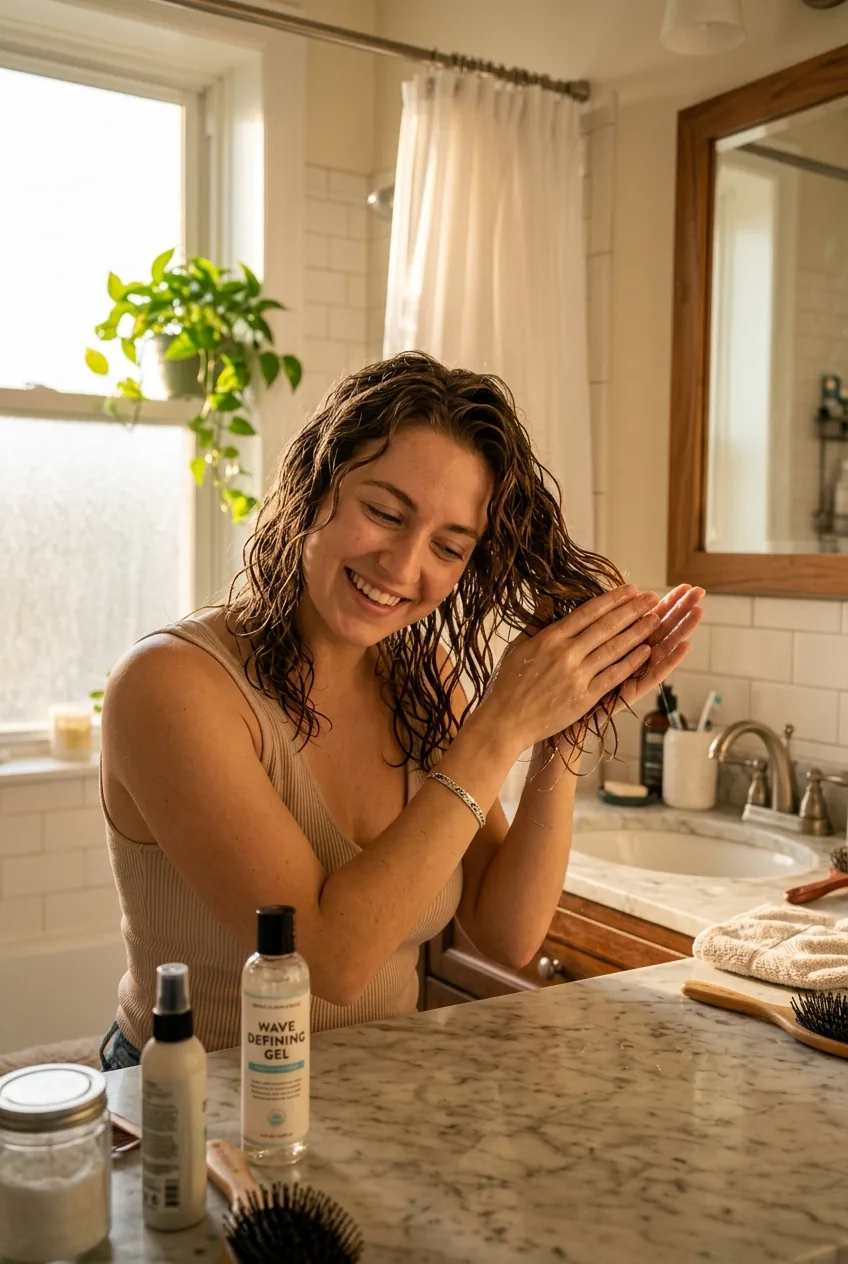
I apply it by scrunching, cupping sections of hair in my palm and gently pushing them up toward my scalp. This encourages the wave pattern and distributes the product evenly.
I used to think more product meant better waves. Wrong. I was weighing my hair down and ending up with limp, greasy-looking waves. Start with less than you think you need — you can always add more next time.
The Drying Game-Changer
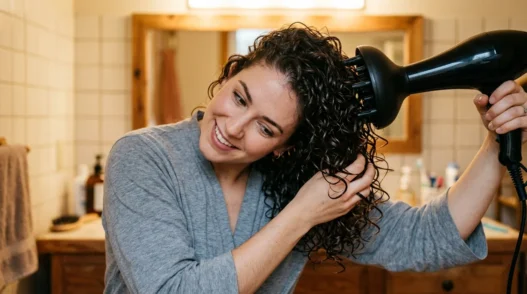
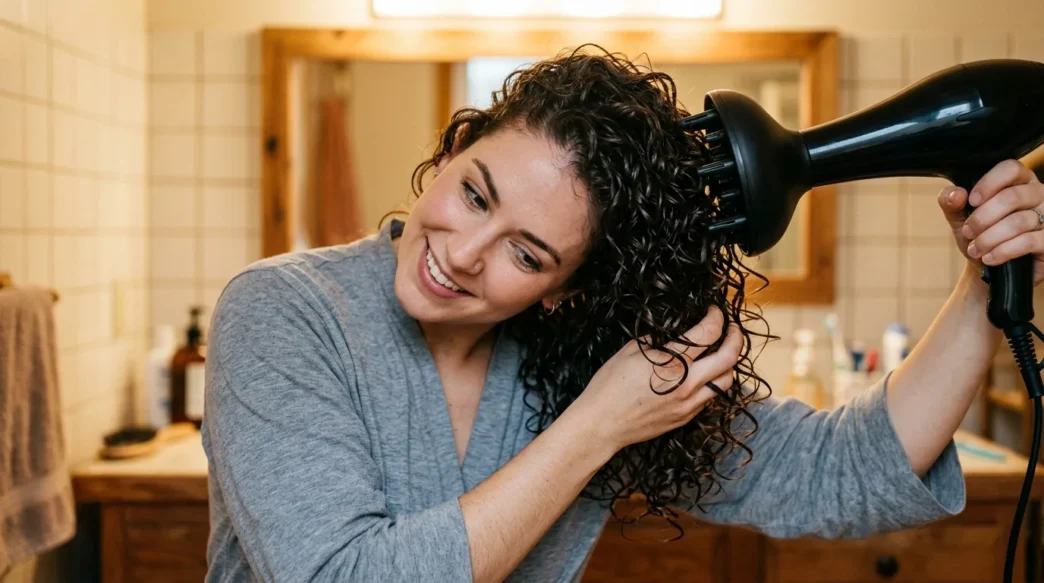
Let me be honest — air drying sounds romantic, but it never worked for me. My waves would lose definition, get frizzy, and take forever to dry completely. The diffuser changed my entire routine.
But there’s a right way and a wrong way to diffuse. The wrong way will give you a triangle-shaped frizz bomb. The right way gives you bouncy, defined waves that last for days.
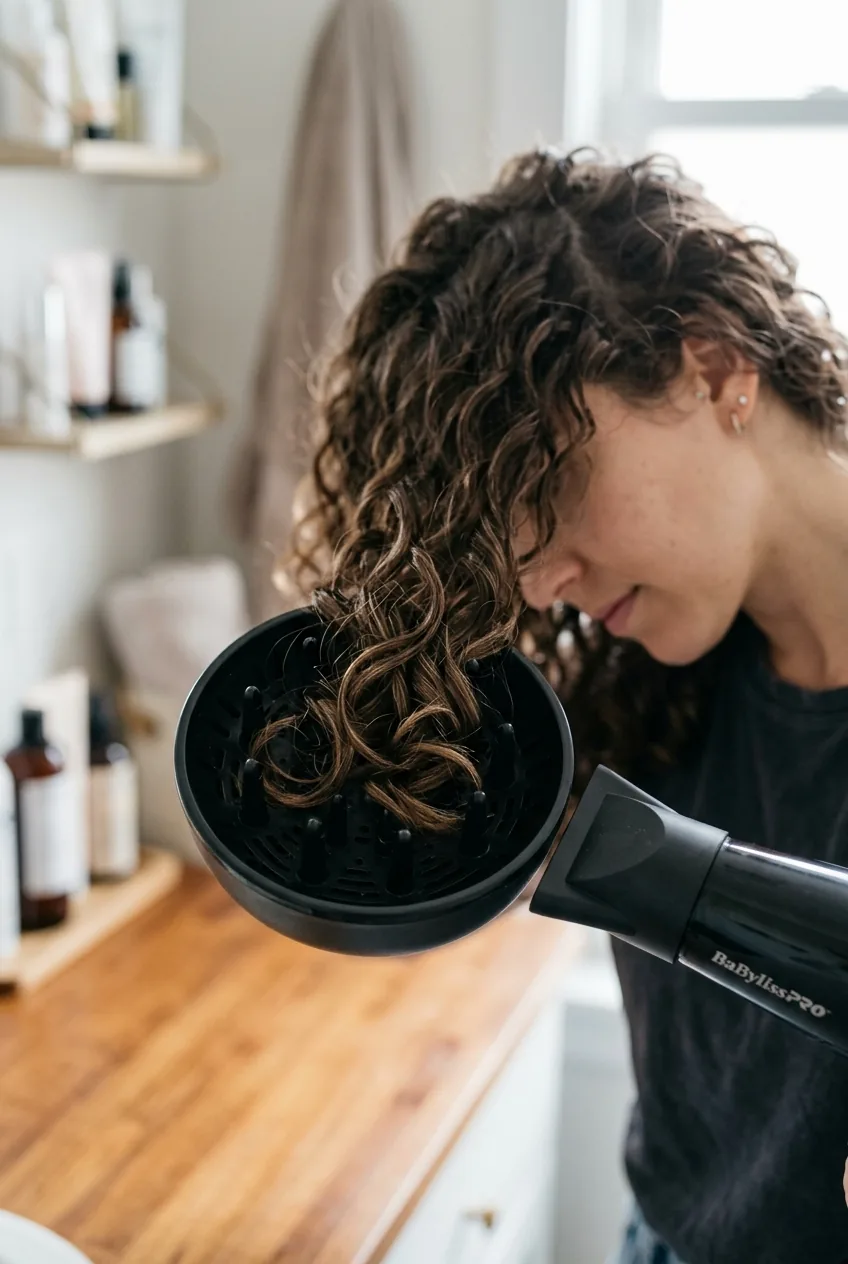
I start with my blow dryer on low heat, low speed. High settings will blow your wave pattern apart and create frizz. I literally hover the diffuser around my hair without touching it for the first few minutes, just to get some of the excess moisture out.
Then I tilt my head to one side and gently place sections of hair into the diffuser bowl. I don’t move it around — I hold it there for 30-40 seconds, then move to the next section. It’s like I’m supporting my waves while they dry, not agitating them.
The key is patience. I dry until my hair is about 80% dry, leaving just a tiny bit of dampness. If you over-dry with heat, you’ll get frizz. If you under-dry, your waves will fall out.
Here’s something that took me forever to figure out — you need to break the cast. After everything is completely dry (and I mean completely), I gently scrunch my hair again. This breaks up that crunchy feeling from the gel and leaves you with soft, bouncy waves.
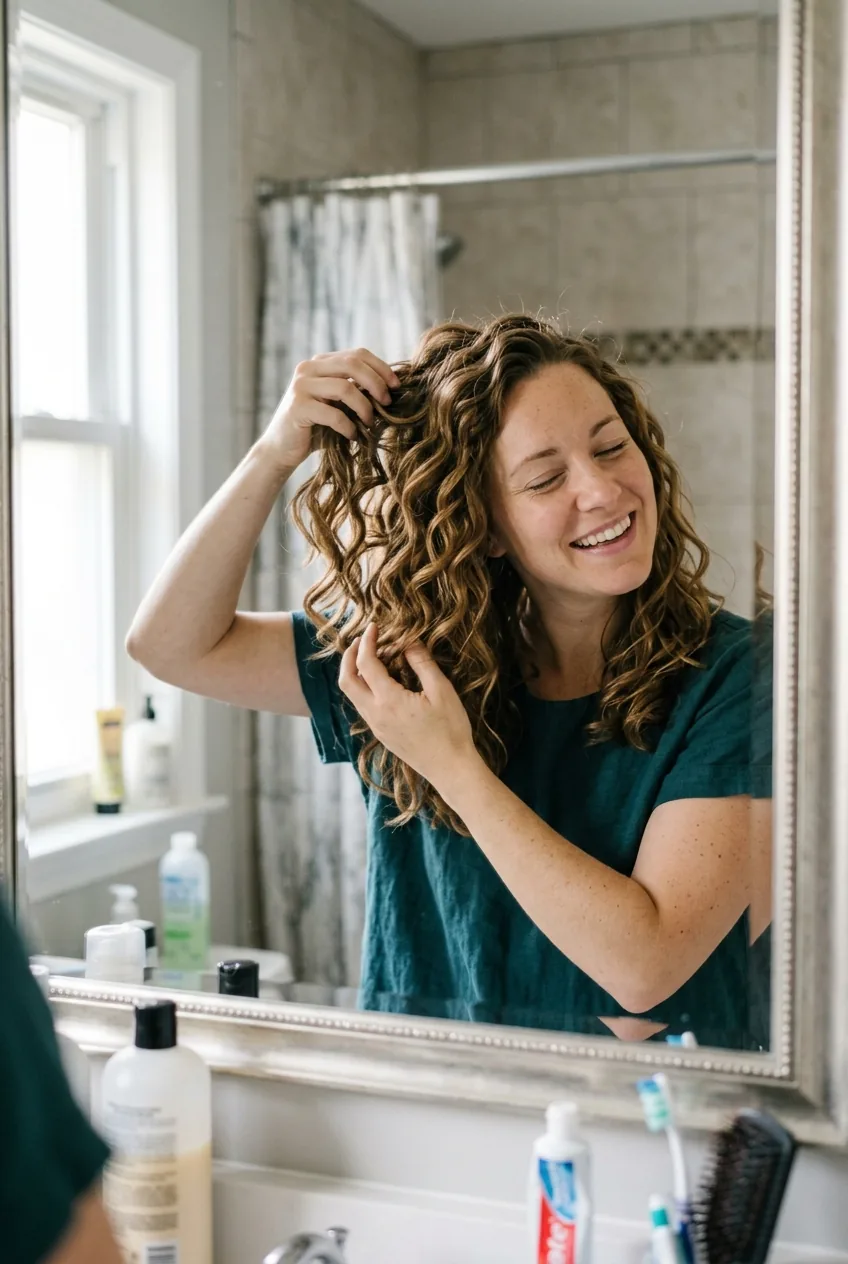
Watch the Diffusing Magic Happen
Lasting Power
Getting gorgeous waves is one thing. Making them last is another challenge entirely. I used to wake up with one side flat, the other side a mess, wondering why I even bothered.
The secret is in how you sleep. That silk pillowcase isn’t just bougie — it actually reduces friction while you toss and turn. I also loosely pile my hair on top of my head with a silk scrunchie. Not a tight ponytail, just a gentle gathering that keeps everything off my face.

Some nights I’ll do a “medusa clipping” technique where I clip random sections of hair up with small clips. It sounds crazy, but it preserves the root volume and wave pattern.
Morning refresh is crucial too. I never brush my waves when they’re dry — that’s a recipe for a frizzy disaster. Instead, I lightly mist them with water mixed with a tiny bit of leave-in conditioner. Then I scrunch gently to reactivate the pattern.
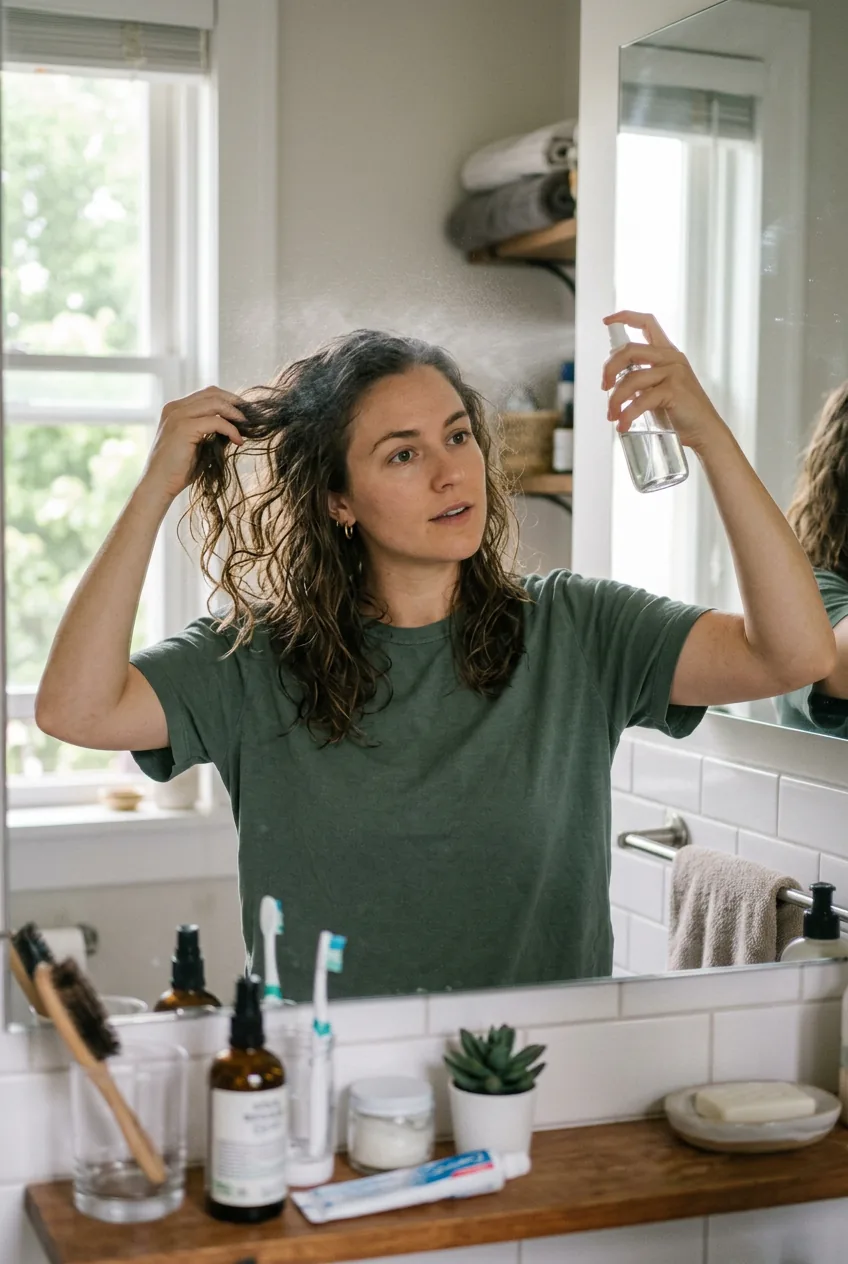
On day two or three, I might add just a tiny bit more gel to areas that need extra definition. The key is working with what you have, not starting over from scratch every single day.
I also learned that touching my hair throughout the day breaks up the wave pattern. It’s tempting, especially when you’re used to running your fingers through straight hair, but wavy hair needs to be left alone to do its thing.
The right products make all the difference, but technique matters more than expensive brands. I’ve gotten amazing results with drugstore products and disappointing results with salon formulas — it’s all about understanding what your specific waves need.
Weather plays a huge role too. Humid days mean I use less leave-in conditioner and more gel for hold. Dry days mean extra moisture and lighter hold products. I keep a small arsenal of products and rotate based on what Mother Nature is throwing at me.

Quick Answers for Wavy Hair Newbies
How often should I wash my wavy hair?
I wash mine 2-3 times per week max. Wavy hair tends to be drier than straight hair, so overwashing strips essential oils. On non-wash days, I just rinse with water or do a co-wash with conditioner only.
Can I sleep with wet hair?
I don’t recommend it. Wet hair is fragile and more prone to breakage. Plus, you’ll likely wake up with weird dents and flat spots. If you must, at least get it 80% dry first and use protective styles.
Why do my waves look different every day?
Welcome to wavy hair life! Humidity, how you slept, product application, even your hormones can affect your wave pattern. The key is learning to work with the variation instead of fighting it.
Should I cut my hair wet or dry?
Find a stylist who cuts wavy hair dry. Wet cuts can be misleading because waves shrink and bounce differently when dry. A good dry cut will enhance your natural pattern instead of working against it.
This routine took me months to perfect, but now my waves are consistently bouncy and defined. Some days are better than others — that’s just wavy hair reality. But even my “bad” wave days are infinitely better than the frizzy disasters I used to call hairstyles. The key is patience with yourself and your hair while you both figure out this beautiful, unpredictable dance.