






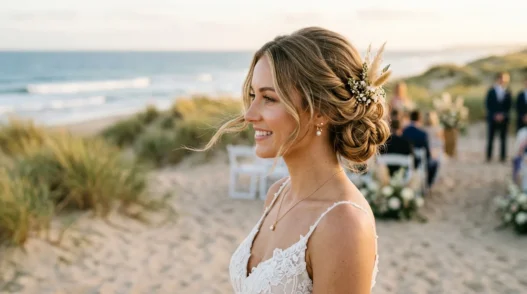
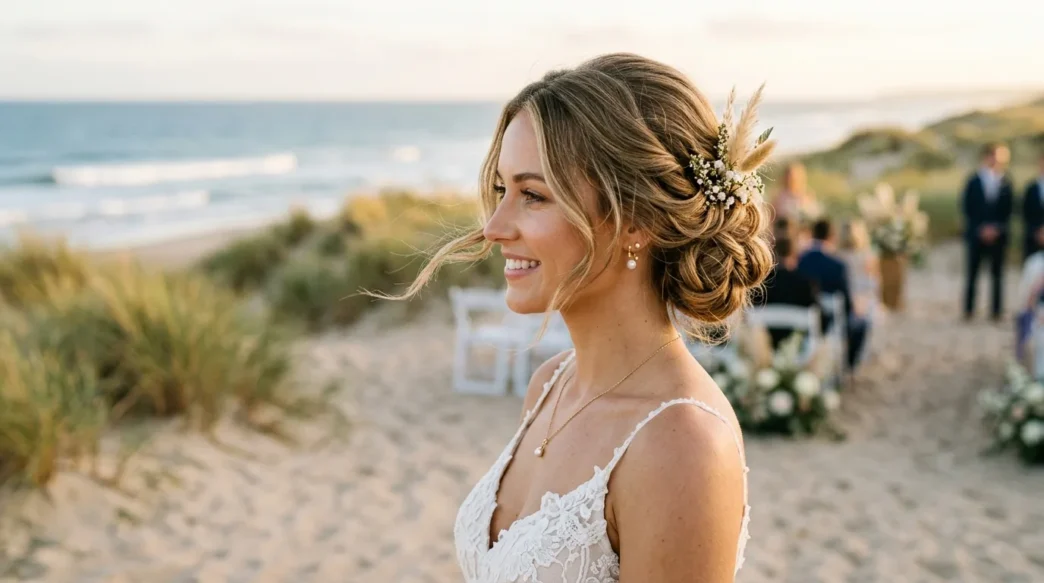
I’ll never forget the bride who showed up to her Malibu ceremony with hair so perfectly coiffed it looked like a museum piece. By the time she walked down the sandy aisle, half her style had surrendered to the ocean breeze. That’s when I realized most wedding hair advice completely ignores the reality of beach ceremonies.
After styling dozens of beach brides over the past few years, I’ve learned that summer coastal weddings demand a completely different approach. You need styles that embrace the elements instead of fighting them.
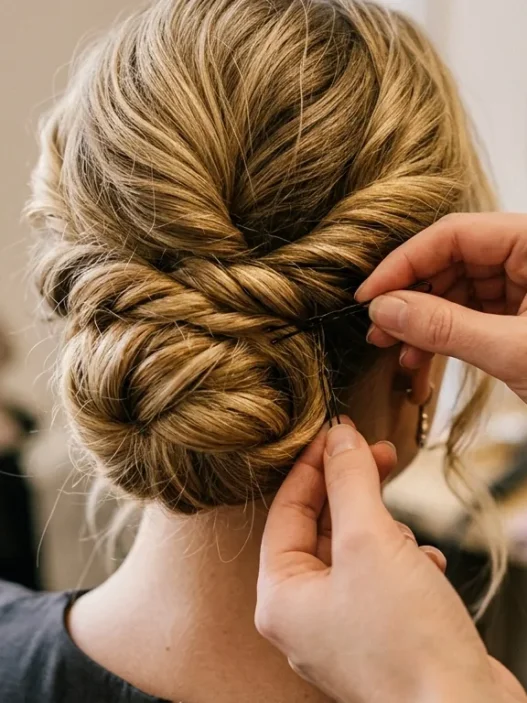
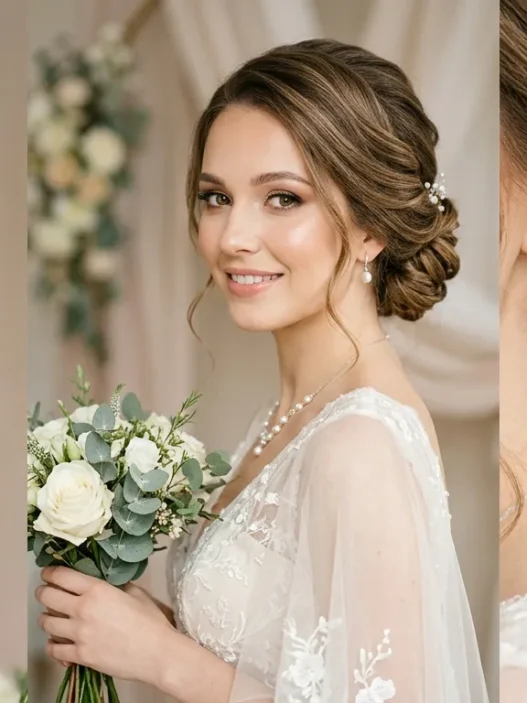
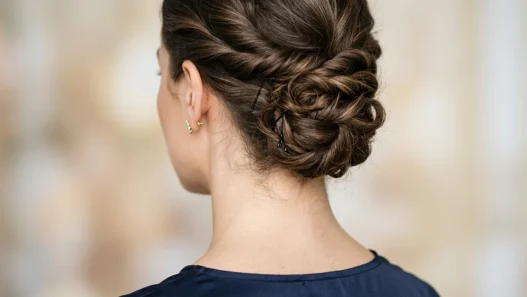
The Messy Low Bun That Actually Stays Put
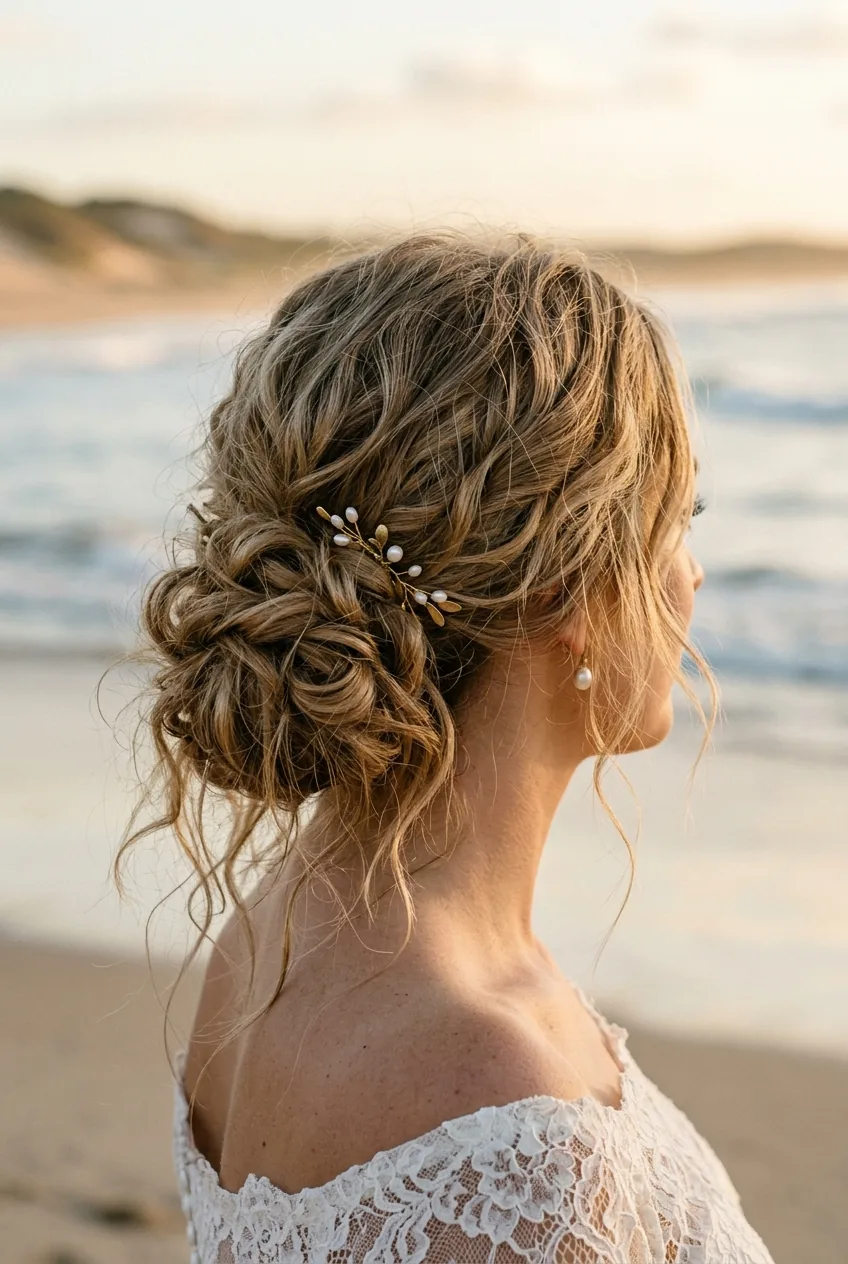
Here’s what most people get wrong about beach wedding buns — they try to make them too perfect. The secret is starting with slightly dirty hair and embracing the undone texture that wind will create anyway.
I always tell my brides to skip washing their hair the night before. Day-old hair holds bobby pins better and gives that effortless grip you need for coastal humidity. The technique I use involves twisting sections loosely instead of pulling them tight, leaving strategic pieces to frame the face.
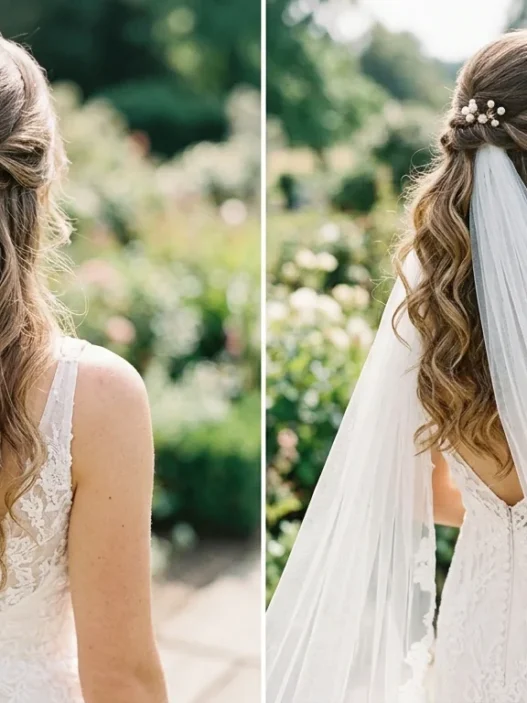
The key is placement — position the bun at the nape of the neck, not higher. This keeps it stable when ocean breezes hit and looks incredibly romantic in photos. Plus, it won’t interfere with veils or headpieces that might shift in the wind.
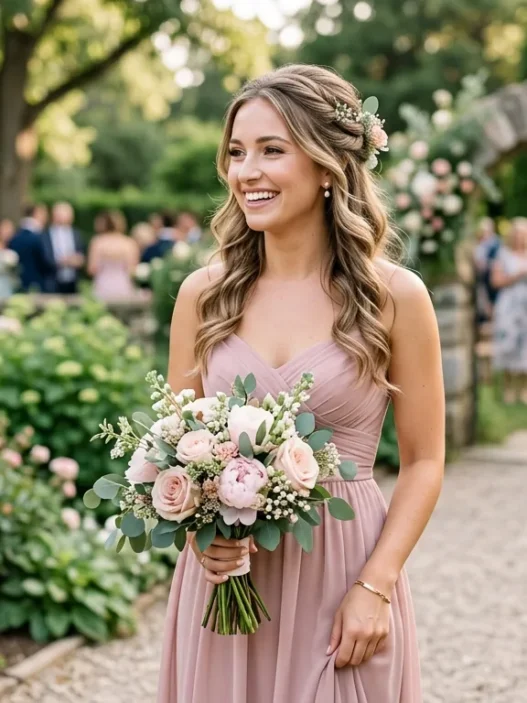
Half-Up Styles With Natural Texture
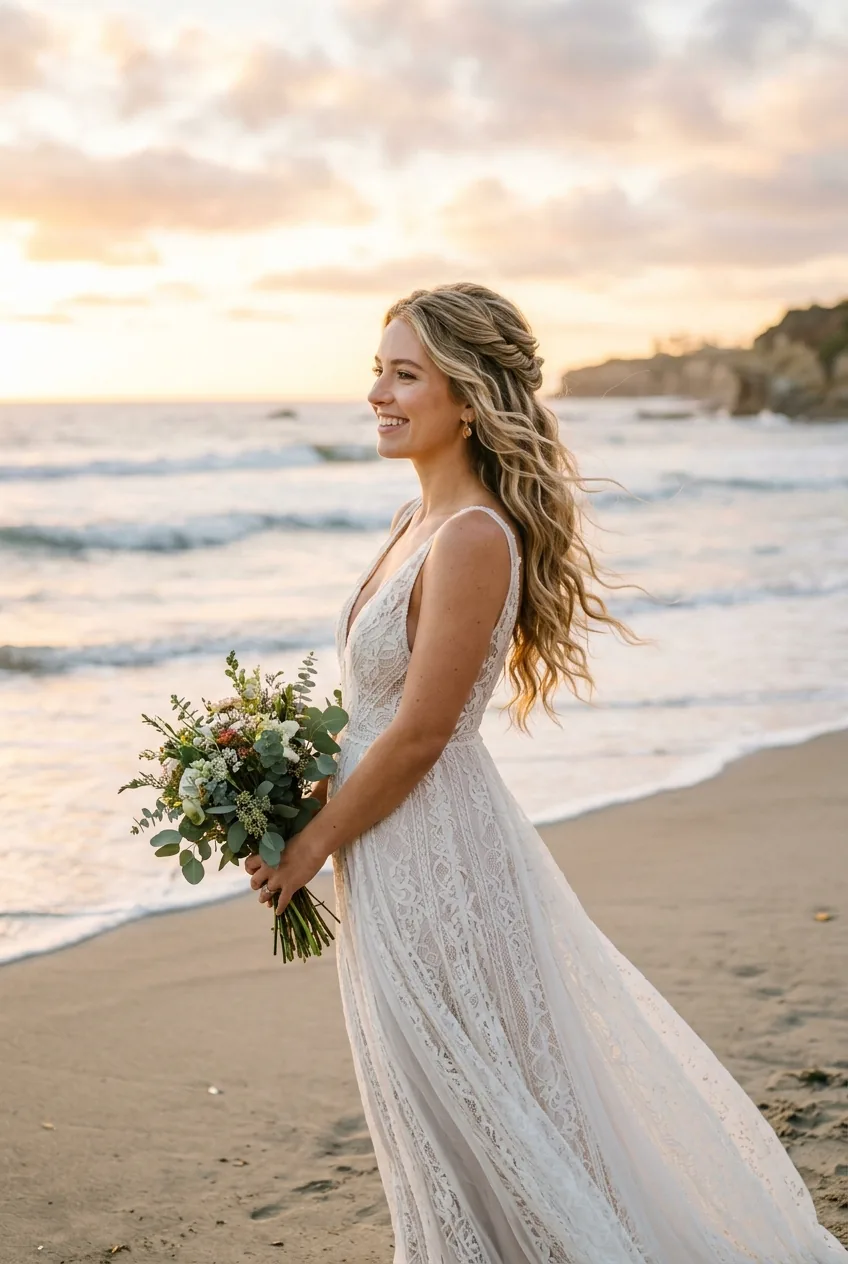
Why do half-up styles work so brilliantly for beach ceremonies? They give you the best of both worlds — face-framing elegance with hair that moves naturally in the breeze.
- Crown section twisted back with texture spray for grip
- Side pieces left loose to catch the light
- Back section flowing freely with natural movement
- Minimal products that won’t get sticky in humidity
I love using texturing sprays that enhance natural movement without weighing hair down. The goal is hair that looks like it belongs at the beach, not like it’s fighting against the environment.
One bride told me her half-up style looked better at the end of the reception than at the beginning. That’s exactly what you want — hair that improves with the elements rather than deteriorating.
Beach Waves Done Right
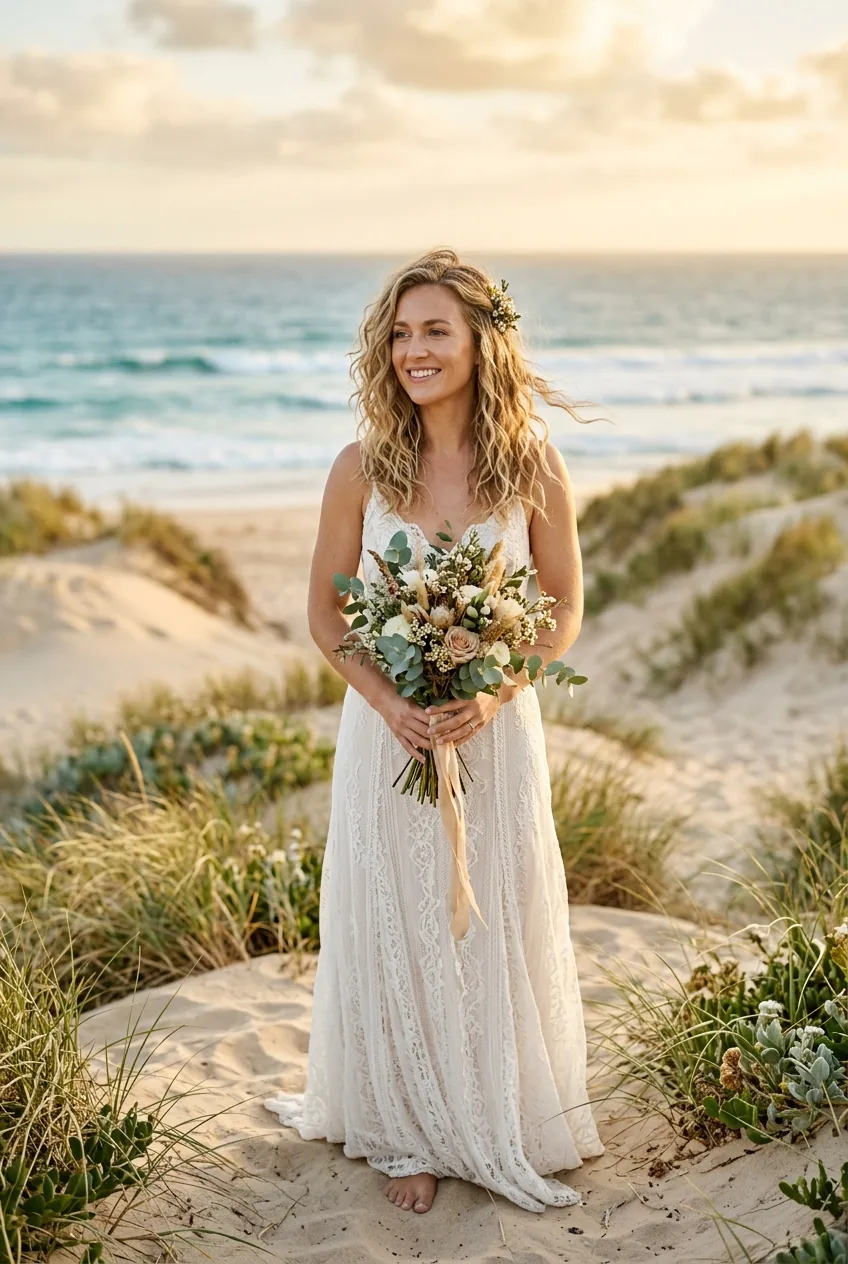
Let’s talk about beach waves that actually work for beach weddings. Most tutorials create waves that look great in controlled environments but fall flat in coastal conditions.
The difference is in the technique. Instead of using a curling iron for uniform waves, I create texture with braids and sea salt spray the night before. This gives hair memory that responds beautifully to ocean air.
Real beach hair has irregularity — some pieces tighter, others looser. That’s what makes it look authentic and effortless.
For summer hairstyles like this, timing matters. I tell brides to do their texture prep two days before, then just scrunch and go the morning of. The result? Hair that looks like it belongs in a romantic beach photo shoot.
See the Technique in Action
Braided Elements That Feel Modern
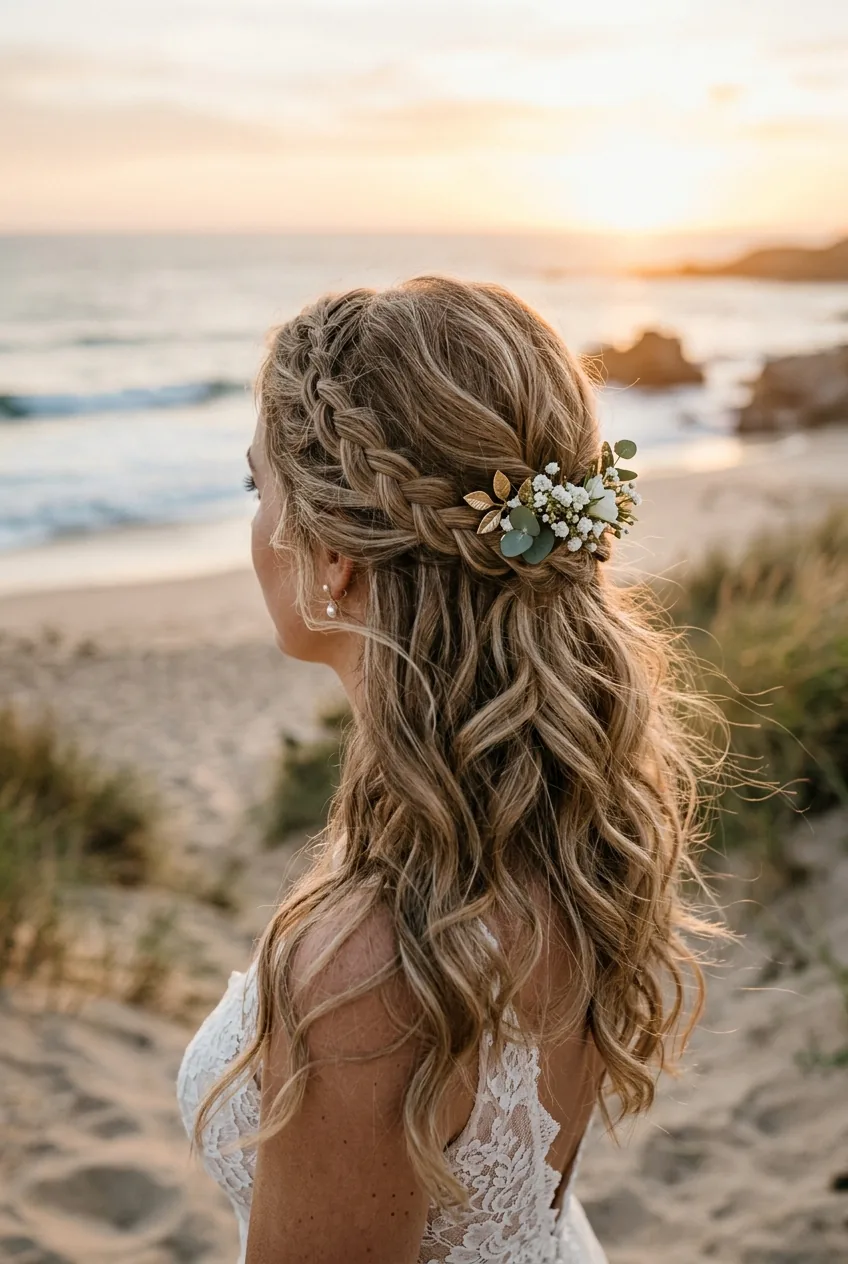
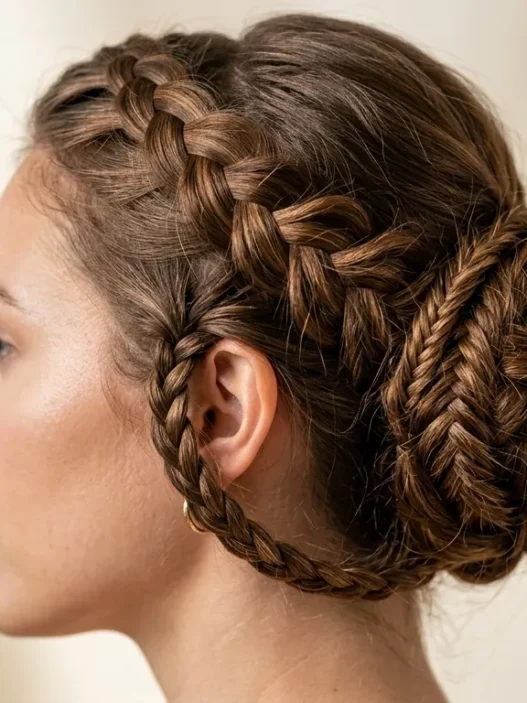
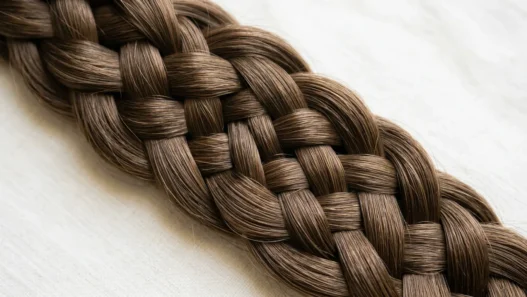
Braids for beach weddings don’t have to be elaborate crown creations that take hours to perfect. Some of my favorite styles use subtle braided accents that add interest without overwhelming the overall look.
A single side braid that disappears into loose waves. Two thin braids that frame the face before joining a low ponytail. These small touches create that boho-romantic vibe that photographs beautifully against ocean backdrops.
What I love about braided wedding hairstyles for beach ceremonies is their durability. A well-placed braid will hold its shape even when everything else gets tousled by wind.
The trick is keeping braids loose and textured. Tight, perfect plaits look out of place against the natural, organic feel of a beach setting. I often pull at the braid after finishing to create that lived-in texture that looks effortlessly chic.
The Controversial Choice I Always Recommend
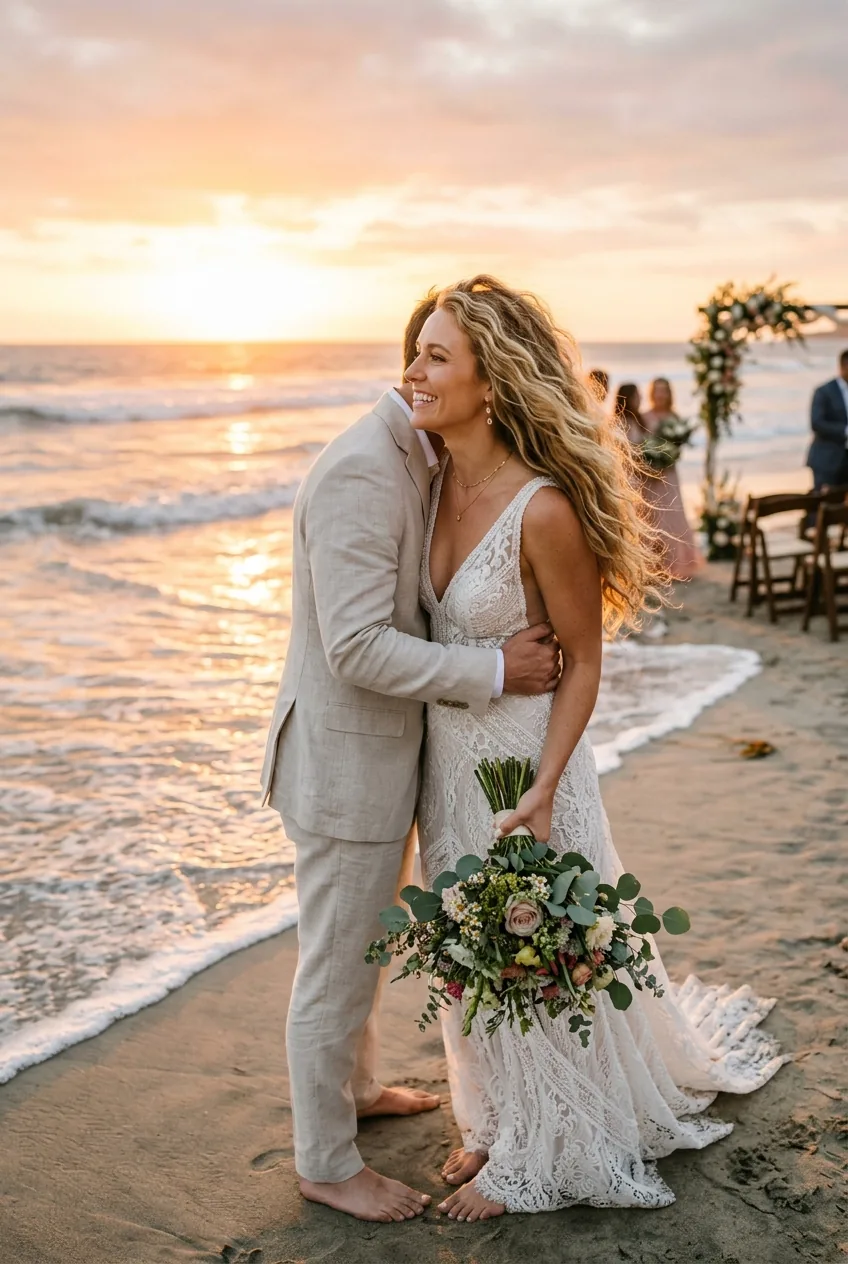
Here’s my most controversial beach wedding hair opinion: sometimes the best choice is to wear your hair completely down and natural. I know it goes against traditional wedding wisdom, but hear me out.
For brides with naturally beautiful hair texture, fighting it with elaborate updos often creates more problems than solutions. Coastal wind will find every bobby pin weakness. Humidity will frizz the pieces you tried to smooth. Salt air will make hairspray feel gritty.
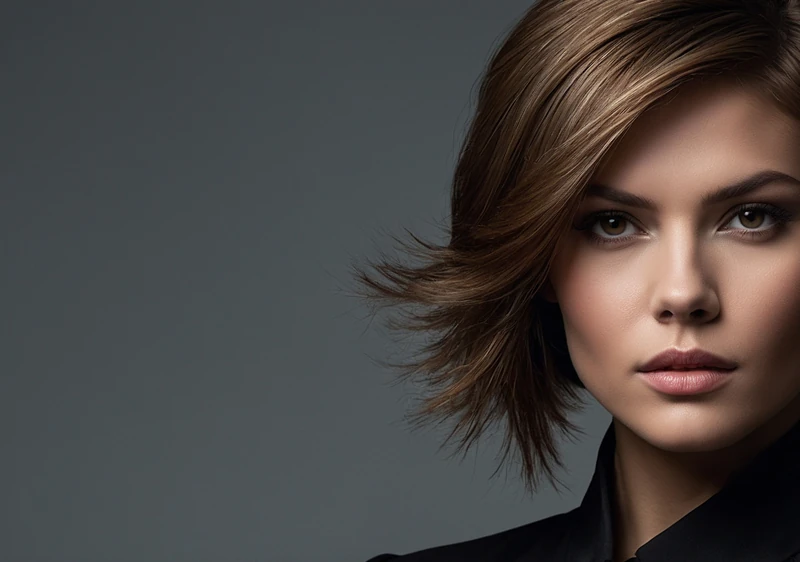
Instead, I recommend embracing your natural texture with minimal styling. A few strategic face-framing layers, some texturizing cream, and confidence in your hair’s natural movement.
This approach works especially well for brides getting married at sunset when golden light creates the most stunning natural highlights. The hair moves, catches light, and creates an effortlessly romantic effect that no amount of structured styling can replicate.
One of my favorite beach bride moments was watching a woman with gorgeous natural curls walk down the aisle with her hair flowing freely. Every guest commented on how radiant and authentic she looked. That’s the power of working with your hair instead of against it.
Quick Answers
How do I keep my hair from getting flat in beach humidity?
Use a volumizing mousse on damp hair and avoid heavy oils or serums. Anti-humidity products work better than traditional hairsprays in coastal conditions. The key is building texture from the roots up.
Should I do a trial run in similar weather conditions?
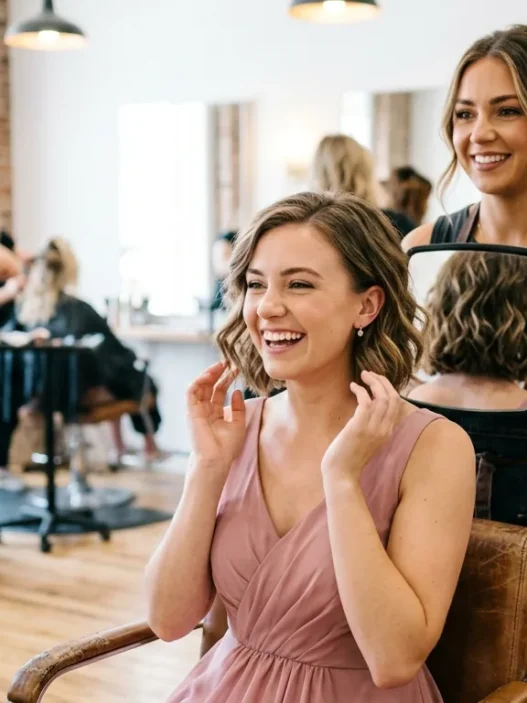
Absolutely. I always recommend testing your chosen style on a humid day or even at the beach if possible. What looks perfect in an air-conditioned salon might behave completely differently in coastal elements.
What if my hair gets wet during the ceremony?
Embrace it! Some of the most stunning beach wedding photos happen when hair gets slightly misted by ocean spray. Choose styles that look romantic when damp rather than trying to fight inevitable moisture.
How far in advance should I cut my hair before a beach wedding?
Two weeks minimum. This gives you time to adjust if needed and allows your hair to settle into its natural growth pattern. Fresh cuts sometimes behave unpredictably, especially in humid conditions.
The most beautiful beach wedding hair moments happen when brides stop fighting their environment and start working with it. Your hair should feel like an extension of the romantic, natural setting — not a perfectly sculpted contrast to it.